Helmet Bags Ranked by Whether They Survive to 2050
Helmet bags ranked by survival math: girth zipper, webbing tack, and twill rot. Learn which military surplus, repro, or fashion bag lasts decades.
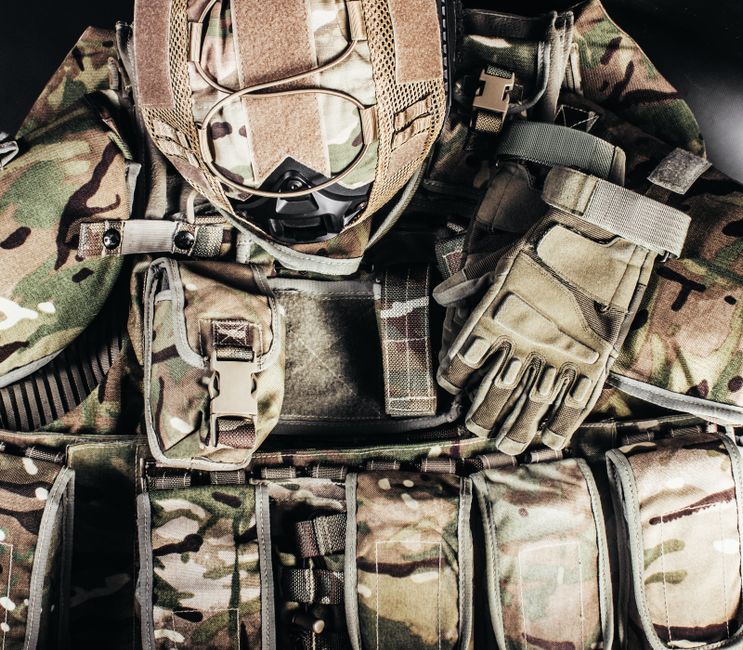
The flyer's helmet bag was never asked to survive you. It was sewn as padded storage for aircrew headgear, built to hang in a ready room between sorties and take a short walk to the flight line, and nothing in that brief demanded decades of loaded carry. Every buy-it-for-life judgment about this bag is a test against loads the original specification never funded.
Stay in the loop.
Get the latest posts and exclusive content delivered to your inbox.
Join 25 readers. No spam. Unsubscribe in one click, anytime.
A helmet bag's fate is decided at three checkable interfaces: the full-girth zipper, the webbing handle attachment, and the cotton twill body. Grade the market on those three and it inverts. A dry-stored 1960s surplus original or a bar-tacked Japanese reproduction is a realistic 2050 bag. Most modern versions inherit the silhouette without the construction, and they can fail years before either. This helmet bag review covers the kill-point anatomy, a 60-second inspection for surplus originals, five specific bags ranked by survival odds, and the repair math that separates a cheap fix from a dead bag.
Why the Helmet Bag Was Never a Daily Carry Bag
Open a period flyer's helmet bag and the design intent is obvious. A boxy main compartment with a zipper running nearly the full girth, so a hard flight helmet drops in without snagging. Twin front pockets for gloves and mask parts. A padded lining. A stubby handle for short moves. This was equipment storage with a handle, closer kin to a padded case than a duffel, and the broader evolution of USAF flight clothing shows where the priorities sat: protecting expensive, life-critical gear around the aircrew.
That gap between design intent and daily-carry reality is the whole reason survival math exists. A bag engineered to hold two pounds of helmet gently will still carry a laptop, a water bottle, and a gym kit for years. It just was not engineered to, so the margin between a 5-year bag and a 25-year bag lives in a handful of construction decisions, not in the silhouette they all share.
The silhouette escaped the tarmac anyway. Carryology's history of the helmet bag traces the crossover to Top Gun in 1986 and Porter's Tanker series, which rebuilt the shape in MA-1 nylon for city streets. The wider rise of the man bag in luxury fashion has since pulled the silhouette into collections at every price point. None of that crossover upgraded the spec. If anything, fashion adoption tends to lighten it, which is why two bags that look identical in photos can be a decade apart in service life.
The Three Kill Points: Girth Zipper, Webbing, Cotton Twill

Most helmet bag reviews stop at fabric feel and pocket count. Survival math lives in three places, and everything else is cosmetic.
The full-girth zipper carries every load you lift
The closure runs around most of the bag's circumference, which means a full bag pushes outward against the zipper tape all day, and every pickup by the handle torques the closure seam. Thread gives before hardware does: on a cotton twill helmet bag without a reinforced seam, the stitching that holds the tape is the weakest link in the strongest load path, and a failed girth zipper commonly ends the bag's useful life. The fix means unpicking and rebuilding the most stressed seam in the whole garment.
Zipper type changes the odds. Period originals typically run a chunky metal zipper, which tolerates grit and lateral load but corrodes. Budget versions usually run a coil zipper, which is cheaper and resists corrosion but distorts more readily under the sideways pressure a loaded girth closure sees. Neither type saves a weak seam, which is why the seam, not the slider, is what you inspect.
The webbing handle decides where stress lands
There are two ways to attach a handle, and you can tell them apart in five seconds. The cheap way sews the webbing flat onto a single outer layer of fabric, so one row of stitching through one ply of twill carries the entire bag. That is the classic tear-out point on budget versions, and it usually fails at the stitching, leaving a clean hole where the handle used to be.
The durable way passes the webbing through slits in the body, stacks the layers, and bar-tacks across the stack so the load spreads across multiple plies of fabric. This is the construction typical of premium Japanese reproductions, and a handle built this way can outlast the twill body around it. Flip the lining in-store: if the webbing emerges inside the bag, you are holding the good version of this design.
The cotton twill body sets the ceiling
Reproduction makers like Metasco still build to the original flyer's helmet bag spec, sage green cotton twill and all, and that fabric choice cuts both ways. Cotton twill resists abrasion, breathes so contents do not trap moisture, and ages with visible character. It also has three chronic enemies: ultraviolet light, sustained moisture, and decades of poor storage.
UV embrittles cotton fibers from the outside in. Damp storage invites hydrolysis and mildew into the cellulose. Plain time embrittles cotton even in the dark. No zipper or handle detail saves a body that has rotted, which is why the twill, not the hardware, sets the ceiling on any bag's service life.
The 60-Second Surplus Inspection
Are surplus helmet bags worth buying? As a condition purchase, yes, often at the best value per dollar in the category. As a blind purchase from photos, no. Dry rot announces itself if you know where to look, and restorers who spend their lives maintaining vintage canvas gear lean on the same handful of tests. None require special tools, and all of them fit inside a minute.
- Flex-crack test. Crush a corner of the body fabric hard in your fist and listen. A crackle like crumpled paper means the sizing is gone and the fibers are embrittled. Fail.
- Fiber tear. Press a thumbnail into a hidden seam allowance and drag. Healthy twill resists. Rotted twill splits or powders at the edge. Fail.
- Musty odor. A damp-storage smell that survives airing out tells you how the bag spent its last decades. Treat it as a strong fail signal.
- Brittle stitching. Pick at a single stitch inside a pocket. Thread that snaps clean instead of fraying has aged out along with the fabric. Fail.
- Uneven UV shift. Compare color under the front flaps and inside the pockets. Exposed areas several shades lighter mean years of light exposure, and the fibers have paid for it. Fail, or walk away unless the price is a gamble you want.
- Zipper under lateral load. Zip it closed, then squeeze the loaded bag across its width. Teeth that separate, skip, or pucker the tape mean closure or seam trouble at the bag's most decisive interface. Fail on separation.
One principle beats all the date-code talk: storage history, not age, is the variable in surplus value. A dry-stored 1960s original routinely outlasts a mishandled 1980s one, so buy the grade, not the year. A vintage helmet bag with supple fabric, sound stitching, and a smooth brass zipper can be the toughest object in this entire ranking. The same bag with crackle and UV shift is a display piece with a handle on it.
Five Helmet Bags Ranked by Survival Odds
Ranked on construction against the three kill points, with honest trade-offs. Street prices drift, so treat the bands as terrain, not quotes.
| Rank | Bag | Tier | What the construction says | Survival verdict |
|---|---|---|---|---|
| 1 | The Real McCoy's Line Crew Helmet Bag | Premium reproduction | Pass-through webbing, bar tacks, reinforced girth seam, heavy twill | Best odds off the shelf |
| 2 | Surplus original, 1960s to 1980s contract | Mil surplus | Heavy sage twill, brass zipper, decades of unknown storage | Rivals number one if it passes inspection |
| 3 | orSlow | Premium reproduction | Japanese repro ethos, heavy fabric weights | Close behind, verify the model |
| 4 | Alpha Industries | Contractor-heritage fashion | True silhouette, lighter build than the repro tier | Mid, inspect each unit |
| 5 | Rothco washed canvas | Budget | Washed cotton, coil zipper, single-layer handle | Beater, not a 2050 bag |
The Real McCoy's Line Crew Helmet Bag is what the category looks like when someone rebuilds the spec with modern thread and no cost ceiling. The webbing passes through the body and bar-tacks into stacked plies, and the girth seam is reinforced the way a repair-minded tailor would insist on. It is a copy rather than an artifact, and you pay for that construction, but it is the most likely new bag here to still be carrying in 2050.
A contract-dated surplus original is the condition lottery. Passed inspection, its heavy twill and chunky brass zipper are genuinely durable, often tougher fabric than anything in current production near the price. Failed inspection, you have bought someone's basement. Never buy one unsighted. Ask the seller to run the flex-crack test and photograph the lining where the handle attaches.
orSlow's current lineup reflects the same Japanese reproduction culture, heavy fabrics and stress points treated like garments meant to be repaired. Expect the construction priorities that define that tier, and verify the handle pass and zipper seam on the specific model before paying, because reproductions get revised too.
Alpha Industries carries real lineage: founded in 1959 in Knoxville as a military contractor before growing into a global brand, per its contractor history. Its helmet bag today sits in the contractor-heritage fashion tier, silhouette faithful, build lighter than the Japanese repros. On the Alpha Industries versus Real McCoy's question, the gap is not branding. It is the two interfaces above: a unit with a well-set zipper and a pass-through handle climbs this list, so inspect before trusting.
Rothco's washed canvas version is the honest budget end. Washed cotton twill, a coil zipper, a handle stitched to a single layer. Built to a price, perfectly usable as a beater, and years, not decades, under a real daily load. For orientation on price bands at the time of writing: Rothco tends to sit under $50, Alpha roughly between $70 and $100, surplus originals commonly $60 to $150 depending on condition and era, orSlow in the mid $200s, and The Real McCoy's around $300. The order of the ranking is the durable fact; the numbers are not.
Repair Math: Fixable Faults and Fatal Ones
Longevity is partly economics. Two of the four common helmet bag failures cost a modest alteration to fix. The other two end the bag. Knowing which is which before you buy changes what you should be willing to pay.
| Fault | Fixable | Rough economics | Verdict |
|---|---|---|---|
| Torn handle stitch line | Yes, re-sew and reinforce the pass | Modest alteration fee | Fix it |
| Small seam split | Yes, restitch promptly | Modest alteration fee | Fix it |
| Rotted twill body | No | No repair outlasts the fabric | The bag is done |
| Failed girth zipper on a low-value bag | Technically | Bench time often near a new budget bag | Usually fatal economically |
The asymmetry is bench time. A helmet bag webbing handle repair is a quick machine job, usually among the cheapest things a tailor will do for you, and reinforcing it while the bag is open makes the fix stronger than the original. A small seam split is the same story, provided you catch it before it runs.
A girth zipper replacement is the opposite job. The tailor unpicks a reinforced seam that runs most of the bag's circumference through heavy twill, installs a long zipper, and rebuilds the seam. Quotes scale with circumference and fabric weight, and on a bag worth $40 the math dies on arrival. The identical repair on a $300 reproduction or an heirloom original can be entirely rational, which is why construction tier and repair math are the same conversation.
Climate, Storage, and Reaching 2050
Cotton twill is a climate-specific material pretending to be universal. In dry climates, office carry, and storage between uses, it is close to ideal: breathable, abrasion-resistant, kind to whatever is inside. Under sustained wet carry it absorbs, gains weight, dries slowly, and every wet cycle taxes the fibers. Under constant UV, a rear car seat or a sunny hook by the door, it embrittles on a schedule you can roughly predict.
The care protocol that stretches any tier toward 2050 is short:
- Dry the bag fully before it goes into storage, every single time.
- Store it loosely folded in breathable cotton or a pillowcase, never sealed plastic.
- Keep it in the living space, with stable temperature and humidity, not a basement, garage, or attic.
- Keep it out of standing sunlight between uses.
- Once a year, run the flex-crack test and check the handle stitching.
These mirror the basics textile conservators on storage recommend for cotton, because a museum's problem and yours are the same problem: time plus moisture plus light kills cellulose fiber. With a passed 60-second inspection and this protocol, a well-kept surplus original or a premium reproduction is a realistic candidate to still be in service in 2050. Without the protocol, the same bag can rot in a humid corner inside five years.
The Verdict: Which Helmet Bag You Actually Buy
The decision path, by budget and temperament:
- Beater budget. Rothco washed canvas, eyes open. A years-of-service bag rather than a decades one, and at the price that is an honest trade.
- Around $100. Alpha Industries, but only a unit that passes the two-interface check. Look for the pass-through handle and a well-set zipper before money moves.
- The hunt. A surplus original that passes the 60-second inspection. Best value per dollar in the category when the grade is right, and the only tier where you must inspect before you buy, not after.
- One bag for the next 25 years. The Real McCoy's, or any reproduction showing pass-through bar-tacked webbing and a reinforced girth seam. This is the best 2050 candidate you can buy new today, with a pristine, dry-stored surplus original as its romantic equal.
Adjust for climate. If your carry is soaked half the year, cotton is the wrong daily material at any tier; choose the repro tier where eventual replacement is at least plausible, and dry the bag fully between carries. If your use is dry-climate office carry, even a 1960s original will outlive the trend cycle that revived it.
The helmet bag was never promised to you as a lifetime purchase. Judged at the zipper, the webbing, and the twill, a few of them earn it anyway, and now you can tell which ones in about a minute.
Stay in the loop.
Get the latest posts and exclusive content delivered to your inbox.
Join 25 readers. No spam. Unsubscribe in one click, anytime.
About the author
Priya Raman
Repair and Restoration Writer
Priya maintains and restores everything she owns, from cast iron to mechanical watches, and has spent years in the right-to-repair community. She writes about maintenance, warranties, and repairs, the half of buy-it-for-life that keeps good gear out of landfills.
Related Posts

Durable Sling Bags Ranked by the Parts That Fail First
Durable sling bags ranked by what fails first: strap junctions, adjusters, buckles, and zippers, with a Bellroy Sling Lite Mini vs budget verdict.

Best Travel Vacuum Storage Bags for Real Lifespans
The best travel vacuum storage bags ranked by the failure modes that kill them, plus care habits and cost-per-trip math that shows when buying once pays.

Amusement Park Backpacks Ranked by How They Die
How do amusement park backpacks die? Chlorine soaks, closet mold, and strap failure at Disney and Universal. See which five popular bags survive.