Buy It for Life Office Chairs Ranked by Cost per Decade
Buy it for life office chairs ranked by 20-year parts availability and cost per decade, with the decades-old Herman Miller Aeron fleet as the benchmark.
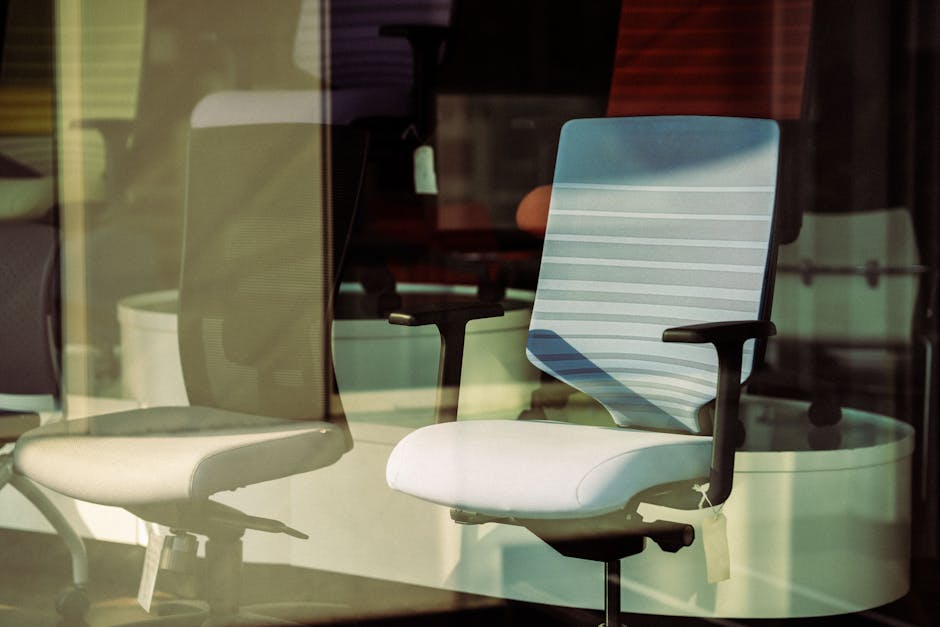
Most office chairs do not so much break as sink. The gas cylinder under the seat bleeds pressure a millimeter at a time until the height lever stops mattering and you are typing at coffee-table height. A huge share of the task chairs hauled to the curb each year died exactly there, at one of the few genuinely standardized parts in the furniture industry, a component that commonly costs $25 to $60 to swap with a rubber mallet and ten minutes.
Stay in the loop.
Get the latest posts and exclusive content delivered to your inbox.
Join 36 readers. No spam. Unsubscribe in one click, anytime.
You would never know it from chair reviews, which rank lumbar feel, adjustability counts, and mesh breathability. That is reasonable shopping advice for next year and useless advice for the next two decades, because comfort specs predict nothing about whether a chair still works in 2045. A true buy it for life office chair is decided at the moment of purchase by three checkable signals: standardized wear parts, a maker with a decades-long record of stocking those parts, and warranty language that covers mechanisms and survives a change of owner.
This piece runs that test. You get a three-axis rubric you can apply to any chair on any showroom floor, a ranked shortlist of five, the used-versus-new math with every assumption exposed, and a five-minute inspection routine that keeps you from paying secondhand money for a chair with a dead cylinder.
The 20-Year Test Most Office Chair Reviews Never Run
Durability is a supply-chain question, not a frame-strength question. The real 20-year test asks one thing: in year 18, when the cylinder or the tilt lock fails, who sells you the part?
Box-store chairs are built and sold as sealed appliances. The SKU lives for a few years, the maker moves on, and no parts channel ever existed, so a $40 cylinder failure retires the whole chair. Contract furniture works differently. Corporations buy thousands of identical chairs, their facilities teams demand a parts pipeline, and third-party suppliers, refurbishers, and OEM catalogs form around any chair that sells at volume.
Buy the chairs corporations buy. The ecosystem follows the fleet.
That is the quiet trick behind finding a long lasting office chair. The most durable office chair is rarely the one with the thickest steel. It is the one whose failures are cheap and whose parts are still on a shelf.
The Six Wear Parts That Decide a Chair's Fate
Every task chair is a near-immortal frame wearing six consumable parts. Learn them and you can diagnose any supposedly dead chair in a parking-lot sale.
| Wear part | How it fails | Typical fix, parts only | Terminal? |
|---|---|---|---|
| Gas lift cylinder | slow sink, lever does nothing | $25 to $60 | No, standard interfaces |
| Casters | wobble, flat spots, carpet shredding | $15 to $40 a set | No |
| Armrest pads | cracks, peeling, delamination | $20 to $80 a pair | No |
| Seat pan, mesh or foam | sag, front-edge fatigue | pan swap, priciest common repair | Sometimes |
| Tilt mechanism | rocking play, lock slips | varies, often proprietary | Sometimes |
| Frame and bolts | loose hardware, rare cracks | free to $5 | Almost never |
The office chair gas cylinder replacement cost question has a short answer because the industry settled on quasi-standard cylinder sizes that fit most task chairs across brands. Arm pads and casters are nearly as interchangeable on contract seating. The two parts that can genuinely end a chair are the tilt mechanism, when it is proprietary and unobtainable, and the seat pan, which is why mesh condition matters so much on the secondhand market.
Now meet the chair that aces this table.
The Aeron Benchmark, 1994 to Now

How long does a Herman Miller Aeron last? The honest answer is that nobody has found the ceiling, because the chair designed by Bill Stumpf and Don Chadwick has been in continuous production since 1994 on a stable size A, B, and C platform. The 2016 remaster updated the look while keeping the platform, and Aeron replacement parts sold today, cylinders, casters, pads, levers, still return late-1990s units to full service. That fleet is the strongest longevity evidence in task seating, which is why the Herman Miller Aeron lifespan question gets answered by office liquidators rather than lab tests.
Two caveats keep the benchmark honest. First, Herman Miller's 12-year warranty terms are strong on paper, but the parts market, not the warranty, is what actually keeps old Aerons alive. Second, the component that kills Aerons is the mesh pan. High-mileage units develop front-edge fatigue and sag, and a pan swap is among the priciest common repairs in the category. Cylinders and pads on an Aeron are trivial. Pans are the inspection priority.
How to Score Any Chair with the Three-Axis Rubric
Score any candidate out of 100 before you spend a dime.
1. Parts availability, 50 points. Office chair parts availability is worth half the score because it is the only axis marketing cannot fake. Award up to 20 points for a live OEM parts channel, up to 15 for standard cylinder and caster interfaces, and up to 15 for a track record of stocking parts after a line is discontinued.
2. Warranty mechanics, 30 points. Up to 10 points if coverage transfers to a second owner, up to 10 if mechanisms are covered rather than just the frame, and up to 10 depending on how wear parts are treated.
3. Cost per decade, 20 points. Total 20-year ownership cost divided by two, lower is better, scored against the field.
Run two examples to calibrate:
| Chair | Parts /50 | Warranty /30 | Cost /20 | Total |
|---|---|---|---|---|
| Used, serviced Aeron | 46 | 27 | 18 | 91 |
| Typical $150 box-store chair | 8 | 6 | 12 | 26 |
Illustrative scores, and yours may differ by a few points, but the gap is the story. A buy it for life office chair clears 80. An appliance clears 30 only by getting lucky on price.
Five Buy It for Life Office Chairs, Ranked
Ranked on the rubric above, with the trade-offs stated plainly.
| Rank | Chair | Parts outlook | Watch out for |
|---|---|---|---|
| 1 | Herman Miller Aeron | 30 years of continuity | mesh pan age, price |
| 2 | Steelcase Leap | deep contract fleet support | younger platform |
| 3 | Haworth Zody | decade-plus coverage | transferability terms |
| 4 | HON Ignition tier | cheap, fast parts | less refinement |
| 5 | BodyBilt | heavy duty, parts inclusive | niche fit, price |
Herman Miller Aeron. The benchmark for a reason, and everything in the section above applies. Buy used, inspect the pan, and size it A, B, or C to your body before anything else.
Steelcase Leap. In a Steelcase Leap vs Herman Miller Aeron durability comparison, the Leap loses the track record but wins the parts economics. Its installed contract base is enormous, so third-party cylinders, pads, and casters are cheap and everywhere, and Steelcase warranty terms run long on seating. The Aeron is the proven veteran. The Leap is the value play with the same serviceability logic.
Haworth Zody. A quiet contract workhorse, commonly cited as the first task chair to earn Cradle to Cradle certification, with Haworth warranty periods published by line and sitting in the same decade-plus bracket as the leaders. Verify transferability before buying used.
HON. The budget pick that behaves like contract furniture. Much of the seating carries limited lifetime terms per the HON warranty page, and its mainstream contract network means parts arrive fast and cheap. Less refined, entirely serviceable, and often the cheapest path to a genuinely repairable chair.
BodyBilt. Purpose-built heavy-duty seating with high weight ratings and long coverage spelled out in BodyBilt warranty information. Niche and priced accordingly, and worth it when a 350-pound-plus rating is a requirement rather than a spec-sheet flex.
Cost per Decade, Used Aeron versus a New Cheap Chair
Assumptions first, so you can re-run the math on your own prices. A clean used Aeron often trades for a few hundred dollars depending on size, generation, and condition, per current used Aeron prices; call it $500 for a fair deal and $350 for a good one. Budget roughly $150 in wear parts across 20 years, one cylinder, one set of casters, one pair of pads. The cheap chair costs $150 and gets replaced on a cycle, with zero resale value at the end.
| Ownership path | Upfront | Parts over 20 years | Total | Per decade |
|---|---|---|---|---|
| Used Aeron at $500 | $500 | $150 | $650 | $325 |
| Used Aeron at $350 | $350 | $150 | $500 | $250 |
| $150 chair every 4 years | $750 | $0 | $750 | $375 |
| $150 chair every 3 years | $1,050 | $0 | $1,050 | $525 |
The break-even moves with two variables. A box-store chair that genuinely survives five or six years narrows the gap, and a $700 Aeron widens it back. Two factors the table cannot show: an Aeron still holds resale value in year 15, and for most full-time sitters the daily experience is simply better. So is a used Herman Miller Aeron worth buying? For a desk worker at eight hours a day, the math says yes, comfortably.
A dealer-refurbished Herman Miller Aeron carries a premium over raw secondhand but arrives serviced, which mostly buys convenience rather than extra lifespan.
Reading Warranty Fine Print Like a Repair Tech
Any office chair warranty comparison should ignore the headline number at first and check four mechanics instead.
- Transferability. Many contract warranties cover the original purchaser only, which guts the value of a used buy. If coverage dies with the first owner, score it accordingly.
- What lifetime means. Limited lifetime usually means the practical life of the product as the maker defines it, often with component tiers underneath. Frames get the long term. Cylinders and pads rarely do.
- Wear-part exclusions. The parts most likely to fail are exactly the ones most often excluded or given short sub-terms.
- Parts after end of life. Paper coverage is worthless on a discontinued line with no parts inventory. A maker's stocking record is the real coverage. Humanscale's published terms, running to 15 years on some lines, are a good example of long headline coverage you should still read clause by clause.
One more trap. ANSI/BIFMA X5.1 type standards, summarized in the BIFMA standards overview, test durability and safety. None of that testing says anything about post-sale parts availability, so a certification badge is not a serviceability check. The office chairs with the best warranty coverage are the ones still honored on a discontinued line.
The Five-Minute Used Office Chair Inspection

The full inspection takes five minutes in the seller's driveway and needs only a phone flashlight. This is how to inspect a used office chair before buying, in the order that matters.
- Sink test. Set the height, sit for two minutes, watch for drift. A sinking cylinder is a cheap fix, which makes it a bargaining chip rather than a walk-away.
- Twist test. Grab the armrests and rock the chair, then twist. Play in the tilt mechanism can be terminal if the part is proprietary.
- Mesh and pan check. Press the front edge of an Aeron seat. Hammocking or a flared edge means pan fatigue, the priciest common repair. On foam chairs, check for a bottomed-out pan.
- Arm pads. Pinch and flex them. Cracks and delamination are cheap to fix.
- Casters. Spin each one and check for wobble at the stem. Fifteen minutes and a set of replacements.
- Base and frame. Look for hairline cracks at the spokes and welds. Walk away.
- Size label. On an Aeron, the A, B, or C label under the seat tells you whether the chair fits your body at all.
Cheap fixes: cylinder, casters, pads. Dealbreakers: cracked base, sloppy mechanism, a fatigued pan on an expensive chair.
Where the Buy It for Life Case Breaks, and the Verdict
Three honest limits. Mesh pans have real age limits, so a cheap Aeron with a dead pan can eat its own price advantage. No maker guarantees parts forever, and any lineup can be discontinued regardless of its record. And warranty transfer gaps mean a used buyer sometimes inherits nothing but the hardware.
A cheap chair also legitimately wins sometimes. Light use of a few hours a week, a move abroad in two years, a furnished rental where chairs are somebody else's problem. Buy-it-for-life logic assumes you will keep the thing, and that assumption has to be true before the math applies.
The verdict, ranked on the rubric. The used, inspected, correctly sized Aeron is the benchmark and the default for a full-time desk. The Steelcase Leap is the value play with the best parts economics. HON is the budget path that still behaves like contract furniture. Score anything else yourself with the three signals, a hundred points, and let comfort break the ties only after serviceability has decided the field.
Stay in the loop.
Get the latest posts and exclusive content delivered to your inbox.
Join 36 readers. No spam. Unsubscribe in one click, anytime.
About the author
Reggie Calloway
Heritage and Craft Editor
Reggie writes about the makers behind lifetime gear, from third-generation tanneries to family-owned foundries. A former magazine editor, he profiles the brands, materials, and craftsmanship that justify keeping a tool or a jacket for the next generation.
Related Posts

Buy It for Life Sunglasses Ranked by UV Survival
Buy it for life sunglasses ranked by UV protection that lasts a decade, covering lens substrates, hinge fatigue, and the wraparound versus oversized verdict.

Buy It for Life Essentials Ranked by 20-Year Math
Buy it for life essentials for your first home, ranked by repairability, parts availability, and 20-year cost per year instead of brand folklore.

Electric Snow Shovels Ranked by 20-Winter Survival
We rank electric snow shovels by 20-winter survival, judging paddle wear, drivetrain access, and power, then price each per winter against a $40 scoop.