Buy It for Life Sunglasses Ranked by UV Survival
Buy it for life sunglasses ranked by UV protection that lasts a decade, covering lens substrates, hinge fatigue, and the wraparound versus oversized verdict.

A recent r/BuyItForLife thread asked the question that stalls most sunglass purchases: does a small wraparound frame or an oversized frame with skinny arms block more UV? The replies contradicted each other, because the thread aimed at the wrong variable. Any two certified lenses stop roughly the same frontal UV. What separates buy it for life sunglasses from the disposable treadmill is where the UV filter physically lives, dissolved in the lens substrate or sitting in a coating that a decade of abrasion slowly strips, and whether the frame is a serviceable platform or sealed consumer junk.
Stay in the loop.
Get the latest posts and exclusive content delivered to your inbox.
Join 7 readers. No spam. Unsubscribe in one click, anytime.
Get those two variables right and shape reverts to what it should be, a fit decision. This guide settles the wrap versus oversized argument with the actual optics, grades the common lens materials on a decade of abuse, names the hinge architecture that survives one-handed removal, and ranks five durable sunglasses by cost per decade.
What Buy It for Life Sunglasses Have to Survive
Sunglass reviews are written in week one. Retirement happens in year three or year five, and it arrives through one of four failure modes:
- Coating loss. Surface treatments, including some UV filters, anti-reflective layers, and mirrors, wear away under wiping, grit, and heat until the lens no longer does what the box promised.
- Abrasion haze. Thousands of micro-scratches scatter light until the lens becomes a glare source of its own.
- Hinge death. The temple goes wobbly, the frame sits crooked, and bending it back never holds for long.
- No spare parts. A single ruined lens retires the whole frame because nobody, including the maker, sells a replacement.
Cheap pairs typically die by all four inside two summers. A genuine buy it for life platform answers each mode in advance: filtering that lives in the substrate and cannot scratch off, materials whose damage degrades comfort rather than protection, a hinge a screwdriver can reach, and a parts catalog. Hold those four answers against every pick below.
Where the UV Filter Lives, Substrate or Coating
The most important property of UV protection sunglasses is invisible at the point of sale. Is the filter in the material, or on it?
Polycarbonate and Trivex absorb ultraviolet in the polymer itself, so the protection is a property of the lens rather than a layer on it, as an industrial lens primer explains. There is nothing to wear off. Many glass and CR-39 lenses are the opposite case: mineral glass stops UVB naturally but transmits part of the UVA band unless the melt is doped, and plain CR-39 falls short of full-spectrum blocking without UV-absorbing coatings or additives. On those lenses, protection can genuinely degrade as the treatment degrades, which is why filter location is the first longevity test.
You cannot see any of this in a store, so buy on markings:
- UV400, blocking up to 400 nanometers, effectively the full UVA and UVB range.
- EN ISO 12312-1, the international standard (ISO standard page) setting UV transmittance limits and the familiar category 0 to 4 tints.
- ANSI Z80.3 (ANSI standard page), the US equivalent for nonprescription sunglasses.
Polarized vs UV protection is the most common confusion at this stage. Polarization filters reflected glare and says nothing about ultraviolet blocking; a polarized lens with no UV certification fails you on the only axis that protects the eye. Drop the dark-tint heuristic too. Behind a very dark lens with no UV filtering, the pupil dilates and the eye can admit more radiation than it would with nothing on at all, the mechanism Columbia's health service covers in its dark lens explainer. A certified light tint protects. An uncertified black one can injure.
How long do sunglass UV coatings last? No standard certifies a lifespan; it depends entirely on abrasion, cleaning habits, and heat. Treat coated lenses as consumables and substrate-filtered lenses as permanent until their optics fail, not their protection.
Wraparound vs Oversized, Which Shape Blocks More UV

Do wraparound sunglasses block more UV than oversized frames? With equally certified UV400 lenses, frontal blocking is effectively identical between the two. Shape changes two other things.
First, peripheral ingress. Solar UV scatters off sky, water, and pavement and reaches the eye from oblique angles, around the edges of the frame. Peer-reviewed measurement of peripheral UV exposure suggests the side contribution can be a meaningful fraction of the UV reaching an eye even while a front lens is worn. The wraparound sunglasses UV protection advantage is real but narrow: it is about side light, not stronger filtering.
Second, skin. Oversized frames shade more eyelid and cheek, the periorbital zone where skin cancers commonly develop, and both the Skin Cancer Foundation and the AAO sunglasses guidance favor close-fitting or wrap styles partly for this reason. A bigger lens is, crudely, a bigger hat for your face.
Note what did not make the list: arm thickness. Thin temples matter far less than gapping at the temple and cheekbone. A wrap that stands off the face leaks side light anyway, and an oversized frame that rides high leaks from above.
Verdict: open water, snow, high altitude, or driving into low sun favors wraparound. Eyelid and cheek coverage, or style latitude, favors oversized with certified lenses. Arm thickness is a red herring either way; fit against the face is what counts.
Lens Materials Graded Over a Decade of Abrasion
Every sunglasses lens material comparison trades the same five properties. The glass vs polycarbonate sunglasses durability debate is really a fight between two kinds of survivability, scratch resistance and impact resistance. A full material guide covers the range; the decade view looks like this.
| Material | Scratch resistance | Optics | Impact resistance | Weight | UV filter location |
|---|---|---|---|---|---|
| Mineral glass | Excellent | Excellent | Poor, can shatter | Heavy | Doped melt or coating |
| CR-39 | Fair to good | Very good | Moderate, brittle | Moderate | Coating or additives |
| Polycarbonate | Poor, marks readily | Good | Excellent | Light | Inherent to substrate |
| Trivex | Good | Very good | Excellent | Very light | Inherent to substrate |
Glass takes a decade of wiping and sandy towels and stays clear; drop it on tile and the story changes. Polycarbonate survives the drop and the face-plant but collects haze from cleaning grit. Trivex, profiled on PPG's Trivex material page, splits the difference, with impact toughness near polycarbonate, optics close to glass, and the lightest weight of the group.
So does a scratched sunglass lens lose UV protection? On substrate-filtered polycarbonate and Trivex, no. Scratches scatter light and wreck clarity while the filtering itself remains, because the filter is the lens. On a coated glass or CR-39 lens, a scratch that penetrates the treatment has plausibly removed the filter in that spot. That distinction reframes damage entirely: on a parts-supported frame, a scratch is a maintenance event, not a funeral.
Hinge Fatigue and the One-Handed Removal Problem
Almost nobody removes sunglasses with two hands, so the spring hinge vs barrel hinge sunglasses question is really a question about which architecture absorbs that daily abuse.
- Screw-barrel hinges (the standard barrel with screws) are the most serviceable. You or an optician can tighten or replace screws in minutes, and failure arrives gradually. Over ten years, repairability wins.
- Spring (flex) hinges absorb one-handed stress with a coil or flex cable inside the temple, which is genuinely gentler on the frame. When the mechanism finally fails, the repair is fiddlier and often not economical, as a practical spring hinge guide lays out. Comfort now, harder triage later.
- Riveted or pin hinges, classic on aviators, stamp the barrel into soldered frame joints. Simple, nearly indestructible when well-made, and correctable by careful bending when they loosen.
The mount matters as much as the mechanism. Monel and titanium hold screws and tolerate repeated adjustment; acetate hinge wells can dry out and crack, taking the barrel with them; nylon flexes instead. The most repairable hinge usually beats the cleverest one, because the decade belongs to whatever a screwdriver can reach.
Replacement Lens Economics and Cost per Decade
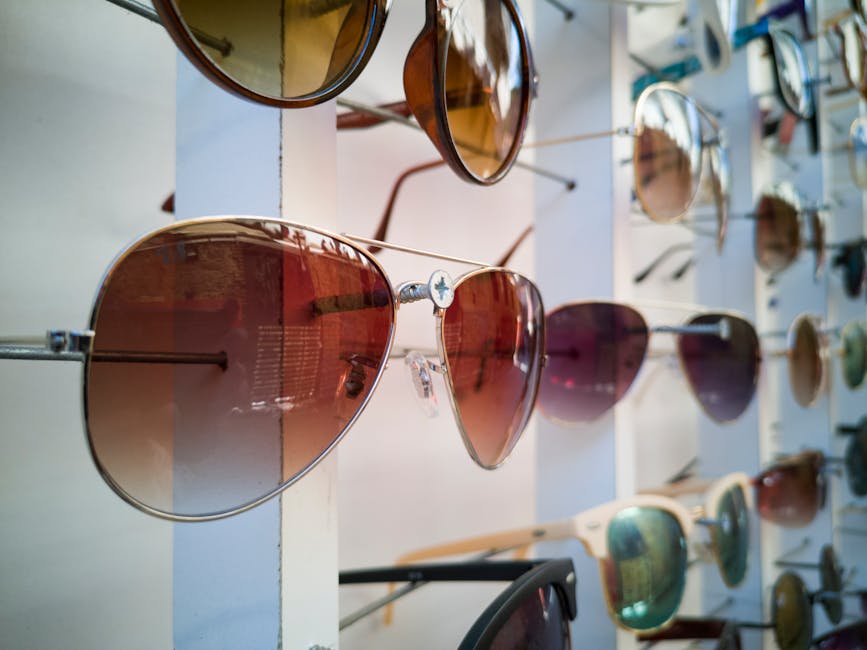
Which sunglass brands sell replacement lenses? That question decides more of your decade cost than any frame material, because replacement lenses for sunglasses convert scratches from retirement events into maintenance line items.
Run the treadmill math with the assumptions on the table. Gas-station pairs at $15, replaced two or three times a year (scratched, sat on, lost to the lake), run $30 to $45 annually, or $300 to $450 per decade. A $200 serviceable platform plus one replacement lens set at $60 to $100, plus incidental nose pads and screws, lands around $270 to $320 for the same ten years, at a far higher optical standard the entire time.
| Disposable treadmill | Serviceable platform | |
|---|---|---|
| Upfront | ~$15 | $150 to $250 |
| Typical annual spend | $30 to $45 | Near zero |
| Scratch outcome | Buy again | $60 to $100 lens set |
| Decade total | $300 to $450 | Roughly $270 to $350 |
| Optical quality | Declines from day one | Restored on each refresh |
The ecosystems make this work. Maui Jim, Costa Del Mar, and Oakley all run brand-direct repair or lens replacement programs, and mature third parties like Revant Optics cut precision lenses for Oakley, Costa, Ray-Ban, and other popular frames, often for less than manufacturer service.
The Five Best Buy It for Life Sunglasses, Ranked
These buy it for life sunglasses picks are scored on this article's axes: filter location, decade lens behavior, hinge serviceability, parts availability, and warranty. Program terms change, so verify each maker's current policy before buying.
| Pick | Lens and filter | Hinge | Parts and warranty | Decade verdict |
|---|---|---|---|---|
| Randolph Engineering Aviator | Mineral glass or polycarbonate | Riveted barrel in soldered steel | Lifetime coverage plus paid repair, Randolph warranty page | Most serviceable platform here |
| Serengeti Drivers | Photochromic mineral glass, doped | Screw barrel in metal | Brand repair ecosystem | Best driving optics, real weight |
| Maui Jim | SuperThin glass or polycarbonate | Screw barrel, varies by model | Brand lens replacement program | Best scratch recovery ecosystem |
| Costa Del Mar | 580 glass or polycarbonate | Screw and spring by model | Brand lens replacement program | Best for water glare |
| Oakley | Prizm polycarbonate, inherent UV | Screw and spring by model | OEM plus deep aftermarket | Cheapest refresh cycle |
One-line verdicts:
- Randolph Engineering builds the aviator as industrial equipment: soldered joints, a riveted hinge, published lifetime coverage, and a repair service. The frame is the platform; the lens is the consumable.
- Serengeti bets on photochromic glass that out-abrades everything else here. Accept the weight and watch the coating question on doped lenses.
- Maui Jim pairs polarized glass or polycarbonate with a replacement process, making it the ecosystem where a scratch hurts least.
- Costa Del Mar matches 580 glass to a strong replacement program and water-first ergonomics.
- Oakley leans fully into the substrate camp with polycarbonate Prizm lenses and interchangeable-lens sport frames, the fastest refresh path.
Value alternate: the American Optical Original Pilot, the mil-spec ancestor of this category, glass lenses, monel frame, typically well under the Randolph price. Fewer service options, identical hinge architecture.
A Decade Care Routine and What Kills Glasses Early
The platform only pays off if you stop committing the four routine murders:
- Dry-wiping. Dragging grit across a lens with a shirt tail is how abrasion haze is manufactured. Rinse or blow off dust first, then wipe with a damp microfiber cloth.
- Dashboard storage. A car dashboard is an oven; heat stresses coatings and warps frames at the hinge wells. Use a rigid case, and keep it out of the sun.
- One-handed yanking. Spring hinges tolerate it; barrel hinges do not. Train the two-hand habit or budget for earlier service.
- Ignoring the first wobble. A quarter-turn on a loose screw today is a five-minute fix. The same screw lost on a trail is a shop visit.
Add periodic hinge checks and a freshwater rinse after saltwater days, and a good platform will still be protecting you in year ten, for roughly what the gas-station habit would have burned anyway, with one frame instead of a drawer of dead ones. That is the whole promise of buying once: protection that lives in the material, a hinge a screwdriver can reach, and a scratch that costs a lens instead of the pair.
Stay in the loop.
Get the latest posts and exclusive content delivered to your inbox.
Join 7 readers. No spam. Unsubscribe in one click, anytime.
About the author
Cal Whitmore
Durability Testing Lead
Cal has spent a decade in product testing, from tool labs to outdoor gear reviews, and treats every claim of a lifetime warranty as a hypothesis to break. He writes about the materials, joinery, and failure modes that actually decide whether gear lasts twenty years or two.
Related Posts
Buy It for Life Office Chairs Ranked by Cost per Decade
Buy it for life office chairs ranked by 20-year parts availability and cost per decade, with the decades-old Herman Miller Aeron fleet as the benchmark.

Buy It for Life Couches Ranked by the Parts That Fail First
Buy it for life couches ranked by the four parts that fail first, with in-store tests for frame joinery, springs, and foam plus repair costs per decade.

Shatterproof Food Storage Containers Ranked by Lid Survival
Shatterproof food storage containers ranked by the only part that dies, the lid, plus the replacement-lid economy and a two-material system that holds up.