Ashley Furniture Quality Ranked by What Actually Dies First
Ashley Furniture quality varies by category, not brand. This audit ranks which pieces survive decades, which fail, and how to spend locked gift credit.
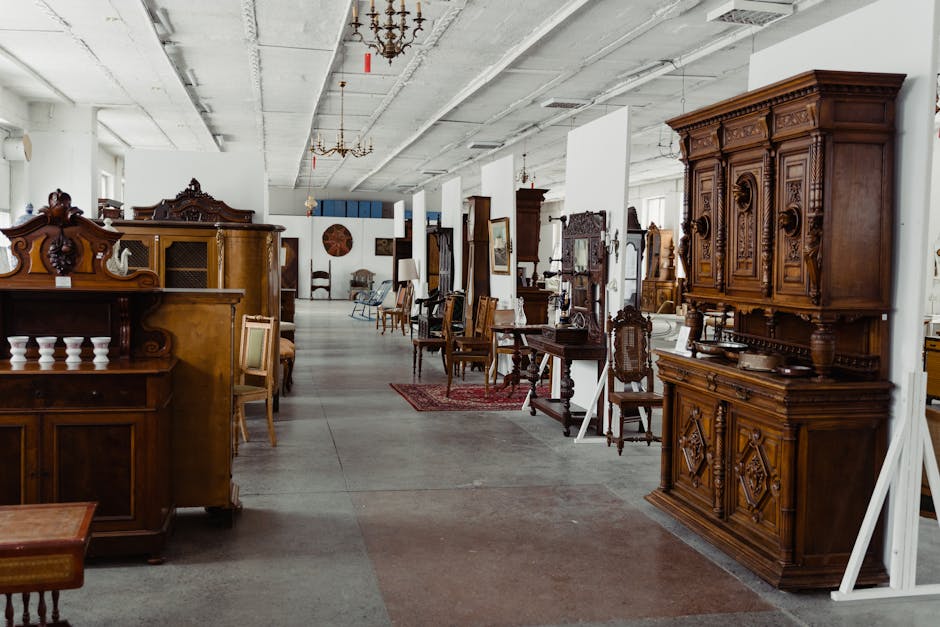
A house fire left one buy-it-for-life forum regular with a $1000 Ashley Furniture gift certificate, and the post about it reads like a confession. The card has sat for "way too long," the writer admits, depreciating in a household that otherwise fills itself with older solid-wood pieces and has little interest in "pressboard." The first plan was to spend it on wall art. Underneath the anecdote sits the question every Ashley shopper actually carries, and no brand verdict can settle it, because Ashley Furniture quality is a spread, wide enough that one label covers furniture your grandchildren could refinish and furniture that will not survive its second apartment move.
Stay in the loop.
Get the latest posts and exclusive content delivered to your inbox.
Join 52 readers. No spam. Unsubscribe in one click, anytime.
So this review answers a different question. Which Ashley categories can outlive the card itself, and which are engineered to die? Rank the store's offerings by dominant failure mode and repairability, then compare any purchase against what the credit is worth in cash, and a clean three-way rule falls out: spend, skip, or resell.
The verdict you actually need when the money is locked
Gift money feels free, and free-feeling money is the most dangerous kind. Shoppers who would never hand over $900 in cash for a particleboard bedroom set will happily burn a card on one. A store card is still an asset with a resale price, which means every purchase you consider is secretly a cash purchase, priced against what the card would fetch if you sold it outright.
That gives you a cleaner decision rule than any brand verdict:
A locked-credit purchase is rational only if the item is worth more to you than the cash you would get selling the card.
Two kinds of purchases clear that bar. The first is genuine durability: a solid-wood table that serves thirty years beats any resale floor. The second is genuine displacement: if you were going to buy a mattress or lamps with cash anyway and Ashley's version is at parity, redirecting committed money is fine. Everything else, the impulse dining set, the "might as well" recliner, fails the rule even though the spending feels painless.
There is also a clock. Federal law keeps the funds valid for years, covered in detail below, but inflation, store churn, and forgotten balances erode a card's real value while it waits. The audit below is designed to be finished in one visit.
How one store spans three quality tiers
Ashley Furniture Industries consistently ranks among the largest furniture manufacturers in the world, a scale visible in Ashley's own company profile. Companies at that scale do not make one product at one quality level. They run parallel lines at once: entry price points engineered backward from a cost target, mid-tier lines with mixed construction, and a top tier built for the showroom's front row. The same brand badge sits on all three.
This is why every "is Ashley Furniture good quality" verdict you have read is half right by accident. The reviewer describing a sagging sofa and the owner praising a decade-old dining table are both telling the truth about different SKUs. When a manufacturer spans the whole price ladder, brand-level judgment stops carrying information, and the unit of analysis drops to the construction line.
For a durability buyer, that is good news. A store with three tiers is a store where at least one tier was built to a real standard, and the lower tiers follow predictable, inspectable shortcuts. You do not need Ashley's internal line names. You need to recognize the shortcuts.
Ashley Furniture quality tiers, ranked by how they fail

The table below is the core of the audit. Each tier is mapped to its dominant failure mode, whether that failure can be repaired at a sane price, and the verdict for locked credit.
| Tier | Typical categories | How it dies | Repairable? | Verdict |
|---|---|---|---|---|
| Solid-wood case goods | Dining tables, stools, some nightstands, benches | Loose joints, worn finish | Yes, re-glue and refinish | Spend |
| Sprung, serviceable upholstery | Mid and upper sofas with spring units and replaceable cushions | Cushion cores soften first, fabric wears second | Yes, if the frame is sound | Spend selectively |
| Quality veneer over solid core | Some headboards, bookcases | Edge chips, veneer wear | Partially | Conditional |
| Foam-only seating | Entry sofas, futons, some accent chairs | Foam pancakes under daily use | No, cores are glued in | Skip |
| Particleboard and MDF cam-lock kits | RTA dressers, TV stands, budget desks, bookcases | Cam bores strip, panels swell, shelves sag | No, repair exceeds replacement | Skip |
The bottom two tiers drive the store's bad reputation, and the mechanism matters more than the label. Much of Ashley's entry and mid-tier case goods are particleboard or MDF panels joined with cam-lock fittings, the round metal discs you see on flat-pack furniture. The joint holds until the bore strips out of the crumbly panel, and then it never holds again; no screw is long enough and no glue grips powdered board. Add moisture and engineered panels swell permanently, one of the gaps between solid wood versus MDF that no repair closes. The solid wood versus particleboard divide is the single biggest lifespan predictor in the store, and failure on the wrong side of it means the haul-away is the intended end of life.
The top of the store is real. Ashley Furniture solid wood pieces exist, especially in dining, and there the brand name is nearly irrelevant: joint type, panel thickness, and finish quality decide whether the piece clears a decades bar. Dovetailed drawers, thick tops, visible end grain. Those are the specs that matter, and the checklist below shows how to verify them with your hands.
So "how long does Ashley Furniture last" has no single answer. Inspected solid-wood and sprung pieces can serve for decades. Cam-lock kits commonly give three to seven years before a move or a spill ends them, and foam-only seating can flatten within a few years of daily use. The lifespans barely overlap. That is the whole point of ranking by failure mode.
Five failure points to inspect in the showroom

Ten minutes, your hands, and a phone flashlight will sort any SKU into the right tier. No salesperson required.
Case goods, from the joints out
1. Cam-lock bores and joinery. Open a drawer or flip the piece and look for recessed metal discs and exposed bores. Their presence alone announces the tier. On genuine wood pieces, hunt for real joinery instead: dovetailed drawer corners, corner blocks under table tops, screws into pilot holes. Staples and cams mean engineered board; visible joinery means the piece was assembled to stay assembled.
2. Panel material and end grain. Learning how to tell particleboard from solid wood takes minutes. Real wood shows end grain on short edges and grain that wraps continuously over corners; laminate shows repeating identical grain (it is a photograph of wood) and a seam of edge banding where the foil wraps the board. A guide to tell real wood from veneer covers the tells in depth, but the fastest showroom test is weight and edge feel: solid wood is heavy with crisp edges, engineered board is light for its size with soft or banded edges.
Upholstery, from the frame up
3. Frame material and stapling. Ashley Furniture sofa frame material appears on spec tags more often than salespeople volunteer it. Across sofa frame construction types, you want kiln-dried hardwood joined with dowels, corner blocks, and screws. A good sofa frame construction guide covers the joinery details, but the showroom version is simple: stapled MDF frames are the hidden killer of good-looking sofas, because when the frame goes, every other repair is pointless.
4. Suspension type. Lift a cushion and look underneath. Sinuous springs, the continuous S-shaped wires, are the modern standard; eight-way hand-tied is the premium old standard. Sofa spring gauge meaning is simple once explained: gauge is wire thickness, so lower numbers mean heavier wire, with roughly 8-gauge commonly considered robust and thin 11-plus-gauge wire a cost cut. The spring unit also matters for serviceability, because springs are what let cushions be maintained rather than structural.
5. Cushion serviceability and legs. Unzip a seat cover. If the foam core pulls out, you own a maintainable sofa, since cores can be replaced for a fraction of a new unit. If the cover is sewn shut or the foam is glued to a platform, the seat is a countdown timer. A primer on foam density ratings is worth two minutes; the rule of thumb is that higher-density cores keep their shape for years while low-density foam feels great in the showroom and pancakes at home. Finish with the legs: bolted legs threading into metal or solid-wood inserts survive moves, while legs stapled or screwed into particleboard rip out the first time the piece is dragged.
How to spend a $1000 Ashley gift card
The question of what to buy at Ashley Furniture with a gift card comes down to tiers, not items. A sample allocation weighted toward the survivable ones:
| Amount | Target | Why |
|---|---|---|
| $500 to $600 | One solid-wood dining table, chest, or stool set passing checks 1 and 2 | The anchor purchase, the only tier with real decades potential |
| $250 to $300 | One upholstered chair or ottoman passing checks 3 through 5 | Sprung and serviceable beats big and disposable |
| $100 to $150 | The smallest solid-wood item in the store | Maximum durability density |
| Remainder | Lamps, art, mirrors, or nothing | Zero failure risk, no joints to strip |
The third line is the contrarian play, and it deserves a defense. The instinct with a $1000 card is to buy one impressive thing. The math says the opposite: value per dollar concentrates in small solid-wood pieces, because the failure-prone components, cam joints, suspension, foam, shrink or vanish entirely. Three solid nightstands you actually use will outearn one compromised $999 sectional every time. If nothing large passes inspection, spending the whole card on the smallest qualifying pieces is not defeat. It is the best trade the store offers.
One caution before checkout: the Ashley Furniture warranty is a limited one, and like most furniture warranties it tends to exclude the parts that fail first, cushion cores, fabric wear, and joints loosened by normal use. Read the actual warranty card on the floor, not after a delivery problem. Plan as if coverage is zero, because the top tiers will not need it and the bottom tiers will not be helped by it.
When reselling the card beats buying anything
Can you sell an Ashley Furniture gift card? Yes, and that fact reframes the entire audit.
The federal floor. Under the Credit CARD Act, funds on a store gift card must remain valid for at least five years from when they were loaded. Your certificate will not evaporate tomorrow, but the five-year clock puts a real boundary on "I'll deal with it later."
The state variable. Whether a card can be redeemed for cash depends on state law. Some states require merchants to cash out small remaining balances, and a few are more generous; current gift card laws by state track the map. Two minutes of checking can raise your floor.
The resale market. Marketplaces buy unwanted store credit at a discount. Payouts vary by brand and demand, but offers commonly land somewhere around 60 to 85 percent of face value, and live gift card resale payouts are worth comparing before accepting a first quote.
Now the break-even rule. Call the resale floor 70 percent for round numbers, so a $1000 card is realistically about $700 in cash. The $899 cam-lock bedroom set is not free with your card; it costs you $700 of real money for furniture with a five-year life, a terrible trade. The solid-wood table you would happily use for twenty years costs the same $700 and functions as a bargain, provided you would have paid that much elsewhere. When nothing in the store clears that bar for you, the correct purchase is none. Sell the card and put the cash toward furniture that lasts.
What Ashley will never be, and where cash should go
An honest ceiling for this audit: at its best, Ashley Furniture quality is retailer-grade quality. Dedicated buy it for life furniture brands and builders, the century-old upholstery houses that still rebuild their own frames, the solid-wood workshops that sell replacement parts for decades-old models, compete on something Ashley does not offer: repairability infrastructure. A bespoke maker assumes the piece will be repaired and stocks accordingly. A mass manufacturer assumes it will be replaced.
So the ranking above is really two claims. If your money is locked to Ashley, the top tier can beat the resale floor and is worth spending on. If your money is cash, it belongs where durability is the business model, and the strongest version is often the used market: estate-sale solid-wood dressers, vintage dining tables, reupholsterable sprung sofas from eras when hand-tied suspension was standard. That is what the original poster was already doing house-wide, and it is why the card felt like a trap. The audit is damage control for locked credit, and it should only ever be read as that.
The decision rule on one card
Screenshot this and use it from the parking lot:
- Spend when the item passes the five checks (real joinery or solid panels, hardwood frame, spring unit, removable cores, bolted legs) and you would keep it at the card's cash value or above.
- Skip when you can see cam discs, banded edges, stapled frames, or sewn-shut cushions, no matter how the staged room looks. Unrepairable construction loses money even when the money felt free.
- Sell when nothing passes or your honest need is low. Convert while the balance is fresh, because the resale floor, like the five-year validity window, only erodes.
And the poster's wall-art instinct? Defensible in one narrow way. Art and lamps cannot fail a durability audit because they have no joints to strip and no foam to flatten. If the art is genuinely wanted, it clears the floor. If it is filler bought to "use up" the card, selling beats decorating.
The whole audit compresses to one sentence. With locked credit you are never choosing between Ashley and nothing; the real menu has three items, Ashley's survivable tier, its disposable tier, and roughly $700 in cash, and only one of those is always a good deal.
Stay in the loop.
Get the latest posts and exclusive content delivered to your inbox.
Join 52 readers. No spam. Unsubscribe in one click, anytime.
About the author
Cal Whitmore
Durability Testing Lead
Cal has spent a decade in product testing, from tool labs to outdoor gear reviews, and treats every claim of a lifetime warranty as a hypothesis to break. He writes about the materials, joinery, and failure modes that actually decide whether gear lasts twenty years or two.
Related Posts
How to Judge a Buy It for Life Bed Frame With No Reviews
A buy it for life bed frame guide built on the four ways beds die, plus a photo rubric to grade any unreviewed bed like the RH Toulouse before you pay.

Buy It for Life Sunglasses Ranked by UV Survival
Buy it for life sunglasses ranked by UV protection that lasts a decade, covering lens substrates, hinge fatigue, and the wraparound versus oversized verdict.

Buy It for Life Dinnerware Ranked by How It Dies
Buy it for life dinnerware ranked by how it dies, from Vitrelle shards to pattern discontinuation, graded on chips, thermal shock, and set economics.