Buy It for Life Briefcases Ranked by What Fails First
We rank buy it for life briefcases by what fails first, grading Bleu de Chauffe against Saddleback, Filson, Tusting, and Frank Clegg for 20-year commutes.
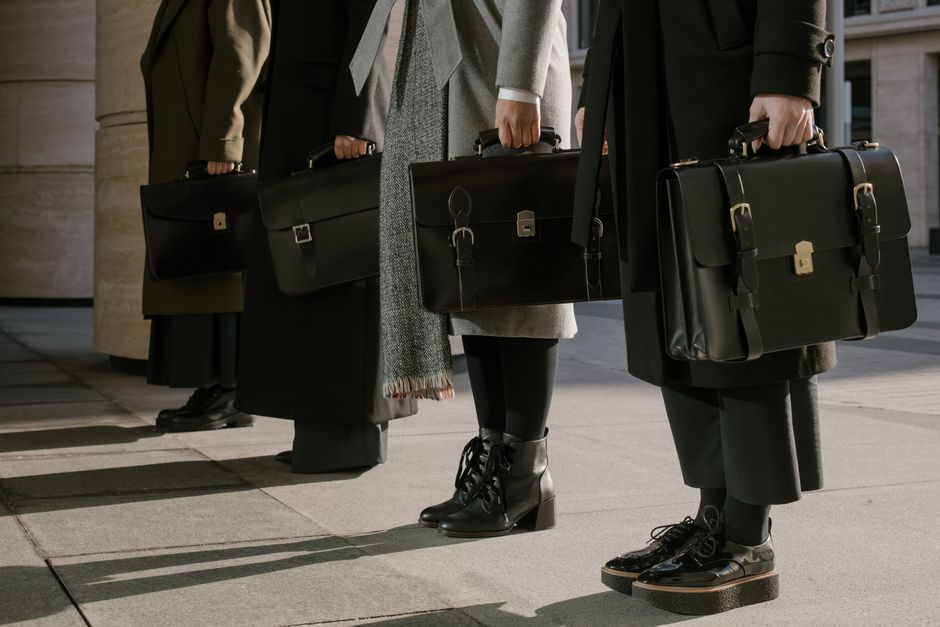
Somewhere in your closet sits a bag that died at one specific spot. The handle tore loose from its posts, a strap ring bent open, or the flap gave up staying shut, all while the leather still looked presentable. What breaks first on a leather briefcase is rarely the leather, yet most buy it for life briefcase coverage grades thickness and stitching romance while ignoring the parts that actually fail. A commuting briefcase dies on a predictable set of five. The set runs handle-post attachment, strap hardware under laptop load, structural collapse in soft bodies, flap and latch wear, and finally the moment near year ten when you learn whether the maker still answers email.
Stay in the loop.
Get the latest posts and exclusive content delivered to your inbox.
Join 52 readers. No spam. Unsubscribe in one click, anytime.
This guide grades five workshop brands against those five failure points, teaches a store-floor inspection you can run in five minutes, and closes with cost-per-decade math that styling reviews never attempt. Bleu de Chauffe is the reference case, measured against Saddleback, Filson, Tusting, and Frank Clegg.
Why briefcases fail differently from every other bag you carry
Most bag durability advice is smuggled over from duffels, totes, and backpacks, and little of it survives contact with a briefcase. Those bags spread load across wide panels and two straps. A briefcase funnels everything, typically 5 to 8 pounds once a laptop, charger, and papers are aboard, into one handle or one narrow strap, then asks you to grab, swing, and set it down hundreds of times a year. Every lift runs the same load path: strap, ring, leather tab, body. The path is only as strong as its thinnest fitting and its most reused stitch.
That concentrated load path predicts where failures land, and what owners report tends to match. In long-running owner threads, the recurring failure stories cluster around handles and hardware, with the body leather often outlasting the fittings attached to it. Nobody has tallied a formal survey, and none is needed: the load path concentrates stress on the same few fittings for every commuter, which is why the stories rhyme. Judged as a system of attachments, a BIFL business bag is a chain, and shopping for a durable leather briefcase is really about finding the strongest links, not the prettiest hide.
The five failure points that decide a 20-year briefcase
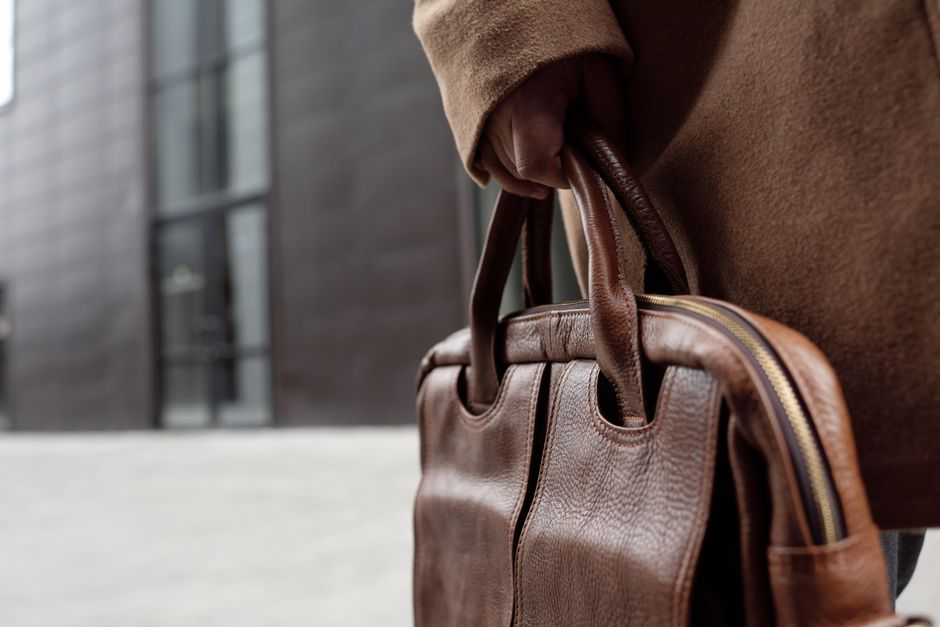
Picture each failure on a timeline before you buy, because every one of them announces itself years in advance.
| Failure point | Year 3 | Year 10 | Year 20 |
|---|---|---|---|
| Handle-post attachment | Slight creak and flex under a full grab | Stitching stretched, leather tearing at the post | Handle re-stitched or pulled free |
| Strap rings and hardware | Plating worn off cheap fittings | Thin rings elongated into ovals, tabs bending | Solid brass still serviceable; zinc alloy snapped |
| Base and body structure | Soft slouch, corners curling | Base sags, contents poke the walls | Holds shape only if base and panels were reinforced |
| Flap and latch | Turn-key stiffens, catches loosen | Strap holes stretched, buckles misaligned | Flap warped, latch replaced or worked around |
| The maker's repair promise | Policy intact, workshop responsive | Does anyone still service your model, and at what cost | A supported heirloom or an orphaned liability |
Two of these run against intuition. First, hardware gauge predicts strap survival under laptop weight better than leather grade does. A thick ring of solid brass carries load and shrugs off flex for decades, while a thin plated zinc fitting can bend, pit, and eventually shear years before the strap leather shows its first crack. The gap between brass and zinc hardware is metallurgy, not branding, and you can often feel it as density in the hand before you can name it.
Second, structure beats hide thickness in soft bags. An unlined, unstructured briefcase can lose shape and effective load capacity under a daily laptop even when the leather itself is excellent, because the load hangs from whatever reinforcement the maker built in, whether a base stiffener, a full-width back panel, or a lined handle mount. Two bags cut from identical hides diverge sharply by year eight if one has that scaffolding and the other does not.
A five-minute inspection for any buy it for life briefcase
These tests need your hands, a laptop for weight, and five minutes. Run them in a store, or against zoomed product photos plus the maker's spec sheet.
- Load and lift. Put your laptop inside, grip the handle exactly as you would at a train door, and lift sharply ten times. Watch the handle base. Pass: zero visible movement at the posts. Fail: leather dimpling, a gap opening, or stitching visibly stretching.
- Audit the hardware. Rings should feel dense for their size and rotate freely. Compare ring thickness to strap width, because a thin ring in a wide strap concentrates leverage exactly where failures start. If the specs do not say solid brass, assume plated alloy and grade accordingly.
- Flex the base. Press the center of the empty bag down against your hand. A reinforced base resists folding flat; in photos, look for a stiffener, feet, or a double-layer bottom.
- Work the latch twenty times. Feel for grit, misalignment, or a catch that only engages at one angle. Check that strap holes sit where the flap actually rests, not where it photographs well.
- Read the repair page like a contract. Note who pays shipping, what counts as normal wear, and whether the model line has persisted. The section below stress-tests those promises in full.
Bleu de Chauffe graded against four rivals on the failure set

Style coverage tends to treat Bleu de Chauffe as a look, and Heddels' business bag guide is a fair sample of the week-one tour genre. Durability needs a different table. Grades below are ours, applied to the five failure points, and each note flags what is verifiable from maker-published specs versus what is owner-reported.
| Brand | Handle posts | Hardware | Structure | Flap and latch | Repair path |
|---|---|---|---|---|---|
| Bleu de Chauffe | A | A | B | B+ | B |
| Saddleback | A | A | A | B | B+ |
| Filson | B+ | B+ | A | B | A |
| Tusting | A | A | A | A | B |
| Frank Clegg | A | A | A | A | B+ |
Verifiable from the maker's own materials: bags are cut and sewn in a workshop in Aveyron, southern France, largely from vegetable-tanned leather, and the Bleu de Chauffe catalog generally specifies solid brass fittings across its business lines.
Saddleback vs Bleu de Chauffe
Saddleback vs Bleu de Chauffe is the heavyweight question in this briefcase class. Saddleback builds thick full-grain hides into a famously heavy, structured case and backs it with a heavily marketed century warranty; posts and rings are effectively overengineered, and structure grades at the top of the set. The cost is literal weight, often a couple of pounds over a comparable Bleu de Chauffe, plus a stiff flap-and-latch system some owners love and others merely tolerate. Bleu de Chauffe wins on hardware-to-weight ratio and on aging: French vegetable-tanned hides with brass fittings put its construction in the top tier among these leather briefcase brands, while its lighter, style-forward business silhouettes give up some base and panel structure, which is exactly where the B comes from.
Filson and the textile aging curve
Filson is the honest outlier. Verifiable: waxed-twill bodies with bridle leather trim from a Seattle outfitter with more than a century of history. Owner-reported: briefcases in daily commuter service for decades, and a repair operation that routinely services old bags, which earns the only A for repair path. The caveat for a 20-year horizon is that textile ages by a different curve than leather. Twill abrades, fades, and thins at corners while the leather trim keeps carrying the structural load, so a 20-year-old Filson looks and behaves differently than a 20-year-old all-leather rival rather than worse. That trade is a style call with durability implications, and the grade reflects the different pattern, not a defect.
Tusting and Frank Clegg, the full-leather flank
Tusting, the Northamptonshire maker, earns its straight-A physical row through construction logic rather than hide thickness. Verifiable from the maker's materials: full-leather cases from a long-standing English workshop. Inferred, but mechanically sound: the year-10 and year-20 implications, because English case-making builds bases and panels to carry load and sizes fittings like tack hardware rather than fashion hardware, which is precisely what the structure and hardware rows reward. Its B on repair path reflects geography, not willingness: a small English workshop can service its own work conscientiously while sitting an ocean and a customs form away from most commuters, so the grade prices shipping friction.
Frank Clegg's line comes out of a small American workshop and earns its top physical grades the direct way: attachments sized beyond what twenty years of grabbing can realistically break. Its year-ten risk is turnover, not toughness, because a workshop at that scale can excel at servicing current models while discontinued patterns tend to drift out of the parts inventory, which is why the repair path reads B+ instead of A despite build quality that matches anyone in the table.
Cost per decade, the number style guides never run
Buy it for life briefcase math is arithmetic wearing a moral halo, so run it honestly. The method is plain cost per use: everything you will spend over 20 years, divided by the decades or carries you receive. The numbers below are round illustrative assumptions, not quotes; plug in today's prices and the structure of the conclusion still holds.
The assumptions, stated plainly
| Scenario, assumptions not quotes | Purchase | Repairs and replacements over 20 years | Total | Per decade |
|---|---|---|---|---|
| Cheap $180 bag, replaced every 4 years | $180 | Four more bags, $720 | $900 | $450 |
| Cheap $180 bag, replaced every 6 years | $180 | Three more bags, $540 | $720 | $360 |
| Bleu de Chauffe at $700, one handle re-stitch plus shipping at $130 | $700 | $130 | $830 | $415 |
| Saddleback at $750, zero paid repairs assumed | $750 | $0 | $750 | $375 |
| Premium $900 bag, repair uneconomical, replaced at year 12 | $900 | One full replacement, $900 | $1,800 | $900 |
What the math reorders
Three results matter. First, a mid-priced workshop bag with a functioning repair path beats the realistic cheap-replacement cycle, and it demolishes the premium bag that cannot be economically repaired, the scenario nobody prices until a handle fails at year 12. Second, the honest wrinkle: if your cheap bags genuinely last six years, the budget path nearly ties, and your tiebreakers become aging quality, waste, and whether you want one object or five. Third, the winner is sensitive to repair friction. Saddleback's $375 per decade assumes zero paid repairs across two decades, plausible for its build but not guaranteed, while the Bleu de Chauffe figure already contains a real refurbishment with shipping. In carry terms, assume 230 commute days a year for 20 years, roughly 4,600 carries, so the $830 scenario costs about 18 cents per carry. Eighteen cents per carry is the entire case for buying well once, and it is what separates a value from something merely cheap.
Repair promises at year ten
A lifetime warranty briefcase is a promise about the maker's future, not your bag's present. Four questions do most of the work: Is coverage transferable? Who pays shipping, both ways? What is excluded as normal wear? Does the workshop still service models it no longer sells?
Saddleback markets its century warranty hard, and it is genuinely transferable, but Saddleback's published warranty is a contract against defects, not a free refurbishment program. A handle re-stitched after twelve years of daily grabbing is wear by any reading, and wear is commonly billable or excluded, with shipping typically on you. The promise retains real value; it is simply not the free-forever service some buyers imagine, and the math above already prices that gap.
Filson runs a genuine repair operation, and Filson's customer care page is where to confirm current terms and queues; owner reports describe both good outcomes and waits. Bleu de Chauffe publishes repair and care guidance from the Aveyron workshop, and for European owners the friction is low; for US owners, transatlantic shipping and customs are the real year-ten cost, so get a written quote before shipping anything. Tusting and Frank Clegg come from small-workshop cultures that tend to service their own work, but small also means limited capacity, so verify rather than assume.
The cheapest test of any repair promise costs nothing: email the maker before buying with one specific scenario, such as what a handle re-stitch on this model would cost in ten years. A workshop that answers that email well will probably answer the year-ten one too.
Which bag earns the 20-year commute
Grade the bag against your routine, not the brand's myth. The most durable briefcase for a daily laptop commute is whichever one scores on the failure points your specific commute punishes.
- Heavy laptop loads, 16 inches and up with charger and files. Structure decides. Saddleback, Frank Clegg, and Tusting carry this best; within Bleu de Chauffe, choose its structured business cases over the soft, slim models, or accept the structure trade knowingly.
- Transit commuters, trains and platforms. Your hand is on that handle thousands of times a year, so handle posts and hardware outrank everything. Riveted, reinforced posts and solid brass rings are non-negotiable, and this is where the cheap replacement cycle bleeds money fastest.
- Car commuters with short carries. The weight that makes Saddleback feel bombproof in a station is wasted in a parking lot. Bleu de Chauffe and Filson shine here: lighter, styled for an office, still built on repairable hardware.
- Style-first buyers who still want 20 years. This is Bleu de Chauffe's home turf, and the honest durability verdict is top-tier construction, top-tier hardware, real trade-offs in structure on soft models, and a repair path that works best if you live near the workshop's side of the Atlantic.
Where Bleu de Chauffe wins: cost per decade with a functioning repair ecosystem, brass hardware on vegetable-tanned leather, and carry weight your shoulder thanks you for. Where it loses: unstructured models under serious laptop loads, and repair shipping if you live far from France. Grade the five failure points yourself, in the store, in five minutes. The leather will outlive the fittings either way; buy the bag whose fittings deserve it.
Stay in the loop.
Get the latest posts and exclusive content delivered to your inbox.
Join 52 readers. No spam. Unsubscribe in one click, anytime.
About the author
Reggie Calloway
Heritage and Craft Editor
Reggie writes about the makers behind lifetime gear, from third-generation tanneries to family-owned foundries. A former magazine editor, he profiles the brands, materials, and craftsmanship that justify keeping a tool or a jacket for the next generation.
Related Posts

5 Buy It for Life Travel Jewelry Cases Ranked by Materials
We rank five buy it for life travel jewelry cases by metallurgy, anti-tarnish lining, and stitching, the criteria that predict decade-long durability.

BAGSMART BLAST X Review, Graded on What Dies by Year Five
Our BAGSMART BLAST X review grades the parts that die by year five, then runs the cost-per-trip math against Osprey, Peak Design, and GORUCK.

Durable Sling Bags Ranked by the Parts That Fail First
Durable sling bags ranked by what fails first: strap junctions, adjusters, buckles, and zippers, with a Bellroy Sling Lite Mini vs budget verdict.