5 Buy It for Life Travel Jewelry Cases Ranked by Materials
We rank five buy it for life travel jewelry cases by metallurgy, anti-tarnish lining, and stitching, the criteria that predict decade-long durability.

Every travel jewelry case roundup scores on pocket count, aesthetics, and price. None of that predicts whether your jewelry arrives untarnished and untangled, or whether the case survives more than a handful of trips. The features that photograph well are essentially uncorrelated with the features that matter in a suitcase. A buy it for life travel jewelry case is defined by four material properties that determine whether it fails in year three: hardware metallurgy, zipper type, anti-tarnish lining chemistry, and stress-point stitch reinforcement.
Stay in the loop.
Get the latest posts and exclusive content delivered to your inbox.
Join 25 readers. No spam. Unsubscribe in one click, anytime.
This guide ranks five representative cases against that rubric, names the specific chemical and mechanical failure modes behind each score, and gives you a portable evaluation skill you can apply to any product page in under two minutes.
Why Standard Rankings Miss Every Real Failure Mode
The typical review celebrates pockets, leather-look exteriors, and compact form factors. These tell you nothing about what actually breaks. Real jewelry case failures follow predictable patterns:
- Corroding clasps. Plated zinc components oxidize in travel humidity, producing greenish-white crust and mechanical stiffness.
- Seized zippers. Coil zippers, the most common type in mid-range cases, bind when contaminated by skin oils, lotion residue, and salt.
- Delaminating synthetics. PU-coated faux leather separates into a sticky, flaking film after repeated heat and humidity cycling.
- Slack elastic. Cord loops in roll-style cases lose recovery tension after repeated stretching, allowing chains to shift and tangle.
- Tarnished silver. The lining, not the shell, determines whether sulfur compounds and moisture blacken your jewelry in transit.
Every one of these traces back to a specific material choice the manufacturer made and the reviewer ignored. The result is a market full of cases that look excellent in photos and fail within two or three years of regular travel.
The Four Durability Criteria That Actually Predict Longevity
Each criterion targets a distinct, verifiable failure mode.
| Criterion | What It Tests | Failure Mode Prevented |
|---|---|---|
| Hardware metallurgy | Clasp, snap, zipper pull material | Corrosion, mechanical stiffening |
| Zipper type | Coil vs molded-tooth | Zipper seizure under contamination |
| Anti-tarnish lining | Lining chemistry and replaceability | Silver tarnish from sulfur and moisture |
| Stress-point stitching | Stitch pattern at hinge and clasp | Seam tear-out under load |
A case that scores well on all four will protect fine jewelry and survive years of travel. One that scores well on only two will fail at its weakest link. Pocket count and aesthetics tell you nothing about any of these properties.
Hardware Metallurgy and Zipper Construction
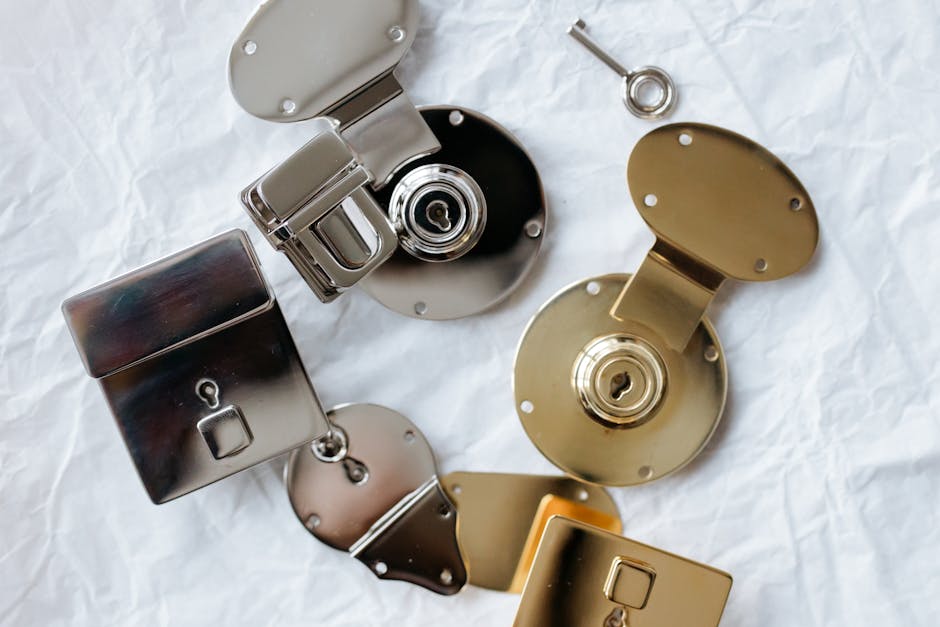
The metals in clasps, snaps, D-rings, and zipper pulls dictate how the case ages under humidity, salt, and skin contact.
Zinc alloy hardware is the default in budget and mid-range cases because it is cheap to cast and plate. Zinc corrodes readily in humid environments, and plated zinc shows accelerated oxidation under humidity testing. What begins as cosmetic pitting progresses to mechanical stiffness in clasps and snaps within a few years of regular travel.
Solid brass hardware behaves differently. Brass develops a patina, a surface oxidation layer that is self-limiting. Unlike zinc corrosion, brass patina does not penetrate structurally or produce flaking residue. In saltwater hardware comparisons, brass resists corrosion far longer than zinc equivalents, though stainless steel outperforms both in marine conditions.
Stainless steel offers the best corrosion resistance of the three. It does not patina or pit under normal travel conditions. For a buy it for life travel jewelry case, stainless or solid brass hardware is non-negotiable.
Coil Versus Molded-Tooth Zippers
The zipper is often the first component to fail, and the type matters more than the brand.
Coil zippers, made from continuous spiral polymer thread, dominate mid-range cases because they are flexible and cheap. They are also the most failure-prone under contamination. The same contamination physics that seizes zippers on tents and cold-weather gear applies inside a jewelry case. Skin oils, lotion residue, and salt accumulate in the coil gap and cause the slider to bind, eventually seizing the track entirely.
Molded-tooth zippers, whether plastic or metal, have discrete interlocking elements that shed contamination more effectively. The same contamination mechanism drives zipper failures in high-exposure gear, where salt and body oil corrode and bind assemblies over repeated use. For durability, choose molded-tooth metal zippers and avoid coil zippers in any case seeing heavy use.
Anti-Tarnish Lining and Silver Protection
This is the criterion no major review publication tests, yet it has the most direct impact on your jewelry.
Silver tarnish is a chemical reaction. Atmospheric sulfur compounds, primarily hydrogen sulfide, react with silver to form silver sulfide, the black film on tarnished pieces. Humidity accelerates this reaction dramatically, which is why jewelry tarnishes faster in a humid suitcase than in a dry drawer.
The outer shell material is largely irrelevant to tarnish. What matters is the lining fabric, because it sits in direct contact with your jewelry.
Anti-tarnish linings intercept sulfur before it reaches your silver. The two common approaches are carbon-impregnated cloth, where activated carbon absorbs sulfur compounds from the air inside the case, and sulfur-absorbing chemical treatments, which neutralize reactive gases. Carbon-treated silver cloth creates a barrier that traps sulfur and prevents it from contacting metal surfaces.
Both approaches share a critical limitation: they exhaust over time. Carbon cloth saturates, chemical treatments deplete, and washing accelerates degradation. A lining that protected silver perfectly in year one may be inert by year three. This is why cases with replaceable inserts have a significantly longer functional protective lifespan, and why practical tarnish prevention strategies should account for lining replacement schedules.
Leather Grade, Stitching, and Elastic Recovery

The exterior shell and structural seams determine whether the case holds together physically.
Full-Grain Leather Versus PU-Coated Synthetic
Full-grain leather develops surface patina without structural degradation. The fiber structure remains intact for decades if the leather is conditioned periodically.
PU-coated synthetic leather consists of a fabric backing coated with a polyurethane film. This film delaminates over time, separating into a sticky, flaking residue. The process is irreversible and can begin within a few years of regular heat and humidity cycling. Bonded leather, made from shredded scraps bonded with adhesive, performs even worse.
Stitch Patterns and Thread
Bonded nylon thread offers high tensile strength and good abrasion resistance. Bonded polyester offers superior UV resistance and colorfastness with slightly lower initial strength. Both are acceptable. Cotton thread and cheap polyester are not.
The stitch pattern matters more than thread choice. The same load-distribution physics that holds for athletic and technical sewn goods applies here. Bar-tack and box-stitch reinforcement distributes force across a wider area than single straight stitches, significantly reducing tear-out at the highest-stress seams. Critical stress points include hinge folds, clasp and snap anchors, strap attachments, and zipper tape end stops. Any case using single straight stitching at these points will eventually tear out under repeated load.
Elastic Cord Degradation
Roll-style cases use elastic cord loops to hold rings, earrings, and chain ends. These loops lose recovery force after repeated cycling and heat exposure. Slack elastic is a leading cause of chain tangling during travel, because loose loops allow jewelry to shift and wrap around adjacent pieces. Cases with rigid snap or buckle closures avoid this failure mode entirely.
Five Buy It for Life Travel Jewelry Cases Ranked
Specific products cycle in and out of stock, but the underlying design patterns persist for years. Ranking by archetype gives you a durable shopping framework rather than a snapshot that goes stale when a manufacturer discontinues a colorway.
The following five archetypes dominate the market. Each is scored on a 1 to 5 scale across the four criteria.
| Archetype | Hardware | Zipper | Lining | Stitching | Total /20 |
|---|---|---|---|---|---|
| Heritage leather roll, brass hardware | 5 | 3 | 2 | 4 | 14 |
| Hard-shell clamshell, molded interior | 3 | 4 | 2 | 2 | 11 |
| Soft-sided organizer, anti-tarnish velvet | 2 | 2 | 4 | 2 | 10 |
| Modular soft case, replaceable inserts | 4 | 4 | 5 | 4 | 17 |
| PU leather folio, elastic slots | 1 | 2 | 1 | 2 | 6 |
Heritage leather roll (14/20). Construction markers: visible bar-tack stitching at the hinge fold, solid brass snaps with a dull gold tone, and a leather strap or tie closure instead of a zipper. The tradeoff is patina appeal over tarnish protection. Untreated suede or leather interiors provide no sulfur barrier, making this design ideal for gold and costume pieces but a poor choice for fine silver. Shopping heuristic: if the listing shows rolled leather with brass hardware and no dark lining fabric, expect gold-friendly storage with zero silver protection.
Hard-shell clamshell (11/20). Construction markers: rigid molded shell, molded-tooth zipper with discrete visible teeth, and pre-cut foam or plush compartments bonded into the lid. The tradeoff is impact protection at the cost of hardware quality, because manufacturers pair hard shells with zinc alloy hinges and clasps to offset molding costs. The zinc here is heavier-gauge structural casting rather than thin stamped plating, so it corrodes more slowly and earns a 3 for hardware instead of the 1 given to the folio below. Shopping heuristic: squeeze the clasps between your fingers. Lightweight, hollow-feeling hardware with a shiny chrome finish signals zinc plating that will corrode.
Soft-sided anti-tarnish organizer (10/20). Construction markers: dark charcoal or black velvet interior, padded soft-shell exterior with coil zipper, and elasticized pocket dividers. The tradeoff is genuine but non-replaceable tarnish protection paired with weak mechanicals. The treated lining often loses effectiveness after two to three years of regular use, and the coil zipper and zinc hardware fail on the same timeline. Shopping heuristic: look for "anti-tarnish" in the lining description, then confirm whether the insert pops out for replacement. If it does not, the case has a hard expiration date.
Modular soft case with replaceable inserts (17/20). Construction markers: zippered soft shell with separate removable lining panels, molded-tooth zipper, and brass or steel hardware with a substantial, weighted feel. The tradeoff is scarcity. Few manufacturers tool for replaceable inserts because the supply chain is more complex, making this archetype the hardest to find on store shelves but the only design that permanently solves lining exhaustion. Shopping heuristic: search for "replaceable lining jewelry case" or "interchangeable insert organizer" and verify that replacement inserts are sold separately, not just claimed to exist.
PU leather folio (6/20). Construction markers: glossy or pebbled exterior that feels smooth and plasticky, elastic cord loop slots for rings and earrings, and a coil zipper or magnetic snap. Every failure mode converges in this design: PU delamination, zinc corrosion, elastic slackening, and zero tarnish protection. Shopping heuristic: if the listing emphasizes "vegan leather" or "PU leather" with elastic slots and no anti-tarnish lining, the case fails all four criteria regardless of brand reputation or price point.
A Two-Minute Checklist for Evaluating Any Case
Apply this inspection routine to any jewelry case in under two minutes.
- Test hardware with a magnet. Magnetic clasps indicate steel or iron-based alloys. Non-magnetic hardware is brass, zinc, or another non-ferrous alloy. Look for "solid brass" or "stainless steel" labeling.
- Inspect zipper teeth. Discrete individual teeth indicate molded-tooth construction. A smooth continuous spiral indicates a coil zipper. Choose molded-tooth.
- Check lining treatment. Anti-tarnish lining is typically dark (black or charcoal) and may carry an "anti-tarnish" label. Light-colored velvet and suede offer no sulfur protection. Ask whether the insert is replaceable.
- Examine stitch anchors. Dense zigzag or rectangular stitch patterns at hinge folds and clasp attachment points indicate bar-tack reinforcement. Single straight stitches indicate cost-cutting.
- Flex the shell. PU leather feels plasticky and smooth. Full-grain leather feels fibrous and slightly irregular. Bonded leather feels cardboard-like and may show edge peeling.
This checklist works equally well on a luxury boutique case and a budget listing. Jewelry case hardware quality reveals itself in seconds once you know what to look for.
Maintenance, Replaceable Liners, and End-of-Life Signals
Even the best case requires maintenance to reach a decade of service.
Zipper care. Brush zipper teeth periodically with a soft toothbrush to remove lotion residue and skin oil. A drop of beeswax on molded-tooth zippers keeps the slider moving.
Leather conditioning. Full-grain leather cases benefit from occasional conditioning with a neutral leather balm to prevent cracking at hinge folds.
Liner replacement. Swap anti-tarnish inserts every two to three years, or sooner with frequent travel. Carbon-impregnated cloth is available by the yard from jewelry supply sources if the manufacturer does not offer official replacements.
Elastic inspection. Stretch each loop. If it does not snap back firmly, it has lost functional tension and will allow chains to tangle. Replace the elastic or switch to rigid closures.
End-of-Life Signals
These signs mean the case is no longer protecting your jewelry:
- Greenish-white crust on clasps or zipper pulls (zinc corrosion)
- Sticky or flaking exterior surface (PU delamination)
- Zipper that binds or separates after cleaning (tooth or slider wear)
- Silver emerging tarnished despite short storage periods (lining exhaustion)
- Visible stitch separation at hinge or clasp anchors (tear-out beginning)
A case showing any two of these is in functional decline. The best travel jewelry case for fine jewelry is built from materials chosen to resist specific chemical and mechanical stresses, evaluated against a rubric that prioritizes metallurgy, zipper type, lining chemistry, and stitch reinforcement over aesthetics. Apply that rubric and you will never need another jewelry case roundup.
Stay in the loop.
Get the latest posts and exclusive content delivered to your inbox.
Join 25 readers. No spam. Unsubscribe in one click, anytime.
About the author
Reggie Calloway
Heritage and Craft Editor
Reggie writes about the makers behind lifetime gear, from third-generation tanneries to family-owned foundries. A former magazine editor, he profiles the brands, materials, and craftsmanship that justify keeping a tool or a jacket for the next generation.
Related Posts

Durable Sling Bags Ranked by the Parts That Fail First
Durable sling bags ranked by what fails first: strap junctions, adjusters, buckles, and zippers, with a Bellroy Sling Lite Mini vs budget verdict.

Buy It for Life Tote Bags Ranked by Handle Load Path
Buy it for life tote bags ranked by handle load path and base wear, with interior dimensions sized for grocery runs and the repair policies that matter.
Helmet Bags Ranked by Whether They Survive to 2050
Helmet bags ranked by survival math: girth zipper, webbing tack, and twill rot. Learn which military surplus, repro, or fashion bag lasts decades.