Buy It For Life Duvet Fill Longevity Rankings
Buy it for life duvets ranked by fill longevity and moisture handling. Wool, down, and silk outlast synthetics and key construction details matter most.
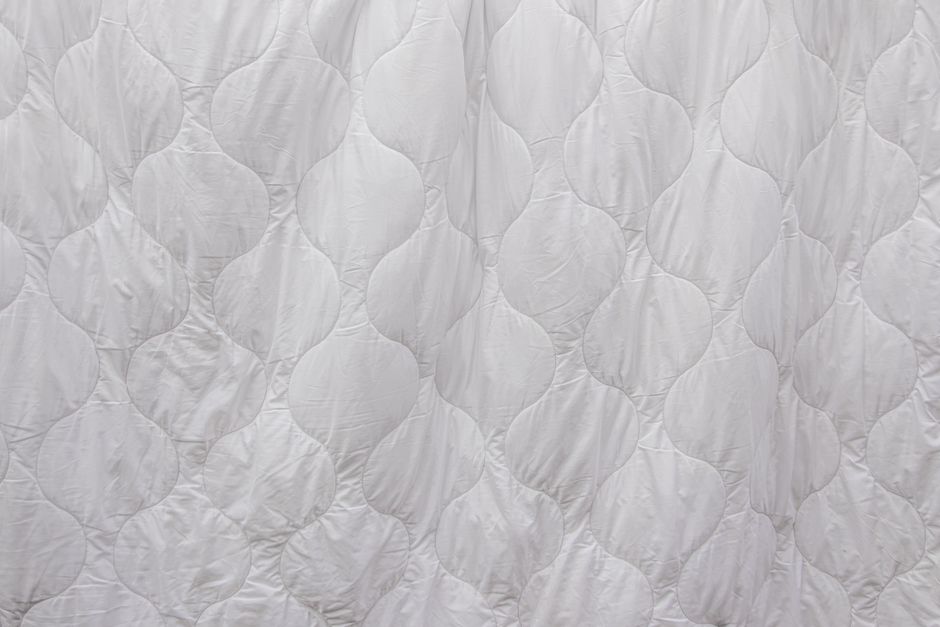
Your duvet may be trapping the moisture your body releases each night, and that trapped moisture slowly degrades the fill over time. Most shoppers looking for a buy it for life duvet focus entirely on thickness or warmth ratings. They ignore the hidden factor that most predictably shortens fill longevity: moisture management.
Stay in the loop.
Get the latest posts and exclusive content delivered to your inbox.
Join 25 readers. No spam. Unsubscribe in one click, anytime.
Every night, the average sleeper loses a substantial amount of body moisture through respiration and perspiration. This creates a highly humid microclimate between your body and the bedding. Research on the sleep microclimate shows that managing this humidity is critical for thermal comfort and overall sleep quality sleep microclimate humidity.
When a duvet traps this moisture instead of passing it through, the fill material degrades. The conventional tog rating (a thermal-resistance scale used in European bedding) and similar warmth rating systems completely ignore moisture management. Yet moisture handling is arguably the most predictive factor for long-term fill degradation and overheating complaints. Over years of use, moisture exposure breaks down fibers, collapses loft, and turns a fluffy comforter into a flat, heavy blanket. The differing standard moisture regain values across fiber types are one reason their long-term performance diverges so sharply.
How Moisture Destroys Synthetic Fill
Polyester fiberfill fails through a predictable chain of physical changes. Each night, the body releases significant moisture through breathing and skin. That vapor carries body heat into the fill. The combination of heat and moisture softens the polymer chains inside each synthetic fiber, and under your body weight compressing the fill, the softened fibers take a shape they cannot spring back from. Textile scientists call this compression set.
Once compression set takes hold, the loft collapses permanently. The three-dimensional structure that once trapped thousands of tiny air pockets flattens into a dense mat. With fewer air pockets, the duvet insulates poorly and traps more moisture against your skin because it can no longer breathe. That additional moisture accelerates the degradation in a feedback loop.
A typical budget polyester comforter follows a predictable timeline. In typical bedroom use, lightweight polyester can lose resilience where your body rests heaviest in as little as six months. Within roughly two years, those areas show visible thinning while fill migrates toward the edges. By about four years, large sections may be flat and matted while still looking like a blanket.
A true buy it for life duvet breaks this cycle by using materials that recover from compression naturally. Wool's crimped fibers spring back into shape. Down clusters expand to full loft when shaken. These fills handle moisture by absorbing and releasing it, not by deforming under it.
Fill Types Ranked by Longevity and Moisture Management
If you have been sleeping under the same synthetic duvet for eight or ten years, you are not due for an upgrade. You are years past functional loft expiration. That flatness you shake out each morning and the overheating that crept in around year three are symptoms of fill death, not normal aging. Use the table below as a diagnostic tool to find your current fill on the degradation curve. Lifespans are commonly cited manufacturer and textile-research estimates, not lab measurements.
| Fill Type | Moisture Handling | Functional Lifespan | Repairability |
|---|---|---|---|
| Wool | Excellent (active absorption) | 15 to 30+ years (mfr. estimated) | High (can be refreshed, aired) |
| Down | Good (passive breathing) | 15 to 20+ years (mfr. estimated) | High (washable, refluffable) |
| Silk | Good (breathes well) | 10 to 15 years (mfr. estimated) | Low (sealed units, non-refluffable) |
| Synthetic | Poor (traps vapor) | 3 to 6 years, depending on fiber quality | Low (irreversible loft loss) |
Plant-based alternatives like kapok and hemp fill are worth noting for ethically motivated shoppers, but long-term longevity data remains limited compared to the established fills above. Treat their lifespan claims with caution until more service-life evidence accumulates.
How Wool, Down, Silk, and Synthetic Fills Age Differently
The table gives you the overview. Understanding wool vs down duvet longevity means looking at how each fill actually fails, because the failure mechanism tells you what care extends lifespan and what care is wasted effort.
Wool
Wool ages through two slow processes: lanolin depletion and progressive felting. The cuticle scales on each fiber interlock under repeated moisture and friction, gradually reducing the natural crimp that gives wool its spring. Sunning and airing reverse moisture retention, but once crimp is lost to felting, airing cannot restore it. Under normal bedroom use this takes decades. The wool moisture absorption properties that let the fiber absorb substantial moisture without structural damage are what keep the internal architecture intact far longer than synthetics. If you are wondering how long a wool duvet lasts, the answer is decades with proper airing and sunning.
Alpaca fill resists the felting problem far better than sheep wool. Its hollow fibers add insulation per ounce, and they have far fewer and less prominent cuticle scales, which slows the felting and compaction that eventually degrade sheep wool.
Down
Down clusters themselves rarely break down. Instead, down fails because body oils, dust, and skin cells accumulate inside the clusters over years, weighing them down and reducing loft long before the keratin structure degrades. Washing restores loft by stripping that buildup, but harsh detergent or insufficient drying can damage clusters. This is the central tradeoff of down ownership: the maintenance that extends life also carries risk. Down fill power measures how much air a cluster traps, and mature down from older birds has more complete cluster architecture that recovers from compression better than down from young birds processed primarily for meat. For ethical sourcing, look for Responsible Down Standard (RDS) certification, which verifies animal welfare standards from farm to finished product. Ethically sourced down is widely available and requires no durability compromise.
Silk
Silk's aging failure is absolute. Hand-layered floss has no crimp and no natural resilience, so once it compresses it stays compressed. Unlike down, which you can wash and tumble to refluff, silk floss inside a sealed shell cannot be opened or restored. Research on silk fiber moisture regain shows the protein fibers breathe well, but breathability cannot compensate for the lack of mechanical recovery. This is why silk's functional lifespan caps at 10 to 15 years while wool can run twice as long and down noticeably longer.
Synthetic
The performance gap within synthetics is wide. Budget polyester compresses within months, while premium cluster fiber and prime polyfill use longer crimped fibers that extend effective insulation toward five or six years. Recycled polyester may degrade faster than virgin because reprocessing shortens fibers. You can spot a duvet nearing end of life when shoulder and hip zones stay flat after shaking and fill has migrated into lumps. Research on polyester fiberfill degradation suggests that sustained moisture and thermal cycling drive irreversible deformation in polymer chains.
Shell Ticking Quality as a Durability Factor
Ticking faces an engineering tension: it must contain fill yet let body moisture escape. A coated or overly dense ticking traps vapor, turning even premium wool into a synthetic-like heat trap and accelerating the compression-set feedback loop described earlier. The fill's moisture properties only work if the shell breathes.
The solution is not simply maximizing thread count. Proper down-proof ticking specifications depend on precise yarn spacing that blocks fibers without sealing the surface. Yarn too loose and fill leaks. Coated ticking can restrict vapor transfer, working against the fill's natural moisture management. The right compromise is a high-thread-count plain weave in long-staple cotton. The properties of cotton percale bedding show this balance: a dense weave that resists friction over thousands of nights while remaining uncoated and vapor-permeable. Long-staple fibers hold this structure far longer than short-staple alternatives, which pill and tear before the fill expires.
Baffle Box Construction and Fill Migration

Construction method is not a comfort preference. It controls whether moisture escapes or gets trapped, tying it directly to the degradation mechanism at the heart of this analysis.
Sewn-through stitching pinches the top and bottom shell layers together at each seam, crushing fill to zero loft along those lines. Those compressed seams become cold spots. The instinctive response to a cold spot is pulling the duvet tighter, which seals the microclimate further and traps more moisture against the fill in exactly the compressed zones where it cannot escape. Accelerated compression set runs along every seam line, while fill migrates into the unstitched pockets and produces a lumpy, unevenly insulated blanket within a few years.
Baffle box duvet construction inserts thin vertical fabric strips between the shell layers, creating three-dimensional boxes that maintain full loft depth from edge to edge. Full loft means uninterrupted air channels through the fill, and those channels are the pathways moisture vapor uses to exit. According to baffle box construction details, baffles preserve maximum fill depth and keep distribution even. Uniform loft keeps the fill breathing uniformly, and that unbroken moisture pathway is why baffle box construction is mandatory for a buy it for life duvet.
Washability, Care, and Repair Options
Every care routine for a natural-fill duvet exists to reverse the moisture buildup that slowly degrades fill structure.
Wool
Air and sun a wool duvet every few months to sanitize with UV light and reactivate the crimp that gives wool its spring. What destroys it: a hot machine wash, which combines moisture and agitation to permanently felt the fibers. Proper wool bedding lifespan care treats airing as the primary tool, not washing.
Down
Wash down in a large commercial machine once a year or when loft visibly drops, to strip the body oils that weigh down clusters. What destroys it: harsh detergent that strips natural cluster oils, or incomplete drying that lets mildew contaminate the fill. Industry duvet care guidelines emphasize thorough drying and regular airing between washes.
Silk
Silk duvets need no washing because they are sealed units with floss that cannot be opened or refluffed. What destroys it: any moisture event inside the shell, because there is no way to dry or restore the interior. This sealed design is a deliberate tradeoff, breathability without serviceability.
Verifying Fill Quality Before Purchase
Before investing, verify that fill quality matches the asking price. The International Down and Textile standards provide independent testing for fill power and cleanliness. These buying-stage checks confirm you are getting the durable fill you paid for.
The Buy It For Life Duvet Decision Framework
Five decision rules, drawn from the analysis above, separate a duvet built for decades from one that fails in three years.
- Fill resilience: Choose natural fill (wool or down) over synthetic. Wool recovers from compression indefinitely; down needs strong shell integrity to hold loft long-term.
- Moisture management: Prioritize fills that breathe and release humidity. This prevents the microclimate moisture that degrades materials and causes night sweats.
- Shell ticking: Verify a high-thread-count, down-proof weave in long-staple cotton. Cheap shells pill and leak fill long before the fill itself expires.
- Baffle construction: Insist on true baffle box construction to prevent fill migration and cold spots.
- Washability and repair: Choose duvets you can wash, air, or refill. Avoid sealed silk units that cannot be opened or refluffed.
Evaluate these five factors together and you can confidently invest in bedding that delivers well-regulated sleep for decades.
Common Questions About Duvet Fill Longevity
How long does a wool duvet last?
A well-cared-for wool duvet lasts 15 to 30 years or more. The failure trigger is almost always a hot machine wash, which felts the fibers and permanently destroys the crimp that gives wool its loft. With regular airing and sunning, the fiber stays structurally sound for decades.
Is down or wool better for a buy it for life duvet?
Both last 15-plus years, but the ownership experience differs. Wool needs only periodic airing and sunning, never machine washing. Down requires occasional commercial-machine laundering to strip body oils that reduce loft. Choose wool for humid or variable climates where active moisture management matters most; choose down for dry, cold climates where maximum insulation is the priority.
Why does my synthetic duvet feel flat and heavy?
Polyester fiberfill undergoes compression set, a permanent deformation under combined heat, moisture, and body weight. Once the fibers flatten, they cannot recover. Check the diagnostic table above to see where your duvet sits on the degradation curve.
Stay in the loop.
Get the latest posts and exclusive content delivered to your inbox.
Join 25 readers. No spam. Unsubscribe in one click, anytime.
About the author
Naomi Estrada
Value and Comparisons Analyst
Naomi came to durable goods through cost-per-use economics, running the numbers on cheap-versus-quality for a personal-finance site before going all-in on BIFL. She builds the head-to-head comparisons and best-of rankings so readers stop guessing and buy the right product the first time.
Related Posts

5 Buy It for Life Mattresses Ranked by Repairable Parts
Buy it for life mattresses ranked by repairable parts, from swappable comfort layers to flippable builds, with warranty math and cost per decade.

Buy It for Life Area Rugs Ranked by How They Die
Buy it for life area rugs are decided by construction, not fiber. Learn the flip and inspect test, the glued-back failure mode, and cost-per-year math.

Best 12V Portable Refrigerators Ranked by What Fails First
The best 12V portable refrigerators ranked by what fails first, not week-one cooling, plus the decade math against a $40 cooler and bags of ice.