5 Buy It for Life Mattresses Ranked by Repairable Parts
Buy it for life mattresses ranked by repairable parts, from swappable comfort layers to flippable builds, with warranty math and cost per decade.

Mattress warranties run 10 to 25 years while the beds underneath them typically last seven to ten, and that gap is not an accident. It exists because the failures that actually end a mattress, comfort foam softening and shallow body impressions, are exactly the ones the fine print excludes or gates behind a measurement threshold. A real buy it for life mattress is the one where the part that wears out is a part you can buy, whether that is a swappable comfort layer, a zip-off cover, or a second wear surface you can flip to when the first one tires.
Stay in the loop.
Get the latest posts and exclusive content delivered to your inbox.
Join 25 readers. No spam. Unsubscribe in one click, anytime.
This guide ranks 5 picks plus one sealed baseline on that single metric, prices each repair path per decade, and shows how to read a warranty document the way a claims adjuster does. The short version: ranked on repairability, the showroom hierarchy inverts, and the premium sticker becomes the budget play.
Why Warranty Length Predicts Almost Nothing
Mainstream warranties now run 10 to 25 years. The mattresses under them typically deliver seven to ten years of service, per Sleep Foundation lifespan data, with build quality and care pushing either end of that band. A 25-year warranty on a ten-year object is a proration schedule with a confident headline.
Mattress warranty coverage is designed around the wrong failure class. Nearly every policy covers workmanship and material defects: coils that snap, seams that split, frames that warp. Those defects surface in year one or never. Beds actually die the slow way, in the comfort layers, somewhere in years five through ten, right as proration begins charging you for the privilege of filing a claim. Warranty length tells you about a marketing budget. Parts availability tells you about your second decade.
What Fails First and What the Warranty Says About It
The comfort layers, usually polyurethane or memory foam, absorb your body's load every night, and foam fatigues under repeated compression. That fatigue shows up two ways, and warranty documents treat them very differently.
Softening with no measurable dip. The bed feels dead in your usual sleeping zone but photographs fine. Essentially all mainstream warranties exclude this as a "comfort preference" rather than a defect, which means the most common real-world failure mode has no claim path at all.
A body impression with depth. This one is claimable, but only past a threshold. Manufacturers' body impression thresholds commonly sit at 1.5 inches, with a minority of brands at 0.75 to 1 inch. Claims get measured with a straight edge and a ruler, sheets off, at the deepest point. A 1.2-inch crater on a 1.5-inch policy is a structural pass and a sleep disaster in the same bed.
So what does a mattress warranty actually cover? Defects that rarely happen, on a schedule that shrinks, while the failure that always happens is defined out of existence. Hold that through the picks below, because it is why architecture, not coverage length, decides your second decade.
How No-Flip Construction Sold Disposability as Convenience
Through the 1990s, a quality mattress was a two-sided mattress, and flipping it was a household ritual. Starting in the early 2000s, most major brands switched to one-sided "no-flip" builds, a shift traced in this history of the flippable mattress by a maker that never adopted the format. The official story was convenience: lighter beds, no more wrestling a queen twice a year. The practical effect was that every night of compression landed on the same few inches of foam for the entire life of the bed.
Two-sided construction is load distribution, not nostalgia. A flippable two-sided mattress alternates which surface takes the compression, giving the tired side recovery time, which effectively doubles the wear surface. Even one-sided makers quietly concede the physics: their care guides still instruct owners to rotate the bed head-to-toe every few months. Rotation evens out uneven settling; only flipping rests the foam itself, and that gap between spreading the wear and actually resting it is the whole flippable vs no-flip mattress durability argument in one line.
A handful of two-sided mattress brands still make genuine flippable beds, including Original Mattress Factory in its mainstream lines and several latex specialists you will meet below.
The Buy It for Life Mattress Test and Four Tiers
Use it in minute one, standing on the showroom floor. The salesperson calls the bed under your hands the most durable mattress in the building. Ask the only question that matters about year eight, when the hip zone softens: can I buy the part that is dying? The answer files the bed into one of four tiers before the pitch finishes.
| Tier | Architecture | Failing part | Can you buy it? |
|---|---|---|---|
| 1 | Component swappable latex | Comfort layer | Yes, layer by layer |
| 2 | Zip-cover modular | Comfort panel, cover | Yes, as modules |
| 3 | Two-sided flippable | Wear surface | No, but there are two |
| 4 | Sealed one-sided | Everything | No |
Notice what the question refuses to rank. Foam density, the statistic that decides the longest lasting mattress type arguments, measures how slowly a comfort layer fatigues; high density slows the curve, but slowed fatigue is still fatigue, and at the end of it there is no part number to order. Coil count is quieter still, because coils are rarely the component that fails. Brand reputation is the weakest input of all, since reputation is largely a marketing output produced by the same companies writing the exclusions. Density, coils, and reputation all describe how the materials might age. The tier question asks what happens when they lose.
A repairable mattress beats a merely durable one because durability is a materials bet and repairability is an architecture guarantee.
The Five Picks, Ranked by Repairability
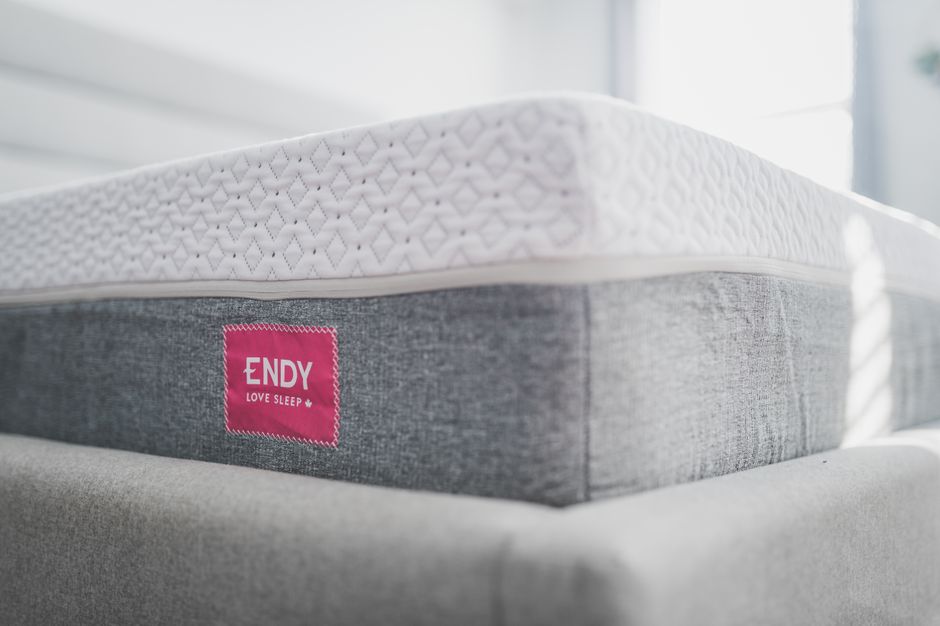
A buy it for life mattress is an architecture purchase before it is a comfort purchase. Comfort is a fit question you settle during a trial period; architecture is the decades question. The 5 picks sit in the top three tiers: Arizona Premium and Sleep EZ (component latex kits), Naturepedic's EOS (zip-cover modular), and Saatva's Zenhaven and the Brooklyn Bedding Plank (flippable). Each tier names the part that fails and the repair path, or its absence. Tier 4 is the sealed baseline the five are measured against, not a pick.
Tier 1, Component Latex Kits
Arizona Premium Mattress sells DIY latex mattress kits where every layer is a separate purchase you configure at the start and re-order individually when one softens. Sleep EZ markets the same playbook with natural latex component builds. Queen kits commonly run $1,000 to $1,700 complete, and a replacement comfort layer typically costs a few hundred dollars. The logic is simple: latex cores age slowly, so the part that dies first is deliberately the part you swap. Latex mattress brands with replaceable layers remain niche, but they are easy to find once you know the category exists.
Tier 2, Zip-Cover Modular
Naturepedic builds the EOS line as a modular mattress, with replaceable layers inside a zip-off organic cotton cover, and markets it on that replaceability. You configure firmness at purchase, then replace or re-firm the comfort panel years later while keeping the core. Queen configurations commonly land between roughly $2,000 and $3,000 depending on setup. You are paying for organic certification, and for the zipper.
Tier 3, Two-Sided Flippable
Saatva's Zenhaven is a flippable two-sided mattress built from Talalay latex, with a distinct firmness on each face, typically $2,000 to $2,500 for a queen. No parts are for sale, but two wear surfaces do the work of a mid-life refresh for free. The budget version is the Brooklyn Bedding Plank, a flippable hybrid whose two sides differ in firmness; queens frequently sell between $700 and $1,100 depending on promotion.
Tier 4, The Sealed Baseline
Tempur-Pedic anchors this baseline, kept for contrast rather than counted among the picks: superb pressure relief, sealed one-sided construction, queens often $2,000 to $4,000 and up. Nothing is for sale and nothing flips, so the first dead comfort layer retires the entire bed. The same description fits most premium memory foam and hybrid mattresses, which is the point. Treat all prices here as planning bands, not quotes; they move with sales cycles.
Cost per Decade Math for Each Repair Path
The mattress cost per decade comparison below uses illustrative queens at typical street prices: one-sided beds replaced every 7 to 10 years, one mid-life refresh of $300 to $400 on repairable builds, ignoring tax, delivery, and disposal fees, all of which favor the repairable paths.
| Path | 20-year spend | Per decade | Bed kept |
|---|---|---|---|
| Component latex kit, two layer swaps | ~$2,100 | ~$1,050 | Same bed throughout |
| Zip-cover modular, one panel swap | ~$2,800 | ~$1,400 | Same bed throughout |
| Two-sided latex, one topper refresh | ~$2,500 | ~$1,250 | Same bed throughout |
| Budget flippable, bought twice | ~$1,800 | ~$900 | Replaced once |
| Mid-price one-sided, bought 2 to 3 times | $1,800 to $2,700 | $900 to $1,350 | Replaced repeatedly |
| Premium one-sided, bought twice | ~$6,000 | ~$3,000 | Replaced once |
Run the components on the first row: a $1,500 kit plus a $300 layer swap around year seven and another around year fourteen totals about $2,100 across 20 years. Buying a $900 mid-price one-sided bed two or three times across the same window costs $1,800 to $2,700, before delivery windows, disposal fees, and two extra mattress research projects. The repairable premium bed lands at or below the "cheap" disposable path, and at half or a third of the sealed premium path. That is the inversion: sticker hierarchy and decade hierarchy point in opposite directions.
An honest asterisk: the budget flippable bought twice wins on pure dollars. It is the best disposable, not a repair, and you still spend the final years of each unit on tired foam with no fix available.
How to Read a Warranty Like a Claims Adjuster
- Find the impression threshold first. The mattress body impression warranty threshold is the number that decides most claims. 1.5 inches is common; 0.75 to 1 inch is rare and materially better for you.
- Learn the measuring protocol. Straight edge, ruler, sheets off, deepest point, usually photos from set angles. Claims die on technique, not merit.
- Read the proration table before the coverage length.Prorated warranty schedules charge a rising percentage of the original price as years pass, often plus inspection or transportation fees. A year-twelve claim can cost enough of the original price that the "repair" approaches just buying a new bed.
- Check full versus limited. Under Magnuson-Moss disclosure rules, written warranties must state plainly which they are. Nearly all mattress warranties are limited, which means the remedy shrinks exactly when you are most likely to need it.
- Count the voids. Stains, a non-matching foundation, a removed law tag: each is a standard denial lever, and adjusters pull them.
The 20-Year Bed Buying Checklist
Run the four-tier test in purchase order. Each step either moves the bed up a tier or names the failure that will eventually claim it.
- Search the brand's own site for replacement layers or covers, with prices posted. A part with no listed price is a part the company does not actually sell, and this one search separates the top two tiers from everything else. It is also the only hedge against softening with no dip, the failure every warranty defines out of existence.
- Open the zipper before you buy. If the cover does not unzip far enough to reach the comfort layer, the replaceability is upholstery talk. Your hand has to touch the foam that will fatigue, or no replacement ever will.
- Count the wear surfaces. A two-sided flippable build halves the load on each face and hands you a mid-life refresh that requires no claim, no inspector, and no receipt.
- Check the impression threshold before the price. 1 inch or lower beats the common 1.5, because the sub-threshold impression, the crater that photographs fine, is the claim most likely to be denied on a technicality.
- Read the proration shape before the coverage length. A 25-year headline over a steep schedule is a shrinking coupon; a year-twelve claim can approach the price of a new bed.
- Count the void triggers while the sale is still negotiable. Stains, a foundation that does not match the manual, a law tag someone peels off: each converts a covered defect into a full-price replacement.
- Book the maintenance calendar last. Quarterly rotations and semiannual flips, where the build allows, slow the fatigue; they never substitute for a repair path.
A recent Reddit thread asked whether any mattress outside the DIY world sells replacement parts, because its author kept watching people junk entire beds over one dead layer. The honest answer is that a small set of latex and modular specialists does exactly that, and the question feels niche only because two decades of no-flip marketing normalized single-surface wear. Buy the bed whose failing part has a price tag and a part number. That, not the warranty headline, is what fifteen more years of good sleep actually looks like.
Stay in the loop.
Get the latest posts and exclusive content delivered to your inbox.
Join 25 readers. No spam. Unsubscribe in one click, anytime.
About the author
Priya Raman
Repair and Restoration Writer
Priya maintains and restores everything she owns, from cast iron to mechanical watches, and has spent years in the right-to-repair community. She writes about maintenance, warranties, and repairs, the half of buy-it-for-life that keeps good gear out of landfills.
Related Posts

Best 12V Portable Refrigerators Ranked by What Fails First
The best 12V portable refrigerators ranked by what fails first, not week-one cooling, plus the decade math against a $40 cooler and bags of ice.

Shatterproof Food Storage Containers Ranked by Lid Survival
Shatterproof food storage containers ranked by the only part that dies, the lid, plus the replacement-lid economy and a two-material system that holds up.
Buy It for Life Blankets Ranked by How They Die
Buy it for life blankets ranked by how they die, from bamboo rayon wet-strength loss to wool moths, with fiber science and cost per decade math.