Buy It for Life Dinnerware Ranked by How It Dies
Buy it for life dinnerware ranked by how it dies, from Vitrelle shards to pattern discontinuation, graded on chips, thermal shock, and set economics.
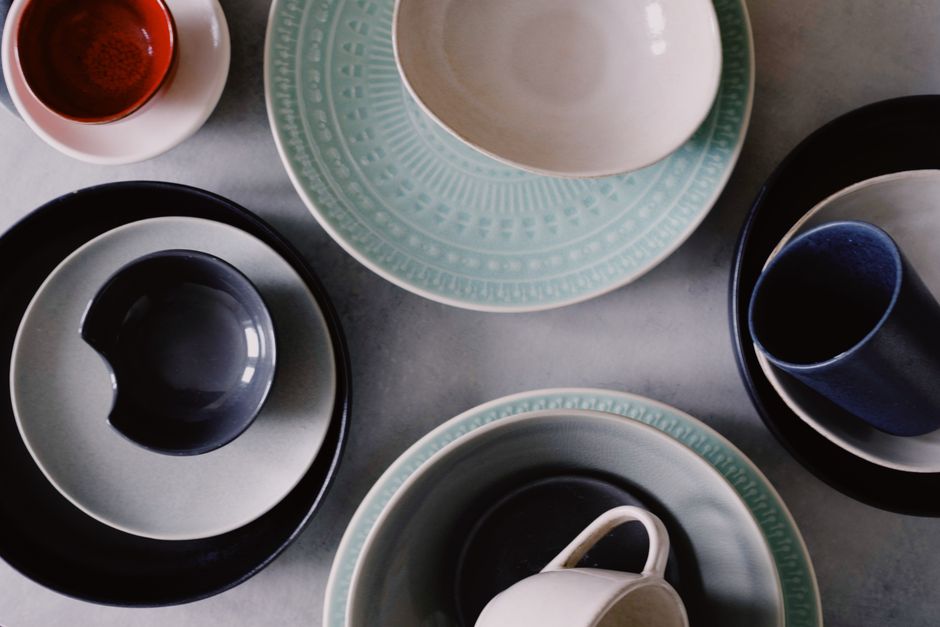
Dinnerware rarely dies in one dramatic crash. It dies one chipped salad plate at a time, and the material you choose decides whether that chip costs eight dollars or the entire set. That is the real buy it for life dinnerware question, and most reviews never ask it. They grade how a plate feels new, hedge with "almost BIFL," and stop there.
Stay in the loop.
Get the latest posts and exclusive content delivered to your inbox.
Join 52 readers. No spam. Unsubscribe in one click, anytime.
Every material fails. The winners win because their failures are cheap to repair. Below, the whole category gets graded by failure mode, from the rim chips that retire most glazed ware, to the Vitrelle shatter reports nobody prints on the box, to the quiet killer that ends more complete sets than breakage ever has, pattern discontinuation. You get a five-criterion rubric, the cost-per-surviving-piece math, five specific picks, and the care rules that stretch any of them across decades. (We have covered mugs separately; this is the plates, bowls, and set-level math.)
How Dinnerware Actually Dies
Ask a durability reviewer and plates break when dropped. Ask a commercial kitchen and you get a different story. Operations that track breakage in foodservice consistently find that stacking, scraping, and sink handling do more damage than falls, which is why how restaurants cut breakage reads like a rim-care manual, full of plate separators, edge protection, and bans on sliding dishes across each other.
Your kitchen works the same way. Five mechanisms retire dinnerware:
- Rim chips. The rim is the wound site. Stacking grinds plates rim to rim, forks strike the edge at every meal, and the faucet claims a bowl now and then. Glazed rims chip in crescents, and the piece limps on until the chip cuts a lip or ruins the look.
- Thermal shock. Freezer to oven, hot plate onto a cold wet counter, cold water over a hot dish. Sudden swings set up stress that cracks the body outright, and maker warnings against it are near-universal across ceramic types.
- Violent shatter. Some materials skip the chip stage and fail all at once, suddenly and sharply. Tempered glass laminates are the main offender, covered below.
- Glaze crazing. A fine spiderweb of cracks in the glaze, cosmetic at first, then a slow moisture-driven decline.
- Pattern discontinuation. One retired piece strands a matching set. No spec sheet lists it and no drop test measures it.
Durability in practice means choosing a failure you can afford, since every option on the market fails somehow.
The Grading Rubric, Five Failure Modes
Each material below gets letter grades on the criteria that decide whether a set survives decades. Hardness alone does not win here. The materials that last are the ones that score well on the weekly failures and fail gently on the rare ones.
| Criterion | The question it answers |
|---|---|
| Chip resistance | Do stacking and utensil strikes leave the rim intact after years of daily use? |
| Thermal shock tolerance | Does it take temperature swings, or does it need careful stepping? |
| Violence of failure | When it fails, is it one chip or a spray of shards across the floor? |
| Crazing resistance | Does the surface stay sealed through years of dishwashing? |
| Set economics | Can you buy one replacement piece in year ten, and for how much? |
Two criteria are formalized. Chip resistance has standardized backing in an ASTM impact test method for ceramic tableware, the kind of testing commercial buyers lean on. Thermal shock guidance comes straight from manufacturers, whose freezer to oven guidance nearly always says do not, even for ware marketed as heat tolerant. Set economics has no test at all. It has open-stock catalogs, which is why it gets its own section.
Corelle Vitrelle, Graded

Chips: A. Thermal shock: B. Violence of failure: C. Crazing: A. Set economics: A.
Vitrelle is laminated tempered glass, three layers fused under heat, and its chip resistance comes from architecture rather than surface hardness. There is no brittle glazed rim to strike. The rim-on-rim grinding and utensil strikes that retire most glazed dinnerware simply have nothing to grab, which is why decades-old sets circulate with intact edges and why chip resistant dinnerware roundups keep landing on the same brand. It is also light, thin enough to double your cabinet capacity, and the plain white lines are dishwasher and microwave safe.
Then there is the failure mode nobody prints on the box: does Corelle shatter into shards? Sometimes, and violently. Documented shatter reports describe pieces breaking suddenly into many small sharp fragments, occasionally mid-use, with many accounts involving older or already-damaged plates. Two things follow. Tempered glass stores energy, so damage tends to fail all at once instead of progressing as a chip. And the failure is dramatic enough to have drawn news coverage, which households with toddlers or bare feet should weigh honestly against sixty years of chipless service.
Two footnotes. Corelle's maker warns against broiler and stovetop use and sudden extreme temperature changes, so Vitrelle is no exemption from the thermal rules. On lead, the company has addressed pre-2005 lead questions concerning decorated pieces made before modern testing expectations; vintage hunters should read those statements and prefer current plain white, which is the BIFL play anyway.
Porcelain and Bone China, Graded
Chips: A- (vitrified). Thermal shock: B. Violence of failure: A. Crazing: A. Set economics: A- in white hotel lines.
The category's biggest surprise is that the "delicate" materials are hidden BIFL contenders. Vitrified porcelain is fired hot enough that the body fuses nearly glass-solid with almost no porosity; what vitrified porcelain means in practice is a body engineered for hotel and restaurant abuse across thousands of commercial dishwasher cycles. Bone china draws its strength from bone ash in the body, allowing thin walls with real toughness. On the direct question, is porcelain or stoneware more chip resistant, vitrified porcelain and quality bone china commonly beat everyday stoneware, and chip resistance by material comparisons back that up.
The Corelle Vitrelle vs porcelain call comes down to failure style, not survival odds. Vitrelle is lighter, cheaper, and stacks thinner. Vitrified porcelain fails the way you want dinnerware to fail, with one clean chip, and hotel lines generally tolerate oven use with sane temperature stepping. You trade cabinet efficiency for weight and usually a higher price per piece.
The catch is economic, not physical. Fancy patterned porcelain dies by retirement like everything else. The BIFL play is a white hotel line from a restaurant supplier, the kind sold piece by piece for decades.
Stoneware, Graded
Chips: B-. Thermal shock: C+. Violence of failure: A. Crazing: C. Set economics: varies wildly.
Stoneware feels durable because it is thick, but thickness hides the weak points. Bodies fire cooler than porcelain, and the decorative glazes that make stoneware beautiful run right to the rim, exactly where stacking and forks do their work. Chips show as missing crescents in colored glaze, unmissable at the dinner table.
Crazing is the slower killer. The spiderweb cracking comes from a mismatch in how glaze and clay body expand, and glaze crazing mechanics explain why dishwashers accelerate it: heat cycling stresses the fit and harsh detergents work the surface. Early on it is cosmetic. Over years it marks a piece in decline, pulling water into the body with every wash.
Artisan and hand-thrown sets die hardest of all. Glaze fit varies piece to piece because every batch is its own chemistry experiment, and open stock is rarely even an option; when the potter moves on, your replacement plan is a different artist's work. Mass-market stoneware with a long production run and wide open stock (one pick below) is defensible. Wedding-registry stoneware in a seasonal glaze is a ten-year set at best.
Enamelware, Graded

Chips: C+ (cosmetic). Thermal shock: A. Violence of failure: A+. Crazing: A. Set economics: B.
Enamelware durability is a different religion. The core is steel, coated in fused glass enamel, which inverts the ceramic failure profile. Drop a plate and it dents or the enamel flakes locally instead of shattering; it essentially never breaks violently, period. Camp kitchens, boats, and campsites run on it for exactly this reason, and steel-cored enamel generally tolerates oven and open-flame heat that would kill any ceramic here.
The death is slow and cosmetic instead. Impacts chip the enamel to bare steel, and exposed steel rusts, starting at the rim where you eat. The food-safety question for chipped enamelware is real but bounded; small chips away from the eating surface are a rust-and-appearance issue, while chipped rims are the usual retirement trigger. One rule is absolute, though. Can enamelware go in the microwave? No, never, because the core is metal. Households that reheat leftovers nightly will find that ban exhausting.
Pattern Discontinuation and Set Death
Breakage kills pieces one at a time. Retirement kills the remaining eleven at once, which is why it ends more complete sets than breakage does.
Why do dinnerware patterns get discontinued? Because patterns are fashion. Makers keep open stock only while a pattern is current, then molds and decorations wind down and the line becomes a collector's market. The proof is an entire discontinued Corelle marketplace that resells retired patterns piece by piece, often above original retail. That aftermarket is a rescue option, not a warranty. Finding one salad plate at a markup is doable. Finding four, in matched condition, across a decade of attrition, is a hobby.
The strongest buy it for life dinnerware lever a buyer controls is therefore not material at all. It is this checklist:
- Buy plain white. White never clashes with replacement pieces and never falls out of a pattern cycle.
- Run the open-stock check before paying. Are singles sold at all? How long has the line run continuously? Is white a permanent line or a seasonal one?
- Prefer specialist and hotel suppliers. Restaurantware makers keep lines alive for institutional buyers who replace piece by piece for decades.
A chipped plate in a current, open-stock line is an errand. The same chip in a retired pattern is a set funeral.
Cost per Surviving Piece, the Real Set Math
Boxed-set prices hide the decade cost. Cost per surviving piece exposes it. Run the model with your own numbers; the assumptions below are deliberately plain.
Assume a 16-piece set, a household that loses four pieces over ten years to chips, shatter, and one mystery disappearance, and a $100 set price either way, with open-stock singles running about $8.
- Open-stock white: $100 up front plus four $8 replacements lands at $132 for a complete set in year ten.
- Current pattern with open stock: the same math, if the pattern is still current in year ten, which no one can promise.
- Retired pattern: replacements come from the collector market at a premium when they surface; otherwise you re-buy a whole set, pushing the decade cost past $200 to keep sixteen matching pieces.
The dollars are illustrative; the structure is not. Open stock converts breakage from a set-level event into a piece-level errand, and a retired boxed set converts the same chip into a full re-buy. That option value is the entire argument for plain white, and it compounds the longer you own the set.
The Five Buy It for Life Dinnerware Picks
Ranked for BIFL dinnerware buyers by how survivable each line's death is, not by showroom looks.
| Pick | Material | Grade | Best use and warning |
|---|---|---|---|
| Corelle Winter Frost White | Vitrelle glass | A- | Lightest, cheapest, deepest open stock; can shatter violently, no broiler |
| Restaurant-supply vitrified porcelain (Tuxton, CAC China, similar) | Vitrified porcelain | A- | Hotel-spec chip resistance sold by the piece; heavier and pricier per piece |
| Homer Laughlin Fiesta | Glazed stoneware | B+ | Among the deepest open stock in stoneware; watch rim chips and long-term crazing |
| Falcon Enamelware | Enamel on steel | B | Camp, oven, and drop-proof; rusts at chips, microwave banned |
| Lenox white bone china (Solitaire and similar) | Bone china | B+ | A formal table that survives daily use; verify open stock before committing |
An honest note on the grades. The two A- lines win on failure mode and economics combined, and every pick here passes the open-stock check in white. The stoneware and enamel picks are for readers who want that material's character and accept its specific way of dying.
Care Rules That Buy Decades
The material picks the failure mode; care decides when it arrives. Dinnerware that lasts decades is mostly dinnerware that was stacked and heated correctly.
- Protect the rim, always. Stack with felt or paper dividers, or store plates vertically in a rack. Never slide plates across each other when unloading.
- Step temperatures. No freezer-to-oven trips for anything. Let a fridge-cold dish sit briefly before the microwave or oven, and never set hot ceramic on a cold wet counter.
- Go easy on detergents. Harsh detergents and high-heat sanitize cycles accelerate glaze wear and crazing on stoneware and decorated ware; plain white lines shrug them off.
- Microwave by material. Ceramic and Vitrelle yes, enamelware never.
- Audit rims a few times a year. Move anything with a deep chip or lip-cutting edge to the picnic bin, and replace it while the line is still current.
The decision rule underneath all of it: buy the material whose death you can afford, in white, from someone who sells singles. Everything else is care.
Stay in the loop.
Get the latest posts and exclusive content delivered to your inbox.
Join 52 readers. No spam. Unsubscribe in one click, anytime.
About the author
Cal Whitmore
Durability Testing Lead
Cal has spent a decade in product testing, from tool labs to outdoor gear reviews, and treats every claim of a lifetime warranty as a hypothesis to break. He writes about the materials, joinery, and failure modes that actually decide whether gear lasts twenty years or two.
Related Posts

Shatterproof Food Storage Containers Ranked by Lid Survival
Shatterproof food storage containers ranked by the only part that dies, the lid, plus the replacement-lid economy and a two-material system that holds up.

Electric Snow Shovels Ranked by 20-Winter Survival
We rank electric snow shovels by 20-winter survival, judging paddle wear, drivetrain access, and power, then price each per winter against a $40 scoop.

5 Buy It for Life Mattresses Ranked by Repairable Parts
Buy it for life mattresses ranked by repairable parts, from swappable comfort layers to flippable builds, with warranty math and cost per decade.