How to Judge a Buy It for Life Bed Frame With No Reviews
A buy it for life bed frame guide built on the four ways beds die, plus a photo rubric to grade any unreviewed bed like the RH Toulouse before you pay.
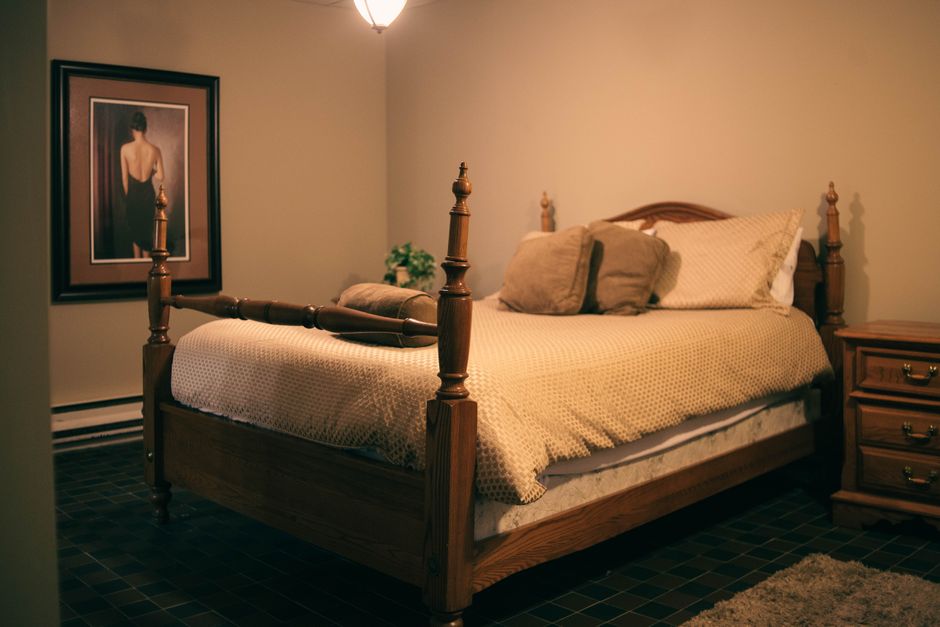
A recent thread in r/BuyItForLife captures a problem the furniture internet has no answer for. The poster loves the look of the RH Toulouse panel bed, is about to spend four figures on it, and cannot find a single first-hand review anywhere. The bed is not in her local showroom. At the time of writing, the thread had drawn no owner responses, and public searches surface effectively no long-term Toulouse reports either. That silence feels alarming, but it is structural rather than suspicious. Premium brands like RH sell mostly through their own channels, hosted reviews skew toward the honeymoon months, and a bed's real problems arrive in years two through ten, long after most owners feel moved to post. If you want a buy it for life bed frame, star ratings cannot carry you there. Inspection can, because longevity is a construction property you can check in photos and spec sheets, not a brand property anyone can vouch for.
Stay in the loop.
Get the latest posts and exclusive content delivered to your inbox.
Join 52 readers. No spam. Unsubscribe in one click, anytime.
Wood panel and platform beds nearly always die at one of four joints: the rail-to-headboard brackets, the bolt holes in the rails, the slats and their cradles, or the center support. This guide walks through each failure mode, ranks five construction types by how they fail instead of how they photograph, and then grades the Toulouse from its own listing, exactly the way you would grade any bed with no review record.
Why bed frames die at joints, not in the middle
Trace the load path. Weight lands on the mattress, crosses the slats, rides the side rails, transfers through four corner connections, and reaches the floor through the legs. The middle of a rail sees gentle, spread-out compression. The joints see the opposite: concentrated withdrawal force, leverage, and racking, repeated every time someone flops down, leans on the headboard, or shoves the frame aside to vacuum.
That asymmetry is why the query "how long do bed frames last" produces useless answers. Estimates range from a few years for flat-pack frames to decades for solid wood, and both are honest, because they describe different constructions. The members themselves almost never snap at midspan. Fastener holes wallow, brackets pull out, slats crack at their bearing points, and rails bow where nothing supports them. Failure is local and predictable, which is precisely what makes it inspectable. The four failure modes below are your inspection map.
Failure mode 1, rail-to-headboard bracket pullout
A headboard is a lever bolted to a box. Tall headboards, the kind that anchor a bedroom's look, lengthen the lever arm, and every push and lean converts into withdrawal force on a handful of small fasteners threaded into panel edges. A few screws, a shallow bite, a long lever. That is the recipe.
Three constructions resist it. Hook-on rails, the pinned system used on most beds built before the flat-pack era, wedge tighter as load increases and engage far more material than a screw thread can. Wide face plates spread one connection's force across several fasteners instead of two. Through-bolts seated in metal barrels turn a screw-holds-wood problem into a metal-to-metal one. Published furniture joint strength research comparing knock-down connectors with traditional joinery consistently finds that connector type and the material it grips dominate joint performance, often more than member thickness does.
So zoom the corner photos. Tiny L-brackets at each corner are a warning. Visible hook pins, chunky plates, or barrel hardware are the opposite. And note that a footboard doubles the bracket count, along with the number of places this failure can start.
Failure mode 2, bolt holes stripping in engineered wood rails
The solid wood versus engineered wood bed frame argument usually gets debated over aesthetics and sustainability, but the fastener science settles the durability side. Particleboard and MDF are glue-bound fiber, and a bolt thread machined into fiber has comparatively little to grip; composite panels generally measure meaningfully lower screw withdrawal resistance than solid wood. Flat-pack frames compound the weakness with cam-lock fittings that engage only a shallow edge, so every disassembly chews the hole a little wider.
Moving is the accelerator. A solid wood rail shrugs off being broken down and rebuilt. An engineered rail absorbs damage each cycle until the bolt spins freely and the joint will never clamp again. That is why "do particleboard bed frames strip bolt holes" is such a common search, and the answer is yes, with reassembly as the multiplier. Once stripped, the failure is close to terminal: glue and toothpicks, oversized bolts, and pressed-in inserts are stopgaps on a member that was marginal to begin with. It is a central reason guides on how long MDF furniture lasts typically land far below the service life of solid wood.
The listing tells are textual. "Solid white oak" on a premium product may describe the panels you can see while the side rails, where the bolts live, are a veneered engineered core. Look for the literal phrase "solid wood rails" or a spec tab naming the rail material, and treat an unnamed rail as a pre-order question, not a footnote.
Failure mode 3, slat and slat cradle breakage

Slats are small beams, and they fail the way beams do: in bending at midspan, or by jumping out of a cradle too shallow to hold them. Species and thickness matter, and a softwood slat with a knot at center is a crack on a schedule. So does the ledge each slat rests on, which listings rarely photograph.
What you can do from photos is the spacing math, and it matters more than comfort. Many foam mattress manufacturers specify slat gaps of roughly three inches or less; wider gaps let foam droop between slats and undermine the support the mattress warranty assumes. That gives "how many slats should a platform bed have" a computable answer:
Slat gap = (inner frame width - combined slat width) ÷ (slat count - 1)
A queen with a dozen wide slats can clear three inches. A queen with nine narrow ones cannot. Count slats in the photos, estimate widths against the mattress, and run the arithmetic before falling for the headboard. One consolation: platform bed slat breakage is the friendliest failure on this list. Any woodworker, or you with a saw and straight-grained poplar, can cut replacements, provided the cradle underneath is sound. Ask about cradle depth in the same message where you ask about rail material.
Failure mode 4, center support sag
A queen mattress spans about 60 inches and a king about 76, and on many frames the side rails carry that width with nothing between them. Wood under sustained load creeps, the rectangle racks toward a parallelogram, slats over-span, and corner bolts ride in slowly enlarging holes. On hard floors the frame walks. On carpet it settles silently.
Center support fixes it, and it doubles as paperwork. Many mattress manufacturers spell out center support warranty requirements for queen and king sizes, so missing legs can void the mattress warranty along with the frame's. A center rail with one sturdy leg is the practical minimum for a queen; a king is better served by two.
Inspection is a count. Four legs on a king is a red flag; six with a center rail is the design you want. Check the leg style too, since a threaded leveling foot copes with uneven floors better than a plain dowel, and confirm the center leg actually reaches the floor rather than stopping short for carpet clearance. Among all the checks in this guide, this is the one where a missing answer should stop a purchase by itself.
Five bed types ranked by how they die

| Construction type | Where it fails | Failure speed | Repairability | Standing |
|---|---|---|---|---|
| Heirloom hardwood with mortise-and-tenon and hook-on rails | Joinery loosens over decades of wood movement | Very slow | High, regluing is routine | The benchmark |
| Bolted solid wood platform, Thuma style | Hardware loosens, the odd slat | Slow, and creaks warn you | High, tighten or swap parts | Best modern buy |
| Steel platform frame | Hardware loosens, occasional weld fatigue | Slow | High if holes hold | Most durability per dollar |
| Premium panel bed, Toulouse class | Brackets or rails, hidden construction decides | Unknown from listing | Unknown until you ask | Conditional |
| Flat-pack engineered wood | Cam locks and bolt holes strip | Fast if you ever move | Low, stripping is terminal | Life-stage furniture |
Two things this table does that price-based rankings do not. First, price does not track the order. A steel platform often costs a fraction of a premium panel bed and sits two rows above it, because premium money buys styling, finish, and brand service before it buys joint quality. Second, bed frame repairability is the column most durable bed frame listicles omit, and it decides whether year fifteen is a screwdriver afternoon or a curb appointment. A buy it for life bed frame is whichever row you buy after knowing its failure mode and repair path, not whichever row costs most.
The benchmark row has the cleanest evidence in furniture: beds built in the 19th century are still in service, which is a working definition of a bed frame that lasts decades, and their characteristic failure, joints loosened by seasonal wood movement, is the kind a woodworker reglues rather than mourns. Bolted solid wood platforms, the category Thuma popularized, pair solid rails with corner hardware designed for repeated assembly, which is why they rank as the best modern buy. If you want the heirloom archetype new, small studios building handmade solid wood beds tend to publish their joinery, species, and finishes, because construction is their pitch. That transparency is itself a rubric pass.
How to grade a buy it for life bed frame from its listing
Learning how to tell if a bed frame is good quality from photos comes down to six checks, about ten minutes, and one email. Score the points, then apply the gates.
| Check | What passes | Weight |
|---|---|---|
| Center support on queen and king | Center rail plus at least one, ideally two, legs | Gate, no pass without it |
| Rail material named | "Solid wood rails" or a spec naming the species | Gate, unnamed forces a question |
| Corner hardware | Hook-on rails, wide plates, or through-bolts visible | 2 points |
| Slat gap | Arithmetic lands at roughly 3 inches or less | 2 points |
| Weight rating | Published and comfortably above mattress plus sleepers | 1 point |
| Warranty | Multi-year structural coverage with readable terms | 1 point |
A score of 6 or higher with both gates passed marks a credible decades bed. Four to five is conditional, and the condition is an email. Below four, or any gate failed without a good answer, keep shopping. Two honest limits: photos cannot verify fastener design hidden inside a rail, and a warranty is only as strong as the company behind it. The rubric raises confidence. It does not manufacture certainty.
The ten-minute sequence:
- Open the spec tab and find the materials list, especially the rails.
- Zoom every corner photo for bracket hardware.
- Count slats and estimate the gap with the formula above.
- Count legs in any below-view shot.
- Locate the weight rating and the warranty terms.
- Email whatever the listing leaves blank, before ordering.
Grading the RH Toulouse from its own listing
Running the rubric against the Toulouse's public materials produces the pattern that defines premium panel beds. What the listing answers well: dimensions, finish, design language, delivery service. What it leaves open, at least at the time of writing: the structural fine print. Rail construction, bracket geometry, slat count and spacing, and center support detail are exactly the items a marketing page can skip, and they are the whole rubric.
So the fair grade is conditional. Style and brand service pass. Construction is unverifiable from public materials, and a search for an RH Toulouse bed review returns effectively no first-hand long-term owner reports, which matches the original thread and is normal for premium-channel brands rather than damning. The grade turns definite the moment RH answers four questions:
- Are the side rails solid wood or an engineered core with veneer, and which species?
- How do the rails attach to headboard and footboard, hook-on, face plates, or through-bolts, and what do the fasteners thread into?
- How many slats, at what width and gap, and is there a center rail with legs on queen and king?
- What does the warranty cover structurally, for how long, and does honoring it require center support?
One caution before treating a return policy as the safety net: heavy furniture returns are slow and physically unpleasant, and a wobbly corner discovered six weeks in is a worse outcome than a two-day email exchange before the order. For the original poster, the Toulouse is worth it if, and only if, the structure answers well, and that is knowable in one message.
Where to spend and where to save on a decades bed
Allocate budget along the load path. Spend on the parts that carry you: rails, corner hardware, center support, slats. Save on the parts that only face you. Headboard styling is furniture rather than structure, and it can be replaced years from now without condemning the frame. A footboard is the purest style purchase in the set, adding two more bracket joints and no structural capacity, so buy it for the look alone.
The cheapest decades bed is often a used one. Secondhand solid wood beds arrive pre-stressed, sometimes decades into their proof, and the restoration trade around them is established; guides to restoring antique bed frames describe regluing and re-pinning as routine work, partly because hooked rails and bed bolts remain standard parts. A restored antique frequently costs less than the premium panel bed it will outlast.
And the closing answer to the question this started from: if RH confirms solid rails, real corner hardware, compliant slat spacing, and center legs, buy the Toulouse and enjoy it. If the answers come back vague, a bolted solid wood platform delivers the same buy it for life outcome for less money, and a restored antique delivers it with better provenance. Either way you will have decided in ten minutes what no review count could ever tell you.
Stay in the loop.
Get the latest posts and exclusive content delivered to your inbox.
Join 52 readers. No spam. Unsubscribe in one click, anytime.
About the author
Naomi Estrada
Value and Comparisons Analyst
Naomi came to durable goods through cost-per-use economics, running the numbers on cheap-versus-quality for a personal-finance site before going all-in on BIFL. She builds the head-to-head comparisons and best-of rankings so readers stop guessing and buy the right product the first time.
Related Posts

Ashley Furniture Quality Ranked by What Actually Dies First
Ashley Furniture quality varies by category, not brand. This audit ranks which pieces survive decades, which fail, and how to spend locked gift credit.

Buy It for Life Sunglasses Ranked by UV Survival
Buy it for life sunglasses ranked by UV protection that lasts a decade, covering lens substrates, hinge fatigue, and the wraparound versus oversized verdict.

Buy It for Life Dinnerware Ranked by How It Dies
Buy it for life dinnerware ranked by how it dies, from Vitrelle shards to pattern discontinuation, graded on chips, thermal shock, and set economics.