Buy It for Life Pepper Mills Ranked by What Fails First
Buy it for life pepper mills ranked by what fails first, from steel burr wear to plastic adjustment rings, with warranty fine print and cost per decade.

Most pepper mill reviews are obsolete the day they publish. They score grind quality in week one, crown a winner, and stop, which tells you almost nothing about the twenty years that follow. In a well-made mill the grinding mechanism is usually the last component to fail, and that single fact quietly breaks most buy it for life pepper mill advice: plastic adjustment rings, glued top knobs, and cracked wooden bodies retire far more mills than dulled burrs ever do, while the lifetime warranties shoppers lean on are written to cover only the part that rarely breaks.
Stay in the loop.
Get the latest posts and exclusive content delivered to your inbox.
Join 52 readers. No spam. Unsubscribe in one click, anytime.
The right question is not which mill grinds best today. It is which platform carries the fewest plastic wear parts, sells real spare parts, and pairs its mechanism to what you actually grind. The most durable pepper mill on a decade scale often loses the week-one taste test to something flashier and sealed. This guide grades five platforms from French, American, German, and mass-market makers on those terms: what fails first, what the warranty actually pays for, salt versus pepper chemistry, and cost per decade. The framework transfers to any mill on any shelf.
The Four Failure Zones That Decide Service Life
Every pepper mill, from a $15 grocery-store unit to a $90 heirloom, dies in one of four places. Grade any mill against these zones and you can predict its first breakdown before paying.
| Failure zone | What wears out | First symptom | Usually fixable? |
|---|---|---|---|
| Grinding mechanism | Steel cutting edges rounding over; ceramic plate wear | Grind drifts coarse; more cranking for less pepper | Yes, if the maker sells replacement mechanisms |
| Adjustment system | Plastic detent rings jamming with dust or wearing smooth | Settings skip, ring spins freely, or action turns gritty | Sometimes. The most common mill killer |
| Body and top assembly | Wood cracking, spindle wobble, top knob stripping or pulling out | Cracks, loose finial, pepper leaking from the top | Rarely, on glued or sealed mills |
| Warranty and parts support | No parts at all; it is the safety net for the other three | Discovering the exclusions after the failure | Decide correctly at purchase |
The pattern across the whole category: the burr set outlives everything attached to it. That is why the sections below work downward from the mechanism to the parts that actually end a mill's life, then to the paperwork that decides whether a failure costs you $12 or a new mill.
Steel Burrs versus Ceramic Crush Mechanisms
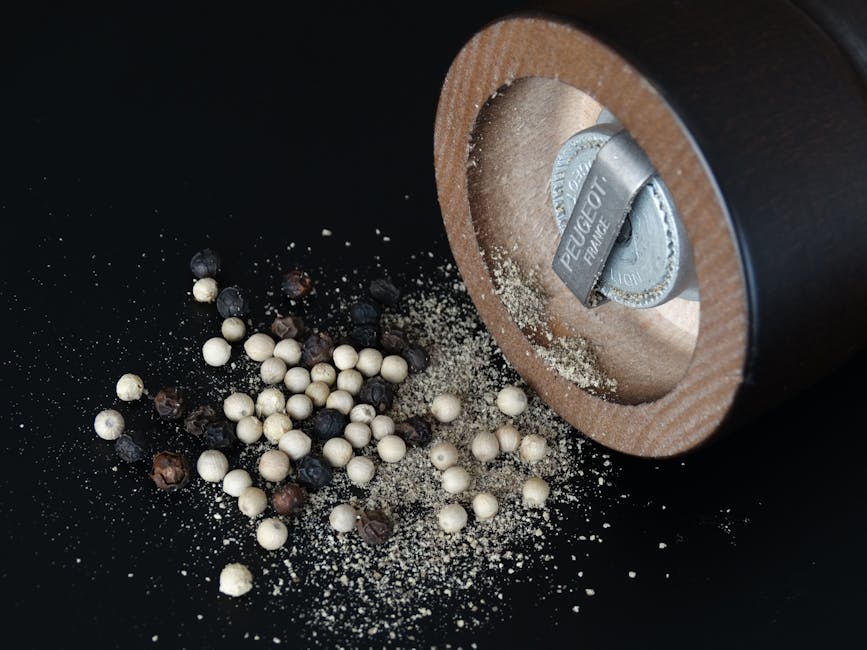
The ceramic vs steel pepper mill mechanism debate matters, but less than forum arguments suggest, because both designs are overqualified for pepper duty.
Peugeot cuts teeth into a steel burr and then case-hardens it, hardening after machining so the edges keep their geometry while gaining a wear-resistant skin. It is a process the company has used for its steel-burr mills in eastern France since 1874, and it is why a decades-old Peugeot mechanism still cuts instead of mashing. Steel dulls slowly and honestly: edges round over years of daily use, output skews coarse, and fines multiply. The mill keeps working, just worse.
Ceramic mechanisms crush rather than cut. The plates are extremely hard, chemically inert, and immune to both rust and salt, which is why nearly every dedicated salt mill uses them. The trade-off is brittleness. A pebble, a hard stem fragment, or a drop onto tile can chip a ceramic plate, and a chipped plate scatters grit into your food. Steel forgives impact and fails to corrosion instead, a weakness that only matters if you wash it or grind salt with it.
For ceramic versus steel mechanisms in pepper-only service, the practical answer is that both typically outlast the rest of the mill. The buy-it-for-life decision is made one zone lower.
Adjustment Design and the u'Select Ring Problem
Week-one grind scores dominate Peugeot u'Select review coverage, yet the component that decides that mill's fate is the small adjustment ring. The u'Select product listing describes the system: six preset positions from powder-fine to chunky, selected by twisting a ring that clicks between detents. The benefit is genuine. Your setting repeats exactly, with no sacrificial test grinding over the pot.
The cost is a plastic wear part sitting in the pepper-dust blast zone. Fine dust migrates past the head and packs into the detents, and long-term owners commonly report rings that turn gritty, jam, skip positions, or crack. These u'Select adjustment ring problems show up on otherwise excellent mills; Serious Eats' testing notes reflect the Paris line's strong consistency, but consistency scores never age a ring for ten years. When a Peugeot stops cooperating, Peugeot's mill troubleshooting page routes you to service and spares, which is more support than most brands offer.
The Fletchers' Mill vs Peugeot comparison really comes down to this one component. Fletchers' adjusts grind with the threaded top knob: tighten for fine, back off for coarse. That knob is simultaneously the adjustment, the fill cap, and the disassembly point for cleaning. The design deletes the plastic detent ring entirely, and when the knob thread eventually wears, it is an ordinary replaceable part rather than a proprietary plastic ring.
Body, Spindle, and Top Knob Failures
Hardwood bodies look permanent and are not. Beech and similar woods dry-check along the grain as kitchen humidity swings, finishes wear where hands grip, and a single drop can split a head. Periodic oiling with a food-safe finish slows the drying but does not stop it, which is fine, because a weathered body is cosmetic; a cracked head that sheds pepper is not.
Inside, the spindle is a steel shaft riding in wood or a small thrust bearing. Years of side load wallow the mounting pocket, and the symptom is wobble plus scattered grind sizes at the same setting. Up top, the knob tells you everything about repairability. Threaded into a metal insert, it is serviceable forever. Pressed into plastic or glued, a pull-out is a death sentence, because the assembly cannot be reopened without destroying it.
The platforms rank cleanly on this zone. Fletchers' Mill publishes a Fletchers' Mill parts store listing mechanisms, shafts, and tops for direct order, which is the difference between a $12 repair and a landfill contribution. Peugeot supplies spares through its support service rather than a public catalog. The Unicorn Magnum's composite body cannot crack the way wood does, at the price of heirloom looks. Zassenhaus mills are handsome wood with a thinner parts path into the United States. Mass-market Cole & Mason units skew sealed.
What a Lifetime Mechanism Warranty Actually Covers
What does a lifetime mechanism warranty cover? Less than the phrase implies. Peugeot's published warranty terms guarantee the grinding mechanism against defects for the life of the mill. They do not insure normal wear, damage from use, the wooden body, the finish, or the adjustment system. Translated: the guarantee covers the burr set that almost never fails and excludes the ring, knob, and body that usually retire the mill.
| Maker | What the guarantee promises | What it leaves out |
|---|---|---|
| Peugeot | Lifetime guarantee on the grinding mechanism against defects | Wear, body, finish, adjustment components |
| Fletchers' Mill | Lifetime mechanism guarantee on its Maine-made mills | Wood and finish, but the excluded parts are sold openly |
| Zassenhaus | Long multi-year guarantee on its hardened grinder | Body and finish; stateside parts support is thinner |
| Cole & Mason | Published guarantee, scope varying by line | Confirm mechanism coverage for your specific model |
The exclusion is not a scam; no maker warranties wear. The differentiator is what happens when an excluded part breaks. Fletchers' Mill runs a documented Fletchers' Mill claim process for the mechanism and sells the wear parts the warranty skips, so an exclusion costs you a modest parts order. Cole & Mason's guarantee page is worth reading line by line before assuming coverage, since terms vary across their ranges. Judge warranties by the repair path they leave you, not the word "lifetime."
Why Salt Mills Need a Different Mechanism
The salt vs pepper mill mechanism difference is chemistry, not marketing. Salt in a humid kitchen gives up chloride ions into the moisture film on metal. Carbon and case-hardened steels carry little or no chromium, so there is no passive film to defend; chlorides pit the steel, and pits concentrate exactly where you least want them, on the cutting edges. A pitted mechanism dulls, sheds corrosion byproducts into the grind, and can seize on the shaft. Add the grinding pressure and moisture released when crystals fracture, and a pepper mill repurposed for salt can degrade in months.
That is why salt service requires ceramic or corrosion-resistant stainless, and why makers who understand this (Peugeot most prominently) build entirely separate salt mechanisms even though the bodies look identical. A cross-over user compromises both grind quality and longevity in one move, and salt duty can void the longevity case for a steel mechanism entirely. For a fuller walkthrough of salt and pepper mechanism differences, the rule of thumb is simple: steel for pepper, ceramic for salt, and never rinse either one.
The Best Buy It for Life Pepper Mills, Ranked
The ranked field
Graded across all four failure zones rather than week-one grind quality, the field orders itself clearly.
| Rank | Platform | Mechanism | Adjustment | First likely failure | Parts path |
|---|---|---|---|---|---|
| 1 | Fletchers' Mill (US) | Hardened steel | Threaded top knob | Wood drying, decades out | Best: public parts catalog |
| 2 | Peugeot Paris u'Select (France) | Case-hardened steel, lifetime warranted | Plastic six-position ring | The adjustment ring | Good: spares via support |
| 3 | Unicorn Magnum (US) | Hardened steel, huge capacity | Simple top screw | Finish wear; mechanism near-immortal | Adequate: maker-supported |
| 4 | Zassenhaus (Germany) | Hardened steel | Top adjustment by model | Wood or parts availability | Thinnest of the five |
| 5 | Cole & Mason (UK) | Steel or ceramic by line | Varies by line | Sealed consumer assembly | Limited |
Fletchers' Mill wins on architecture, not branding: no plastic detent ring, a knob that doubles as the service hatch, and a parts catalog that turns every excluded failure into an orderable fix. Peugeot owns the best mechanism pedigree in the category and would top this list if its adjustment system matched its burrs. The American-made Unicorn Magnum, covered in long-term Magnum reviews, is the pragmatist's pick: a nearly indestructible design with throughput nothing wooden can match, wrapped in a body that will never be an heirloom. Frieling's Zassenhaus range earns its place on grinder quality alone. Cole & Mason lands fifth on construction, not on value.
Cost per decade
Illustrative math, not a price quote, and street prices move: a generic sealed mill at $15 to $25, dying every two to four years with no parts path, runs roughly $45 to $125 per decade. A parts-supported platform at $40 to $70 up front, needing $10 to $25 in knob or ring service per decade, runs near its purchase price in decade one and close to zero after. The PepperMate repair-versus-replace cost guide walks the same arithmetic for mechanism swaps specifically.
The conclusion most shoppers find counterintuitive: parts availability, not mechanism metallurgy alone, defines the buy-it-for-life pick. Two platforms with identical burr steel can sit on opposite sides of the value line for decades, purely because one sells you the part that breaks.
Repair or Replace, and How to Judge Any Mill
When repair wins
Apply three tests before binning a mill. First, if the failed part is orderable and costs under roughly 40 percent of a new unit, repair, because the mechanism you already own has decades of proven service. Second, if the mechanism is fine but the wood has cracked, that is cosmetic; oil it and keep it, or replace it only if the look bothers you. Third, if the adjustment has jammed, clean before you condemn: packed pepper dust in a detent ring imitates a broken ring remarkably well, and a brush-out plus dry run can restore full function.
The five-minute store test
- Adjustment. Metal threads or plastic detents? Plastic under dust load is the single most common decade-scale failure.
- Knob. Unscrew it. A threaded metal insert means serviceable; glue or a press-fit plastic boss means sealed.
- Mechanism. Is the burr material named and hardened, or just "steel"? Hardened steel for pepper, ceramic for salt.
- Parts. Search the maker's site for a parts listing before buying. No listing, no long-term platform.
- Warranty. Read the scope: mechanism-only or whole mill, and who pays shipping on a claim.
A long lasting pepper grinder is bought once and serviced occasionally, never rediscovered at the store every third year. The mechanism in almost any quality mill will outlive your interest in pepper. Choose the mill you can open, thread into metal, and buy parts for, and the decade-scale math takes care of itself.
Stay in the loop.
Get the latest posts and exclusive content delivered to your inbox.
Join 52 readers. No spam. Unsubscribe in one click, anytime.
About the author
Reggie Calloway
Heritage and Craft Editor
Reggie writes about the makers behind lifetime gear, from third-generation tanneries to family-owned foundries. A former magazine editor, he profiles the brands, materials, and craftsmanship that justify keeping a tool or a jacket for the next generation.
Related Posts

Buy It for Life Mugs Ranked by How They Die
Buy it for life mugs ranked by how they actually die, from rim chips to thermal shock, with MiiR's first ceramics collection as the breakage test case.

Buy It for Life Bread Machine, Graded by What Dies
A buy it for life bread machine is decided by pan seals, belts, and parts supply, not the motor. Grade any used machine in 10 minutes with this checklist.

Buy It for Life Kitchen Gear Worth Thrifting, Ranked
Buy it for life kitchen gear is worth thrifting when the fatal flaw is inspectable at the shelf and the wear parts still exist. This ranked list shows which.