Buy It for Life Bread Machine, Graded by What Dies
A buy it for life bread machine is decided by pan seals, belts, and parts supply, not the motor. Grade any used machine in 10 minutes with this checklist.

The most-shared bread machine review of the year is one sentence long. A Panasonic bought in the early nineties, the original post reports, is 31 years old and still making bread, so grab one if you ever see it second-hand. That advice is half right, and the missing half is where your money goes.
Stay in the loop.
Get the latest posts and exclusive content delivered to your inbox.
Join 52 readers. No spam. Unsubscribe in one click, anytime.
What the post proves is narrow: the drive unit, meaning the motor and reduction gears doing the actual work, can survive three decades of weekly bakes. What a photo cannot prove is whether the parts that genuinely wear, the nonstick pan, the shaft seal under it, the paddle, and the drive belt, are still purchasable for that exact model number today. A buy it for life bread machine is decided by that second question, not by brand lore or chassis heft. Below, the lore becomes an audit: which components fail and in what order, whether parts still exist for 1990s and current machines, a 10-minute grading routine for any used unit, and the per-loaf math that tells you whether the whole project pays.
What Actually Dies in a Bread Machine
The motor in a bread machine has an easy life. It runs for roughly twenty minutes of kneading plus the occasional pulse during a rise, it never sees oven-level heat, and it is sized for a load measured in pounds of dough. The heating element is a resistive coil with zero moving parts. The control board sits in the coolest corner of the housing. In practice, when a bread machine reaches end of life, the component that killed it is almost always a consumable, and there are only four of them.
| Wear part | What wears it out | How it announces itself | Failure order |
|---|---|---|---|
| Nonstick pan coating | Paddle abrasion, dough scraping, thermal cycling | Sticking loaves, dull or flaking finish in the paddle's sweep arc | First, often within a few years of regular use |
| Shaft seal, where the paddle shaft passes through the pan base | Water and dough migrating past the lip, grease washing out | Dried dough or oil residue on the pan's underside, growing paddle wobble | Second, and it usually takes the bearing with it |
| Paddle bearing | Slop developing around the shaft | Visible wobble, uneven kneading | Second to third, typically alongside the seal |
| Drive belt | Stretch, glazing, tooth wear | Rhythmic squeal or thump, paddle stalling under load | Later, and it is the cheapest fix of the four |
Two of these deserve special attention. The coating is a consumable by design: PTFE-based nonstick wears, and it cannot be re-applied in a home kitchen the way cast iron can be reseasoned. The chemistry has also shifted over the decades, with PFOA eliminated from US nonstick production by 2015 under the EPA stewardship program, which is one more reason an original 1990s pan is living on borrowed time even when it looks serviceable.
The belt is the friendliest failure. It is a rubber ring under the base plate, it costs little, and a documented belt-replacement guide for a 1990s Panasonic walks the whole job with hand tools. The existence of that guide tells you two things: the repair is genuinely DIY, and enough of these machines fail this exact way that someone wrote it up.
So how long do bread machines last? There is no honest single number. Machines that die young almost always die of a ruined pan or a weeping seal, and the machines that reach thirty years are the ones whose owners replaced those parts or bought lightly used examples. The realistic framing: the drive unit can outlive you, and the pan assembly decides whether that means anything.
The 31-Year-Old Panasonic, Read Mechanically
Read as engineering evidence rather than nostalgia, the viral post establishes one useful fact. Panasonic's drive units of that era were robust enough that the motor, gearbox, and heater are plausibly the last things to fail even now. That is a real durability signal, and it is the signal every comment thread correctly celebrates.
What the post cannot establish is serviceability, and survivorship bias hides the reason. The machines you see celebrated are the ones that made it. Nobody posts the early-2000s Panasonic whose seal started weeping dough slurry onto the counter, because scrapped machines do not generate upvotes. "Grab one if you see it" also skips the only step that protects you: the machine in that photo could have a flaking pan and a tired seal, and no photo of a clean exterior will show either. The base of the pan tells you more than the badge on the front.
The deciding question the post leaves unanswered is testable: for the model number stamped on the base, can you still buy a pan, a paddle, a seal, and a belt? A 31-year-old machine with a dead drive unit is scrap. A 31-year-old machine with a worn pan is a working appliance, if the pan exists. That distinction is the entire subject of the next section.
The Parts Test for a Buy It for Life Bread Machine

Buy-it-for-life forums over-index on weight. A heavy chassis does correlate with a better motor and gearbox, but it says nothing about whether anyone will sell you a pan a decade from now. Parts availability, not chassis weight or brand reputation, is what separates a bread machine that lasts decades from a durable-looking disposable, because the parts are the things that die.
Where to Buy Bread Machine Replacement Pans
Four channels exist, and your model number decides which ones are open to you:
- The maker's own store. Zojirushi sells replacement pans, paddles, and lids through Zojirushi's own parts store, which is the strongest signal in the category: the company treats the pan as a replaceable consumable rather than a reason to rebuy.
- Authorized distributors. Panasonic routes parts through Encompass, and Panasonic's authorized parts channel carries a full component page for the SD-YD250, a staple of the used market. If your model has a page there, the machine is serviceable.
- Repair ecosystems. iFixit-style guides and forum threads cover belt swaps and teardowns for common models, which matters for confidence as much as for parts.
- The used and new-old-stock market. eBay routinely turns up original pans for 1990s machines. Condition varies wildly, so grade the replacement with the same checklist you use on the machine.
Always search the exact model number plus "bread pan" or "drive belt" before money changes hands. Availability drifts, so treat the table below as a demonstration of the method, graded as of this writing, and verify your specific unit.
| Machine | Replacement pan | Seal and paddle parts | Belt | Parts grade |
|---|---|---|---|---|
| Early-1990s Panasonic, the post's era | Used market only, condition varies | Salvage only, model-specific | Generic sizes sized to match often work | B- if the pan is healthy |
| Panasonic SD-YD250 | Listed through the authorized channel | Paddles listed | Findable | A- |
| Current Panasonic Home Bakery line | Sold as an accessory | Paddles listed | Findable | B+ |
| Current Zojirushi models | Direct from the maker's parts store | Paddles, lids, and accessories listed | Findable | A- |
| Big-box house brand | Typically no listings at all | None | Generic sizes only if you measure | F |
One warning before you celebrate a findable part: a replacement pan for a current mid-range machine can cost a large fraction of an entire new unit. When the pan alone approaches the price of a whole machine on sale, the buy-it-for-life math resets, because the rational move becomes buying the new unit and keeping the old one for spares. The part existing is necessary but not sufficient; the price has to leave room for the repair to make sense.
Regulation is nudging in the right direction but has not arrived here. EU spare-parts rules now require makers of certain large appliances to keep components available for repair, yet countertop bread machines generally sit outside those protected categories. Until that changes, the parts test is the buyer's job.
The 10-Minute Second-Hand Grading Checklist
Bring your phone and the willingness to ask for an outlet. Ten minutes, six checks, one verdict.
The shaft seal announces failure physically, with oil or dough seepage under the pan and growing paddle wobble, long before any electrical symptom appears. That is why this inspection centers on the pan, not the plug.
- Photograph the model number (1 minute). It lives on the base plate or a rear label. Search the exact number plus "replacement bread pan" and "drive belt" before you haggle. Pass: parts findable. Fail: nothing findable and the seller wants new-machine money.
- Inspect the coating (1 minute). Pull the pan and study the arc the paddle sweeps. Pass: intact finish. Haggle: dull but unbroken. Walk: any flaking, because the pan is the expensive part.
- Check paddle wobble (1 minute). Refit the paddle, grip the blade, and rock it side to side. Pass: no perceptible play. Fail: visible wobble, which means the bearing is worn and the seal is on borrowed time.
- Flip the pan (1 minute). Examine the underside around the shaft exit. A dried dough ring or oil film means the seal weeps. Fail. There is no electrical symptom yet, which is exactly why checking the cord first tells you nothing.
- Run a cycle (4 minutes). Ask to power it on a basic knead-and-bake program. Confirm the housing warms during the heat phase. Listen under kneading load: a rhythmic squeal or thump points at the belt, and a paddle that stalls when you press a wooden spoon gently against it points at the belt or the coupling.
- Sniff and check the cord last (1 minute). Burnt-varnish odor or a cracked cord ends the negotiation, though by now you usually know whether it matters.
The verdict logic is mechanical:
- Buy: intact coating, no wobble, clean pan underside, parts listed for the model number, and a price at used-appliance levels.
- Haggle: dull coating plus slight wobble, but a replacement pan exists; price the pan into your offer and ask for the difference.
- Walk: flaking coating plus shaft wobble plus no parts channel, and walk from any no-name unit regardless of condition.
Cost per Loaf When a Machine Lasts Decades
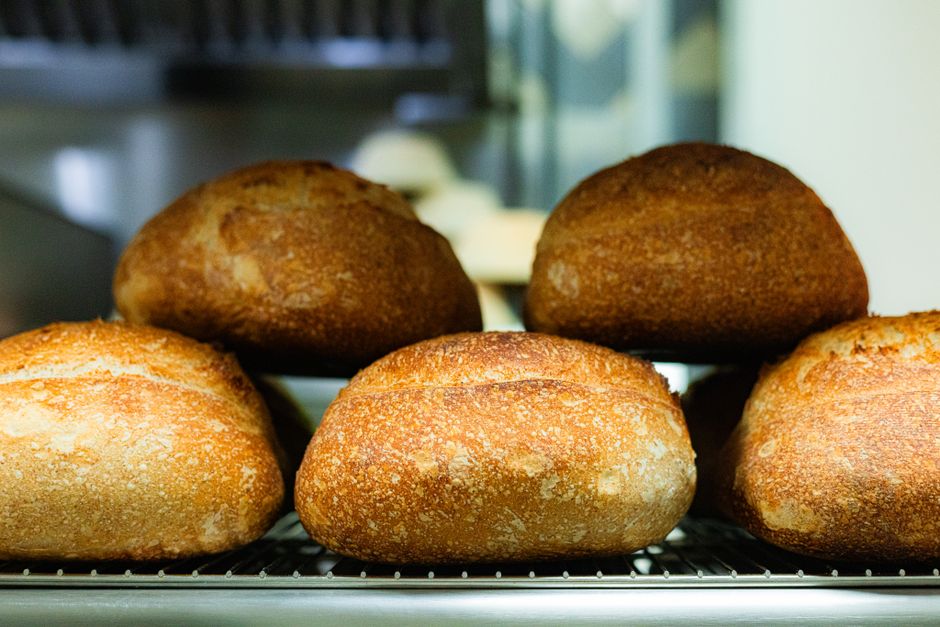
Is a used bread machine worth it? Run the arithmetic with your own numbers; a worked example with every assumption on the table gets you the shape of the answer. Ingredient costs for a basic sandwich loaf, flour, yeast, salt, a little sugar and oil, typically land well under the retail price of a comparable store loaf, and published cost breakdowns walk the same math with itemized flour and electricity figures you can swap for your local prices.
Illustratively, assume $1.00 of ingredients and roughly $0.10 of electricity per loaf, one loaf per week, and a $150 machine:
- A machine that lives 20 years bakes about 1,040 loaves, adding roughly $0.14 of hardware cost per loaf.
- The same machine dying at year three spreads its cost over 156 loaves, about $0.96 per loaf, and leaves you shopping for a replacement.
- A $20 belt at year ten that buys another decade of life costs under $0.02 per loaf. Lifespan, not feature count, decides whether the math works.
The sensitivity is the whole story. The gluten-free cycle you never use costs nothing per loaf. A machine whose pan cannot be replaced and whose seal weeps at year three quietly costs you about a dollar a loaf forever. When you evaluate the longest lasting bread machine candidates, you are really evaluating how many loaves each wear part will see before it needs buying again.
How to Buy the Longest Lasting Bread Machine
The grading work compresses into three shopping rules.
On the used market, the best used bread machine to buy second hand is a Panasonic SD-series or Zojirushi unit whose exact model number returns live parts listings, graded green on the six checks above. Pay used-appliance money and leave headroom for one replacement pan, because even a healthy pan is a consumable on a machine this old.
On the new market, pay the premium only where a parts channel exists. A current Zojirushi or Panasonic earns its price partly through the pan you can order in year eight, while a feature-identical house brand fails the parts test on day one. A buy it for life bread machine is, in the end, a machine whose maker still sells the parts that die.
Walk away when the model label is missing or worn beyond search, when the shaft wobbles and no pan exists, or when any no-name big-box unit is priced like a real appliance. Heft and a famous badge are not a parts channel.
The one-sentence review got the machine right and the transaction half-done. Grab one if you see it, after ten minutes with the pan in your hand and the model number in your search bar.
Stay in the loop.
Get the latest posts and exclusive content delivered to your inbox.
Join 52 readers. No spam. Unsubscribe in one click, anytime.
About the author
Cal Whitmore
Durability Testing Lead
Cal has spent a decade in product testing, from tool labs to outdoor gear reviews, and treats every claim of a lifetime warranty as a hypothesis to break. He writes about the materials, joinery, and failure modes that actually decide whether gear lasts twenty years or two.
Related Posts

Super-Automatic Espresso Machine Longevity Splits in Two
Super-automatic espresso machine longevity splits into cartridge-service and sealed designs. Compare both against a Gaggia Classic plus Baratza stack.
Best Carbon Steel Pan for Life, Ranked by Real Failure Modes
The best carbon steel pan is the one that never warps or sheds its handle. Gauge math and rivet checks show why 3mm restaurant pans outlast boutique ones.

Buy It for Life Pepper Mills Ranked by What Fails First
Buy it for life pepper mills ranked by what fails first, from steel burr wear to plastic adjustment rings, with warranty fine print and cost per decade.