SawStop WorkTrack vs JessEm Clear-Cut, Which Fails First?
SawStop WorkTrack vs JessEm Clear-Cut, ranked by what fails first over a decade, from roller grip and spring tension to parts prices and cost per year.
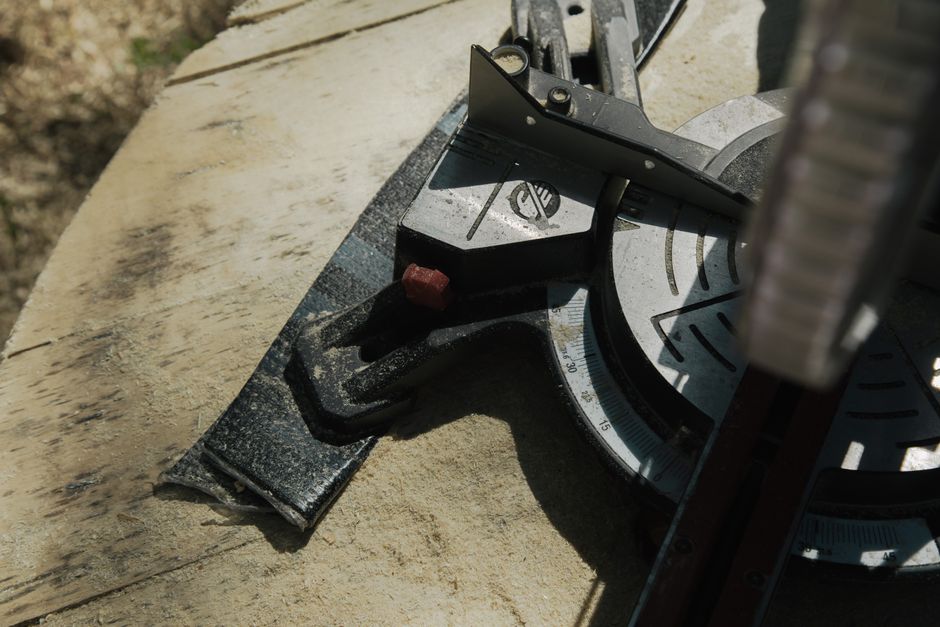
Launch week already delivered its verdict on SawStop's WorkTrack guides, and the verdict is drama: half the woodworking internet is debating whether SawStop copied JessEm's long-running Clear-Cut. Fun for a forum thread. Useless for a decade. A serious SawStop WorkTrack vs JessEm Clear-Cut comparison has to answer the question that outlives the news cycle, which system still grips true after ten years of service, and what it costs to keep it there.
Stay in the loop.
Get the latest posts and exclusive content delivered to your inbox.
Join 52 readers. No spam. Unsubscribe in one click, anytime.
The drama buries the detail that matters most. Both systems hold stock the same way, with spring-loaded arms pressing urethane rollers down onto the work and inward against the fence. Shared principle means shared wear points, roller surface, springs, bearings, and mounting hardware, and it means the launch-week spec sheets cannot tell you anything about year ten. The machined arms and bodies will outlast most of the people who buy them. The parts that touch wood and carry spring load are consumables, every one of them.
So we graded both platforms the way a buy-it-for-life woodworker shops: audit five named wear points, price each maker's replacement-part ecosystem, then run cost-per-decade math across the whole category, import clones and featherboards included. No launch coverage bothers with any of that, and the answer to the real question lives exactly there.
How We Judged These Two Stock Guides
The test is simple to state and rare to see applied: rank each system by which parts fail first and what those parts cost to replace. The SawStop WorkTrack review wave so far, like nearly every JessEm Clear-Cut review before it, grades week-one grip. That tells you how a guide performs on delivery day, not on delivery day plus a few thousand board feet, and the two answers are not always related.
Stock guides earn this scrutiny because they are table saw kickback safety hardware wearing a convenience costume. Pressing work down and tight to the fence suppresses the lift-and-spin combination that flings wood back at the operator, and Fine Woodworking's breakdown of how kickback happens covers the mechanism. An accessory doing that job deserves to be judged on how well it keeps doing it, which means judging decay, not day-one grip.
On the copying question, once and briefly. ToolGuyd's launch coverage called the resemblance a ripoff, with extra irony given SawStop's own history of patent litigation. Maybe, maybe not. It has no bearing on ten-year ownership value: a copy with a strong parts pipeline beats an original design with none, and the reverse holds too. From this point on, design lineage stays out of the audit.
SawStop WorkTrack vs JessEm Clear-Cut at a Glance
Two product pages tell you what each maker wants you to know. SawStop's WorkTrack product page sells system integration, while the Clear-Cut stock guides page sells a long track record. The table shows what a decade buyer actually needs, and how little of it is genuinely different.
| SawStop WorkTrack | JessEm Clear-Cut | |
|---|---|---|
| Grip principle | Spring-loaded urethane rollers | Spring-loaded urethane rollers |
| First part to fail | Urethane roller surface | Urethane roller surface |
| Time on market | New, launched late 2026 | Long-running incumbent |
| Parts track record | Parts list published at launch, otherwise unproven | Years of replacement rollers and hardware sold |
| Mounting approach | Carrier-based, per its manual | Miter-slot hardware, saw to saw |
| Made in | China, per launch coverage | Canada, per JessEm |
Two sentences on lineage, as promised: the systems are close enough in function that the original-versus-copy debate is a moral question, not a practical one. The practical question is which company will still sell you a roller in 2036, and that is where they diverge.
Roller Grip Material Fails First

Ask an industrial engineer how long a polyurethane feed roller lasts and you will not get a number, you will get a maintenance interval. Conveyor builders treat urethane rollers as scheduled consumables because the material wears through well-documented modes, glazing, age hardening, and edge cracking, and the same physics governs any urethane roller table saw accessory. Engineering references on polyurethane conveyor rollers describe exactly this replacement-cycle thinking. The roller is the sacrificial part. Everything else in the box is designed to outlive it.
On a stock guide the decay shows up mid-cut before it shows up on the bench. Feed resistance climbs, the roller stops turning freely against the wood, and thin stock starts to wander off the fence line. Pull the guide and inspect the face: a polished, glassy surface has lost its tack, a hardened compound skates over the work instead of conforming to it, and hairline cracks at the edges mean the roller has been riding over knots and dried glue lines on its way out.
How long do urethane stock guide rollers last? There is no honest universal number, because lifespan tracks hours, species, pitch load, and shop cleanliness. A weekend woodworker may run one set for years. A daily shop can glaze one in a fraction of that. The question that actually decides value is what a replacement roller costs and whether anyone still sells it. JessEm has historically listed Clear-Cut replacement rollers and hardware at a small fraction of a new guide set. SawStop's roller pricing and availability are simply unknown this early, which is a fact, not a knock.
Bearings, Axles, and Spring Tension
Each roller spins on a bearing or bushing, and those are the quiet second failure point. They rarely die from load; they die from grit. Fine dust works past the seals, rotation goes rough, and a rough bearing drags on the stock at exactly the moment you need free spin. The bench test takes ten seconds: a healthy roller should spin freely and coast, while one that stops within a turn or feels crunchy under a fingertip is contaminated. Well-kept bearings and axles will usually outlast several sets of urethane, which is why they sit below the roller on the failure order and far above the machined arms.
Springs are the opposite story: the cheapest part in the system and the one most often misdiagnosed. Spring tension loss never announces itself with a broken component. It shows up as slipping on thin or narrow stock first, pieces that used to feed pinned to the table now lifting or skating at the roller. Most owners read that as a fence problem or a blade problem and chase the wrong fix for months. The diagnostic is almost free: if thin stock slips while thick stock still feeds solid, suspect the springs before touching anything else. Where a maker sells springs separately they cost pocket change, yet almost nobody keeps a pair on hand. Be the exception.
Mounting Hardware and Track Compatibility
A guide set can be mechanically perfect and still die of incompatibility. Mounting hardware and the track interface decide whether a healthy set survives a saw upgrade, and this failure mode never appears on a spec sheet.
The Clear-Cut TS mounts through standard miter-slot hardware, so it travels from saw to saw as long as the new table's slot matches standard miter slot dimensions. That portability is a durability feature in its own right: the guides can outlive any single saw you own. WorkTrack mounts through SawStop's own carrier hardware, and the WorkTrack carrier manual documents the setup. What launch materials have not settled is WorkTrack's track compatibility beyond the SawStop ecosystem, and that is the question a future saw change will force.
The stranded-accessory scenario is common enough to price in. Buy into a proprietary bracket scheme, then switch saws or watch a bracket get discontinued, and perfectly good rollers and arms become shelf ornaments. Before choosing either system, verify three things: your saw's slot or track geometry, the maker's current bracket range, and whether third-party mounting options exist. Non-standard slots and discontinued brackets have retired more accessory sets than worn-out urethane ever has.
Replacement Parts and the Parts Ecosystem
This is where the two companies genuinely diverge, and it is the heart of the SawStop WorkTrack vs JessEm Clear-Cut decision.
JessEm has sold the Clear-Cut line long enough to demonstrate a working replacement-parts pipeline. Rollers, springs, and mounting hardware have been available as separate catalog items for years. A parts list is easy to publish on day one and easy to abandon in year five; a long habit of actually shipping small parts orders is the only proof that counts, and JessEm has that proof.
SawStop has published a WorkTrack parts list alongside launch, and the company has decades of history supporting the machines it sells. Both facts count in WorkTrack's favor. But an accessory line this new has no track record by definition, and accessory lines get culled far more often than safety-critical saw parts. The rational hedge if you buy WorkTrack: order a spare roller set and springs in the same transaction, while availability is guaranteed rather than promised.
State the asymmetry honestly and it still favors the incumbent. A proven parts pipeline versus a promising but unproven one is a legitimate lifetime-buying factor, every bit as real as roller compound or arm rigidity.
Cost per Decade Across the Category

Are table saw stock guides worth it over ten years? Price the stock guide wear parts instead of the sticker and the answer changes shape. The working formula:
cost per decade = purchase price + (expected wear-part replacements × part price) + abandonment risk
Abandonment risk is the cost of replacing the entire system when a single part becomes unavailable, and it dominates cheap systems with no parts pipeline. The table below uses round illustrative numbers, so substitute live pricing before you decide:
| System type | Upfront, illustrative | Wear parts pipeline | Decade behavior |
|---|---|---|---|
| JessEm Clear-Cut | premium | proven | one purchase plus a few roller swaps |
| SawStop WorkTrack | premium | promised | one purchase, spares bought early |
| Import clone | roughly a third of premium | often none | one dead roller can force buying the whole set again |
| Featherboards | low | none needed | near-zero dollars, real performance cost |
The clone trap is the one launch coverage never mentions. Suppose a clone set costs 60 dollars, a premium set costs 160, and replacement rollers run about 20 a pair. If the clone's rollers glaze in year four and nobody sells replacements, you buy a second clone set, and eventually a third. The premium set fed 20-dollar rollers twice lands cheaper per year of service than the "cheap" option, and it never leaves you stuck mid-project. That is the entire argument for parts pipelines in one line of arithmetic.
On stock guides vs featherboards for a table saw: featherboards cost little and effectively last forever because they are simple, but they hold by friction, so feed resistance and surface marking come with the package, and they cannot roll with the cut. For an occasional cutter that trade can be perfectly fine. For anyone who rips weekly, rolling guides pay for their wear parts in feed quality alone.
The Verdict by Buyer Type
The hardware is a coin flip. The parts ecosystems are not, and that asymmetry settles most versions of this matchup:
- Buy it for life on a standard-slot saw. Clear-Cut, today, on the strength of a demonstrated parts habit. Revisit WorkStop if SawStop proves accessory support over the next few years.
- Already all-in on SawStop machines. WorkTrack is defensible and well matched to the carrier system, but buy spare rollers and springs with the set.
- On a budget. A clone is acceptable only if you verify replacement parts exist or you accept the set as disposable when the first roller dies.
- Occasional weekend cutter. Featherboards may honestly cover your needs at a fraction of the price.
- Planning a saw change within the decade. Whichever set you buy, confirm track and bracket compatibility with the next saw before this one.
Notice that none of these verdicts references who copied whom, because none of them should.
Maintenance for a Ten-Year Lifespan
Either system can reach a decade of honest service with a routine that costs minutes per month:
- Inspect roller faces for glazing, edge cracks, or hardening. Press a thumbnail into the compound; aged urethane that will not dent has hardened past its grip window.
- Clean rollers with mild soap and water. Skip aggressive solvents, which can swell or degrade urethane.
- Run the thin-stock slip test quarterly. Slipping thin stock with solid thick-stock feed points at the springs, not the fence.
- Check mounting torque and clamp tension. Over-clamping miter-slot hardware distorts slots and cracks brackets over the years.
- Store guides out of direct sunlight when off the saw, since UV exposure ages urethane.
- Buy one full set of spares, rollers and springs, on the day you buy the guides, while availability is certain.
Ten years from now nobody will remember the copying thread. The owner still ripping clean, fully pinned cuts will remember which company shipped the roller.
Stay in the loop.
Get the latest posts and exclusive content delivered to your inbox.
Join 52 readers. No spam. Unsubscribe in one click, anytime.
About the author
Priya Raman
Repair and Restoration Writer
Priya maintains and restores everything she owns, from cast iron to mechanical watches, and has spent years in the right-to-repair community. She writes about maintenance, warranties, and repairs, the half of buy-it-for-life that keeps good gear out of landfills.
Related Posts
The Best Hydraulic Floor Jack Ranked by 20-Year Survival
The best hydraulic floor jacks ranked by 20-year survival, from Daytona to US-made Hein-Werner, on seal kits, parts supply, and cost per decade.

Buy It For Life Pocket Knives Ranked by Lock and Pivot
Buy it for life pocket knives ranked by lock wear, pivot survival, and replaceable parts. The lock retires most folders long before the blade does.

Long Reach Diagonal Cutters Ranked by What Fails First
Long reach diagonal cutters ranked by what fails first: joint slop, jaw drift, and edge wear in Crescent X2, GearWrench Double X, Knipex, and Channellock.