The Best Hydraulic Floor Jack Ranked by 20-Year Survival
The best hydraulic floor jacks ranked by 20-year survival, from Daytona to US-made Hein-Werner, on seal kits, parts supply, and cost per decade.
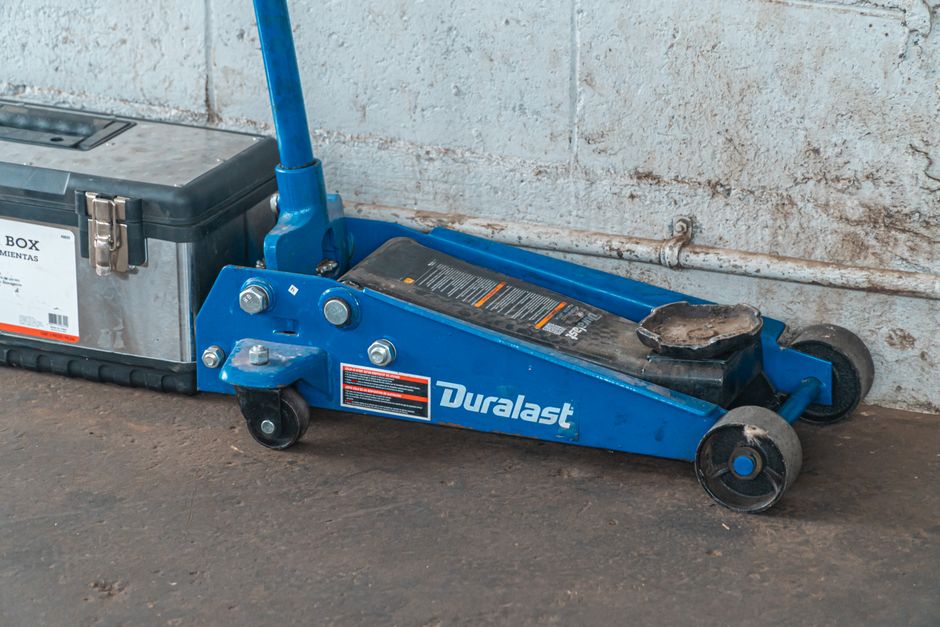
Harbor Freight rolled out its Daytona 3-ton low-profile in Metallic Racing Blue with white racing stripes, $289 at launch, and the gear press reviewed the paint. Fair enough; the flake pops. But coverage that grades colorways is grading the one part of a floor jack that never decides anything. The question people actually ask is "how long does a hydraulic floor jack last," and the answer lives somewhere else entirely: in the cylinder, the valves, and the parts catalog. Most jacks die in their hydraulics long before the frame matters, which makes the best hydraulic floor jack simply the one whose seals you can still buy in year fifteen.
Stay in the loop.
Get the latest posts and exclusive content delivered to your inbox.
Join 36 readers. No spam. Unsubscribe in one click, anytime.
This ranking scores the system that decides year twenty: seal weep, ram pitting, bypass and check-valve faults, weld integrity, and the parts economy behind all four. Graded that way, the category splits in a way week-one spec sheets never show. A $290 budget Daytona outlives many pricier imports because its cylinder accepts generic seal kits, while heritage US-made iron like Hein-Werner stays rebuildable across decades on official parts. And if the jack in your garage is weeping or slowly sinking right now, hold that thought. That is a safety event, not a shopping trigger. Stands first, decisions second.
How a hydraulic floor jack actually dies
Floor jack longevity is a hydraulics story wearing a steel costume. Four failure modes end almost every jack's working life, and three of the four live in the cylinder and pump.
Seal weep. The u-cups and o-rings inside the ram and pump wear out from cycle friction, heat, and dirty oil. The first symptom is a glossy film on the ram after lowering; the later one is a slow sink under load. Contamination is usually the accomplice, since water, grit pulled past a dried wiper, and metal flakes from a worn pump all chew seals faster than clean oil ever could. A hydraulic seal specialist's writeup on common hydraulic seal failure modes tells the same story: contamination and wear, not mystery, kill most ram seals.
Ram pitting. The polished ram is a precision bearing surface, not just a shiny stick. Rust rings, dings, and score marks act like sandpaper on every seal that wipes across them, so a pitted ram can eat a brand-new kit in months. Ram condition, not kit cost, is the real gate on any rebuild.
Bypass and check-valve faults. A jack that sinks with the release valve closed, or stops building pressure near full extension, gets read as dead all the time. Frequently it is a sticking ball or worn seat in the bypass or check valve, and a strip, clean, and reseat of the valve gallery restores full function for close to nothing. This is one of the most misread failures in the category and the cheapest to fix.
Weld and casting failure. The rarest mode and the only non-negotiable one. Cracked lift-arm welds, split castings, or bent release hardware send a jack to scrap no matter how healthy its hydraulics are. You can rebuild a cylinder all day. You never weld a loaded frame back into service.
The takeaway that drives everything below: lifting capacity and steel thickness tell you almost nothing about service life, because the parts economy around seals, rams, and valves sets the ceiling. A gorgeous frame around an orphaned cylinder is a well-finished paperweight.
The 20-year survival scorecard
Score any jack, including the five below, against five criteria. Rate each 0 to 5, multiply by its weight, and sum. The weights track the failure modes above, which is why half the total sits on the two hydraulic criteria you can inspect with a rag and a flashlight in under a minute.
| Criterion | What you check | Why it decides year 20 | Weight |
|---|---|---|---|
| Seal kit availability | A floor jack seal kit exists for that exact cylinder, at a sane price | No kit means one weep ends the jack | 30% |
| Ram design and condition | Hardened, chromed, mirror finish, replaceable if needed | Pitting is the repair gate; kits cannot fix rams | 25% |
| Valve serviceability | Bypass and check valves accessible, cleanable, adjustable | The cheap fix that masquerades as death | 15% |
| Frame and weld integrity | Lift-arm welds, castings, release linkage | The failure no rebuild cures | 15% |
| Parts ecosystem depth | Manuals, exploded drawings, OEM and aftermarket stock | Feeds the other four criteria for decades | 15% |
The best hydraulic floor jacks, ranked by survival
The best hydraulic floor jack for pure survival is not automatically the best purchase, and the gap between those two ideas is where buyers waste money. Five representative jacks, best to worst, and every row is checkable by name or by trait.
| Rank | Jack | Survival verdict | One-line rationale |
|---|---|---|---|
| 1 | New Hein-Werner 3-ton class | 30+ years, indefinitely rebuildable | Still US-built, with official rebuild parts and published service drawings |
| 2 | Used Walker or Blackhawk-era US jack | Often 50 years old, one rebuild from 20 more | Overbuilt architecture designed for seal service, parts still available |
| 3 | Harbor Freight Daytona 3-ton | 15 to 25+ years with one rebuild | Common cylinder architecture that generic seal kits commonly fit |
| 4 | House-brand import in the $120 to $180 band | Dead at first serious weep | No cataloged cylinder, and a pre-purchase search for its seal kit comes up empty |
| 5 | Torin or Pro-Lift big-box class, about $70 | Five to ten years of light use | At $70 each, the cost-per-decade math is a replacement treadmill, not a rebuild case |
Why the Daytona outranks its price class. Most Harbor Freight Daytona review coverage grades colorways and week-one specs, but the survival story is boringly practical: the pump and cylinder follow architectures shared across a huge installed base, so aftermarket seal makers stock interchange kits, and the launch specs list a 5,000-cycle rating. Can you rebuild a Harbor Freight floor jack? For Daytona-class jacks, commonly yes, for the price of a generic kit and a quart of jack oil. The Pittsburgh line and many lookalike imports are a different story, with cylinders nobody catalogs.
Why used US iron ranks second. The most durable floor jack in service today was probably built before 1980. Walker and Blackhawk jacks from that era were overbuilt and designed to be resealed, and specialty suppliers still list Blackhawk parts decades after the original owners moved on. A used US-made floor jack is worth buying precisely because its second and third lives were planned at the factory, which is the entire difference between a tool and a consumable.
The Daytona vs Hein-Werner floor jack question. New, the Hein-Werner class often lists between roughly $600 and $1,000 depending on frame and capacity, against about $290 for the Daytona. The spread does not buy lifting capacity; it buys permanence, heavier duty-cycle hardware for daily shop use, and a jack your heirs will argue over. For a home shop lifting a car twice a month, a Daytona plus one planned rebuild is the rational path. For daily commercial cycles, the US-made jack earns its premium back in longevity. Neither choice is wrong. The orphaned middle tier is. If the jack in front of you is a house-brand import from the $120 to $180 band, run the two-minute check before you pay: search for that exact model's seal kit. If nothing turns up, you are holding a consumable priced like a tool.
The seal kit economy behind the ranking
Two repair economies keep jacks alive, and the ranking above is really a map of which economy each jack belongs to.
Generic interchange, the Daytona path
Daytona-class cylinders follow common bore and ram dimensions, so aftermarket makers produce generic kits that interchange with them. The process is measurement, not part numbers: ram diameter, cylinder bore, and the old seals themselves, matched with calipers against a kit commonly in the $20 to $40 range. Measure carefully, because a kit even half a millimeter off in bore diameter can weep from the first lift. In the Daytona world, floor jack leaking hydraulic fluid repair is a thirty-dollar evening, not a funeral.
Official parts, the Hein-Werner path
Hein-Werner still builds its jacks in the USA and still publishes exploded parts diagrams that let you order the exact u-cups, backup rings, and valve components by reference number, no calipers required. Official rebuild parts run pricier than generic, often two to four times a kit, and the same specialty channel keeps vintage Blackhawk and Walker hardware alive. Whichever path you take, the pre-order ritual is identical: wipe the ram, inspect it under bright light for rust rings and score marks, and stop right there if the finish is pitted. A fresh kit on a pitted ram is money spent destroying the kit.
Cost per decade, not sticker price
Sticker price is a down payment; the number that matters is cost per decade of service. Honest assumptions rearrange the field again.
| Path | Upfront | By year 10 | By year 20 | Notes |
|---|---|---|---|---|
| Big-box disposable, about $70 | $70 | $140 | $280 | Four jacks bought, three dead, zero rebuilt |
| Mid-price orphan import, about $150 | $150 | $150 | $300 | Dies at first weep, no kit exists |
| Daytona, about $290 | $290 | $290 | $325 | One $25 kit plus oil around year 10 |
| Used US jack, about $250 all-in | $250 | $250 | $280 | Rebuilt at purchase, oil top-ups after |
| New Hein-Werner, about $800 | $800 | $800 | $890 | One official kit, alive past year 30 |
Treat those as illustrative street prices with your labor valued at zero, and verify current pricing before running your own numbers. Three findings survive any reasonable tweak to the assumptions. The crossover lands between years 10 and 20: at the decade mark the cheap jack still wins on cash, and by year 20 the replacement treadmill has caught up while handing you three failures at inconvenient moments. The orphan tier never wins after year ten, since paying $150 twice for kit-less cylinders is the worst contract in the category. And the used US path quietly beats everything at every horizon, buying rank-one architecture at rank-three money. Compress the duty cycle to daily shop use and the cheap jacks stop being cheap almost immediately, because cycles, not calendar years, are what consume seals. Run the cost-per-decade comparison honestly and it lands on whichever jack has a real parts path.
A bleeding jack is a safety event
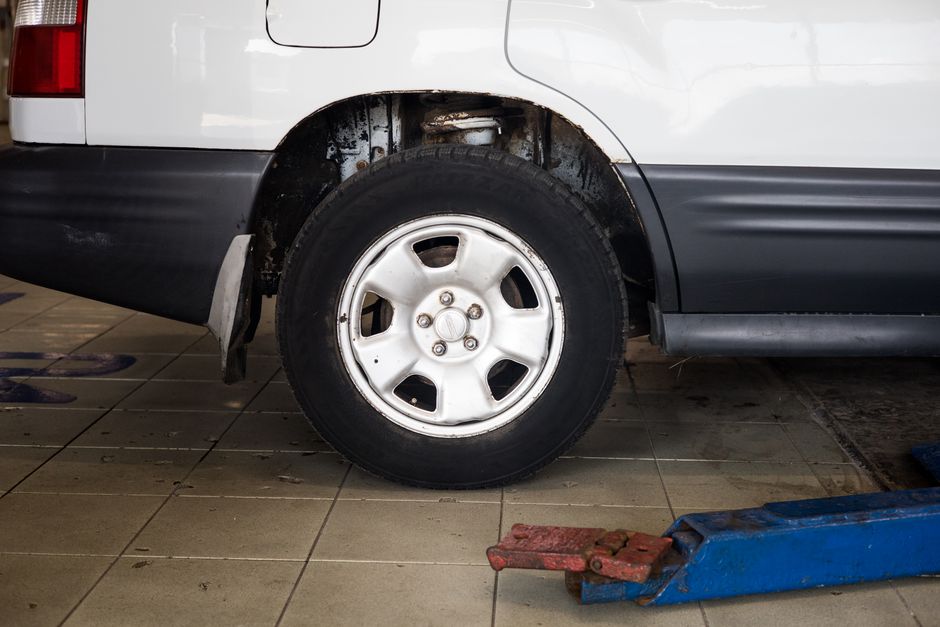
If your jack is weeping or slowly sinking, the repair-or-replace question comes second. A hydraulic floor jack is a lifting tool, not a holding tool, and the symptom you are watching is its load-holding system failing in real time.
The rule that outranks this article: a raised vehicle goes onto rated jack stands before anyone climbs underneath. Never trust a jack alone, no matter how new or expensive it is.
Read the leak before you touch a wrench
- Oil film on the ram after lowering means early seal weep. The u-cups are tired. Bench-rebuild on your schedule, but soon.
- Slow sink under load with the release closed means seals well past due, or a bypass and check-valve fault. Stop working immediately. A floor jack that is slowly sinking gets fixed on the bench, where valve service costs almost nothing and a seal kit costs little, and neither matters while the car is in the air.
- No pressure or no hold at full extension means check the oil level and purge trapped air first, then suspect the check valve before condemning the cylinder.
The pre-lift ritual
Sixty seconds before every session: wipe and inspect the ram for film and rust, cycle the jack to full height unloaded and watch it hold for a minute, check the oil level with the saddle fully down, eyeball the lift-arm welds and caster mounts, and run the release valve through its travel. If anything on that list fails, the car can wait. The jack cannot.
What to buy, rebuild, or walk away from
If you already own it
- Weeping, ram mirror-smooth, kit exists: rebuild it. A good step-by-step seal replacement guide and one free evening stand between you and another decade of service.
- Sinking with no visible weep: service the bypass and check valves before spending a dollar. Cleaning and reseating a valve ball frequently restores full function.
- Pitted or scored ram: walk away, unless the model's official parts list sells a replacement ram at a sane price.
- Cracked weld or casting: scrap it without guilt. No seal kit fixes structure.
If you are buying new
A home shop on a budget should buy the Daytona-class jack and plan on one $25 rebuild. A buyer on a decades horizon, or a shop cycling a jack daily, should buy the new US-made Hein-Werner, the definition of a rebuildable floor jack: bought once, fed official parts every 10 to 15 years. Skip the orphaned middle tier entirely. It charges rebuild-jack prices for disposable-jack economics.
If you are hunting used US iron
Is a used US-made floor jack worth buying? Usually yes, at the right price, provided it passes five checks before money moves:
- Ram finish under the wiper, wiped clean and lit brightly: mirror surface or walk away.
- Oil condition at the filler plug: milky means water, gray glitter means worn internals, a burnt smell means abuse.
- Full-height unloaded pump, held for a minute, watched for drift.
- Welds at the lift arm and caster mounts, castings inspected for cracks.
- A parts lookup for that exact model, because "they should make seals for it" is not a parts path.
How long does a hydraulic floor jack last? Exactly as long as its parts economy does. Buy the cylinder you can feed, feed it before it weeps, and put the car on stands no matter how good the paint looks.
Stay in the loop.
Get the latest posts and exclusive content delivered to your inbox.
Join 36 readers. No spam. Unsubscribe in one click, anytime.
About the author
Naomi Estrada
Value and Comparisons Analyst
Naomi came to durable goods through cost-per-use economics, running the numbers on cheap-versus-quality for a personal-finance site before going all-in on BIFL. She builds the head-to-head comparisons and best-of rankings so readers stop guessing and buy the right product the first time.
Related Posts

Buy It For Life Pocket Knives Ranked by Lock and Pivot
Buy it for life pocket knives ranked by lock wear, pivot survival, and replaceable parts. The lock retires most folders long before the blade does.

Milwaukee vs Bosch Cordless Drill, Re-Ranked for Year Ten
Milwaukee vs Bosch cordless drill, re-ranked for year ten on chuck wear, clutch detents, trigger life, and battery parts instead of torque specs.
Buy It for Life Scissors Ranked by Pivot and Steel
Buy it for life scissors ranked by pivot serviceability and sharpenability, plus why induction-hardened edges can turn tough shears into consumables.