Buy It for Life Scissors Ranked by Pivot and Steel
Buy it for life scissors ranked by pivot serviceability and sharpenability, plus why induction-hardened edges can turn tough shears into consumables.
Count the scissors in your house. You own more of them than any other tool, and you have almost certainly never compared two pairs on anything but price and how they felt in week one. That instinct is backwards. On a decade scale, week-one cutting feel predicts almost nothing, and neither does the sticker price. What decides whether a pair is still cutting in 2035 is whether the pivot can be re-tensioned and whether the steel will accept a new edge from an ordinary file or bench stone.
Stay in the loop.
Get the latest posts and exclusive content delivered to your inbox.
Join 25 readers. No spam. Unsubscribe in one click, anytime.
This is a durability-first ranking of buy it for life scissors across four use lanes, household, kitchen, tailoring, and shop work, plus the budget platform that quietly beats a forged heirloom on cash. It also answers the steel question the marketing will not. Induction hardening, the feature sold as long-lasting sharpness, genuinely extends the first edge, and it usually converts the shear into a consumable the day that edge finally dies. The new SK Tools heavy duty shears that prompted this piece are the cleanest example of that trade you will find anywhere.
By the end you can grade any pair in your drawer in about 30 seconds, pick the right model for your lane, and run a maintenance plan that keeps it serviceable for decades.
Pivot and Steel, the Two Specs That Decide a 20-Year Pair
Pick up any pair and run two checks.
Check one, the pivot. There are only three kinds. An adjustable screw pivot lets you set blade tension and, on most designs, take the pair fully apart for cleaning and lapping, which is why screw pivot scissors dominate any ranking that measures decades instead of weeks. A peened rivet is smashed and set at the factory. It works until it loosens, and once it loosens you get blade chatter and a repair that generally fails at home, because re-peening a worn rivet rarely restores tension for long. A molded one-piece body, the kind on cheap kitchen multipacks, has no pivot service at all. When it dulls or gums up, it is disposable by design.
The pivot also fails before the blades on most discarded scissors. Pivots collect lint, adhesive, and metal swarf; they wear, loosen, and corrode. If you can open the pivot, all of that is a five-minute fix with soap and an old toothbrush, and a take-apart cleaning guide covers the disassembly basics. That same access is what makes lapping the inner blade faces possible when the edges stop meeting cleanly.
Check two, the steel. Hold a standard mill file flat against the bevel and draw it across with light pressure. If the file bites and leaves a bright scratch, the edge is reworkable at home forever. If the file skates, gliding over the surface without cutting, you are holding an induction-hardened edge. That one second answers the question of whether induction-hardened scissors can be sharpened, and for the pair in your hand the answer is usually no.
What Induction Hardening Buys, and What It Takes

The metallurgy in one paragraph
Induction hardening passes the blade through a coil that heats only a thin surface layer, then quenches it, leaving a hard, thin case over a tougher core. The induction case hardening process is legitimate engineering with a real payoff: the surface resists abrasive wear so the first edge lasts longer, while the core resists bending and snapping. That is why it shows up on pruners, saw plates, and hardened budget shears.
The bill comes due later. A hand file is itself hardened to roughly the low-to-mid 60s on the Rockwell C scale, and an edge case-hardened to a similar level makes it skate. For what that scale means in practice, this plain-language Rockwell hardness scale explainer is worth two minutes. The short version: if your file skated in the check above, your bench stones are softer still, and powered diamond gear is the only home route that removes metal at all. Even then you are gambling, because the case is thin. Grind through it and you expose the softer core, and edge retention collapses right where you reworked. Trade discussion of induction-hardened cutting edges reaches the same conclusion: treat the edge as non-reworkable unless you have specialized equipment and modest expectations.
SK Tools heavy duty shears, a mini review of the trade
Consider this a compact SK Tools shears review, because the launch is a perfect specimen. Per the SK Tools launch coverage, the new heavy duty scissors were posted at $15 for the 7- and 8-inch sizes and $18 for the 9- and 10-inch versions, sold through Amazon. SK describes the blades as high-quality CR-V steel with one-piece construction, and the current SK-10 product listing carries the one-piece drop-forged claim. The edges are induction-hardened.
That is a coherent product. One-piece forged chrome vanadium with a hardened edge at $15 to $18 is decent value for a shear you plan to abuse and eventually replace. The marketing imagery shows them cutting sheet metal, which I would not plan around. And the launch specs say nothing about the pivot, the single detail that decides whether this is a 30-year tool or a 5-year tool. Check the listing photos for a screw slot before buying. This is not a scam; it is a trade, and the seller is counting on you not noticing which side of it you are on.
How We Scored Longevity
Four criteria, weighted toward the two specs that gate everything else.
| Criterion | Weight | Scores high | Scores low |
|---|---|---|---|
| Pivot serviceability | 35% | Adjustable screw, full disassembly | Peened rivet, molded body |
| Steel reworkability | 35% | Takes a file or stone, through-hardened | Induction case, plated mystery steel |
| Handle fatigue | 15% | All-steel or overmold on a steel core, thick pivot boss | Thin plastic at the pivot, soft overmold |
| Cost per decade | 15% | Low upkeep under real load | Paid service several times per decade |
Handle fatigue is scored separately because handles, not blades, often end a scissor's life first. Cracked plastic at the pivot boss and degraded overmold retire otherwise serviceable pairs, and no amount of edge care repairs a broken grip. Cost per decade is computed with stated assumptions in the cost section below, so you can rerun the math for your own usage.
The Five Buy It for Life Scissors, Ranked
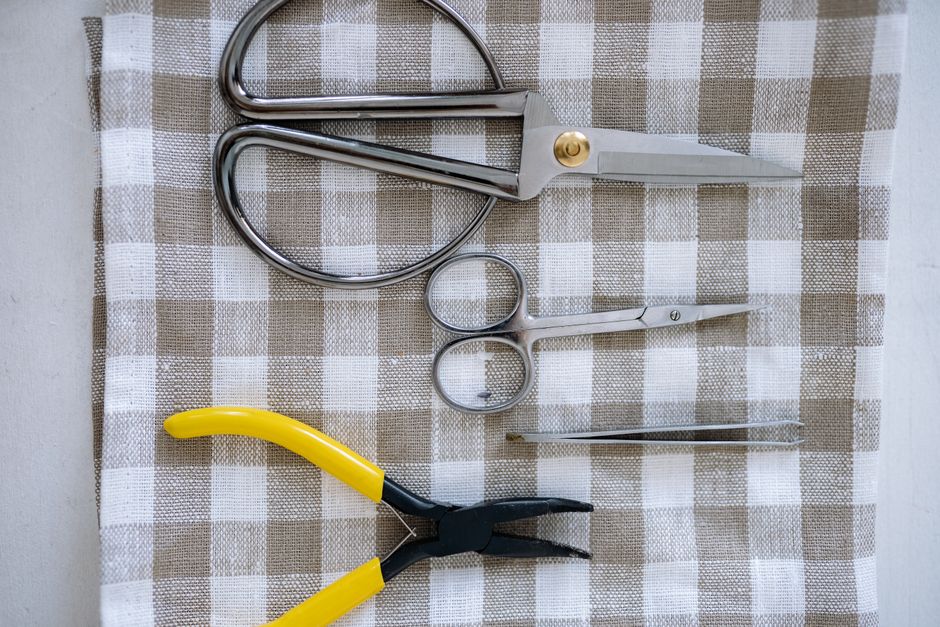
| Rank | Pick | Lane | Pivot | Edge strategy | 10-yr cost est. |
|---|---|---|---|---|---|
| 1 | Forged shears, Wiss pattern | Tailoring and shop | Adjustable screw | Forged steel, file-friendly | $85 to $160 |
| 2 | Take-apart kitchen shears | Kitchen | Screw, splits in half | Stainless, stone-friendly | $40 to $60 |
| 3 | Fiskars screw-pivot scissors | Household | Adjustable screw | Stainless, easy to sharpen | $15 to $25 |
| 4 | Slice replaceable blade scissors | Budget, all lanes | Fixed, blades swap | Ceramic refills | $25 to $45 |
| 5 | SK Tools heavy duty shears | Shop consumable | Unverified | Induction-hardened CR-V | $30 to $55 |
1. Forged shears, Wiss pattern
The heirloom earns the word. Classic forged tailor shears carry an adjustable screw pivot, all-steel handles, and through-hardened blades that take a file at the kitchen table. Even worn examples survive, since restorers have long shimmed worn tailor shears to take up pivot slop rather than junking them. Sized up to 10 or 12 inches, the same platform is the traditional shop shear for leather, canvas, and rubber, which is why it tops both lanes here. The modern stainless alternative is the Kai 7000-series shears, current-production dressmaking shears that professional sharpeners service routinely. Service is simple: check tension, oil the pivot, hone on a stone.
2. Take-apart kitchen shears
The best kitchen shears for longevity are the ones that split in half at the pivot. Food debris at a pivot accelerates wear and corrosion that closed pivots hide, so taking kitchen shears apart for a real wash is not a nicety, it is the maintenance plan. Rinse, dry fully, one drop of oil, re-tension the screw, and a $30 pair outlives several $15 pairs that can never be opened.
3. Fiskars screw-pivot household scissors
Not heirloom steel, and that is fine. Most current Fiskars household scissors use an adjustable screw pivot, the stainless takes an edge from any stone, and breakage is covered by a lifetime warranty you can file through Fiskars warranty registration. A $15 pair with a serviceable pivot and a warranty backstop is more durable in practice than many $40 pairs with riveted pivots and none.
4. Slice replaceable blade scissors
The honest consumable. At roughly $12 for the platform, with Slice replacement blades commonly in the low single digits each, dull becomes a ten-second swap instead of a skill you have to learn. The edge is a consumable by design and the company says so. For households that will never touch a stone, this is the highest-utility pick on the list.
5. SK Tools heavy duty shears
The trade specimen from above. A perfectly good buy at $15 to $18 for shop abuse where losing the pair matters more than keeping it, but last place as a lifetime pick because the edge has no afterlife once the induction case dulls.
Cost per Decade, When a $12 Platform Beats a $100 Heirloom
Stated assumptions, so you can rerun this: published scissor sharpening price lists commonly run from the high single digits to the low teens per pair, so assume $10 per service using this professional sharpening price list as a reference point. Moderate load means three sharpenings per decade, heavy means six. Slice blades average $2 to $3. SK replacements run $15 to $18 per unit, two to three units per decade under heavy shop use.
| Platform | Buy-in | Moderate decade | Heavy decade |
|---|---|---|---|
| $100 forged heirloom, paid sharpening | $100 | ~$130 | ~$160 |
| $100 forged heirloom, home sharpening | $100 | ~$100 | ~$105 |
| Take-apart kitchen shears | ~$30 | ~$40 | ~$55 |
| Fiskars screw-pivot household | ~$15 | ~$15 | ~$25 |
| Slice replaceable blade | ~$12 | ~$20 | ~$35 |
| SK Tools heavy duty | ~$16 | ~$16 | ~$48 |
The replaceable blade versus forged shears cost argument lands hardest under heavy use with paid sharpening: $160 for the heirloom against roughly $35 for the platform. The heirloom still wins on three grounds. If you sharpen at home, a one-time $25 stone pushes its marginal service cost toward zero. Past the ten-year mark, buy-in amortizes while blade purchases recur forever. And a forged shear cuts fine fabric more cleanly, disassembles for tuning, and holds resale value that a plastic-body shear never will.
Keeping a Pair Alive, and When to Retire One
A routine that takes ten minutes a season:
- Tension. Open the blades halfway and let them fall. They should close with slight drag. If you are wondering how to tighten a loose scissor pivot, it is a quarter-turn on the screw at a time until that drag returns.
- Disassemble and clean. Screw pivots only. Remove pivot fuzz, lint, and dried adhesive; for kitchen pairs, degrease the pivot area specifically.
- Oil. One drop of light machine oil at the pivot, then wipe the blades dry.
- Hone before full dull. A few light passes on a fine stone at the factory bevel, then a pass on the inner face to remove the burr, beats waiting for a full regrind.
- Store dry. No wet sink drawers, and wipe carbon-steel blades after cutting anything damp.
Retire a pair when you see these signals: cracked plastic at the pivot boss (the most common death, since handles fail before blades), overmold peeling enough to change your grip geometry, a loosened rivet, deep chips in an induction edge, or blade tips that no longer meet after repeated regrinds. Everything else on a screw-pivot, file-friendly pair is fixable.
That is the whole framework. Two specs you can check in half a minute, five picks across the lanes, and honest math on whether your next decade belongs to a $100 heirloom or a $12 platform. Scissors that last decades are chosen on purpose, and now you know exactly what to choose on.
Stay in the loop.
Get the latest posts and exclusive content delivered to your inbox.
Join 25 readers. No spam. Unsubscribe in one click, anytime.
About the author
Cal Whitmore
Durability Testing Lead
Cal has spent a decade in product testing, from tool labs to outdoor gear reviews, and treats every claim of a lifetime warranty as a hypothesis to break. He writes about the materials, joinery, and failure modes that actually decide whether gear lasts twenty years or two.
Related Posts

Best Knife Sharpening System Ranked by What Fails First
The best knife sharpening systems ranked by what wears out first, comparing Wicked Edge, Tormek, Edge Pro, KME, and Lansky on vise drift and consumables.

The Best Utility Knife Is Not the Week-One Winner
The best utility knife for a decade of work is not the week-one winner. We re-rank 9 tested knives by failing parts and 10-year blade cost.

The Best Tool Belt Is the One That Fails Last
The best tool belt is the one that fails last. We rank leather and nylon rigs by the parts that break first, with cost-per-year math by trade.