Best Knife Sharpening System Ranked by What Fails First
The best knife sharpening systems ranked by what wears out first, comparing Wicked Edge, Tormek, Edge Pro, KME, and Lansky on vise drift and consumables.

The fastest way to ruin a guided sharpening setup looks the same on a $40 clamp and a $500 one: crank the vise until the handle stops. On a thin kitchen blade, that torque bows the steel between the jaws, the edge reference shifts a degree between passes, and the angle repeatability you paid for quietly disappears while the knife still feels rock solid. Wicked Edge now ships clamping guidance for its redesigned vise that amounts to a confession: tighten to contact plus half a turn, because jaws built to flex will deform under old-school torque. That principle scales past any single vise. Clamping discipline and wear mechanics, not spec sheets, decide what deserves to be called the best knife sharpening system after ten years of ownership.
Stay in the loop.
Get the latest posts and exclusive content delivered to your inbox.
Join 36 readers. No spam. Unsubscribe in one click, anytime.
Day-one sharpness is table stakes. Every system in this comparison can apex an edge when new, so a review that scores week-one cutting performance tells you almost nothing about decade value. What separates a ten-year workhorse from a drawer ornament is whether the precision interfaces still agree with each other after years of clamping cycles, and whether the abrasive stream ends up costing more than the machine. Ranked by what wears out first, the order runs Lansky's angle-fork play, then KME at its rods and bearings, then Edge Pro at its fast-eroding water stones, with Wicked Edge's machined vise and Tormek's truable wet wheel degrading slowest. This guide walks that ranking, prices the consumable stream behind it, and ends with the clamping protocol that keeps thin blades honest.
Why Over-Clamping Wrecks Angle Repeatability
Over-clamping fails quietly because a bowed blade still reads as secure. The jaws grip the flats near the spine; excessive force bows the thinner steel ahead of them, so the edge sits on a different plane than the clamping reference. Switch sides, re-clamp, or let the stress redistribute mid-session, and that plane moves again. The vise did its job. The geometry moved.
Repeatability dies before edge security does. A blade held at moderate force across good contact points will not slip under normal sharpening pressure, but a bowed blade presents a shifting target to the stone. Instead of abrading one plane toward a single apex, you grind two shallow shoulders and chase a burr that never fully forms on either side. For a look at what that burr actually is, deformed steel rolled over the apex, Science of Sharp's microscopy covers how a burr forms.
So, does over-clamping a knife vise bow the blade? On thin stock, yes, and the damage is subtler than a visible bend. What bends first is the machine's core promise: the same angle, every pass, for years.
What Actually Wears Out on a Guided Sharpener
A guided knife sharpening system wears from its precision interfaces inward. The frames rarely fail first. Four interfaces do the aging:
- Vise registration. The clamp establishes where the blade sits, so every angle measurement starts here. Jaw wear, screw slop, or pivot play means the knife seats slightly differently each session, and the baseline wanders before the abrasive even touches steel.
- Arm and rod bearings. Guide rods ride through holes, balls, or bushings. Clearance grows oval with use, and the stone stops sweeping a fixed plane. A fraction of a millimeter at the rod becomes degrees at the edge.
- Abrasive erosion. Stones dish, diamond plates shed coating, wheels go grooved. As cutting speed drops you press harder, which accelerates wear in the first two interfaces. Wear compounds.
- Fasteners and springs. Adjustment screws, detent balls, and return springs fatigue or strip. Cheap to fix, annoying to live with, rarely fatal.
The interfaces interact, which is why a worn stone can masquerade as a worn machine. Flatten the abrasive and retest before blaming the frame. In practice, what wears out first on a guided knife sharpener is the interface with the cheapest replacement, and knowing which one that is per system decides the whole purchase.
Five Systems Ranked by What Fails First
This table is the article in one view. First failure is what you will actually notice; decade outlook is what you will actually pay for.
| System | Tier | First to wear | Second | Decade outlook |
|---|---|---|---|---|
| Lansky | Budget clamp-and-rods | Angle-fork holes ovalize | Clamp screw, then hones | Cheap to refresh, falling accuracy ceiling |
| KME | Mid-tier rod guide | Rod wiggle at the block | Rod flex on long blades | Strong value, inspect the bearings |
| Edge Pro | Bench stone fixture | Water stones dish | The stone budget itself | Fixture outlives stone generations |
| Wicked Edge | Premium vise and arms | Jaw damage from over-torque | Paddle consumables | Slow hardware wear, if disciplined |
| Tormek | Wet wheel | Wheel goes out of true | Motor brushes, eventually | Truing turns wear into maintenance |
Read it as a wear order, not a quality verdict. Lansky at its price is a legitimate tool; it simply arrives closest to its wear limit. And the framing answers a sharper question than any best knife sharpening system roundup scored on fresh edges: which machine still holds its angle after the honeymoon.
Lansky, Angle Fork Play Comes First
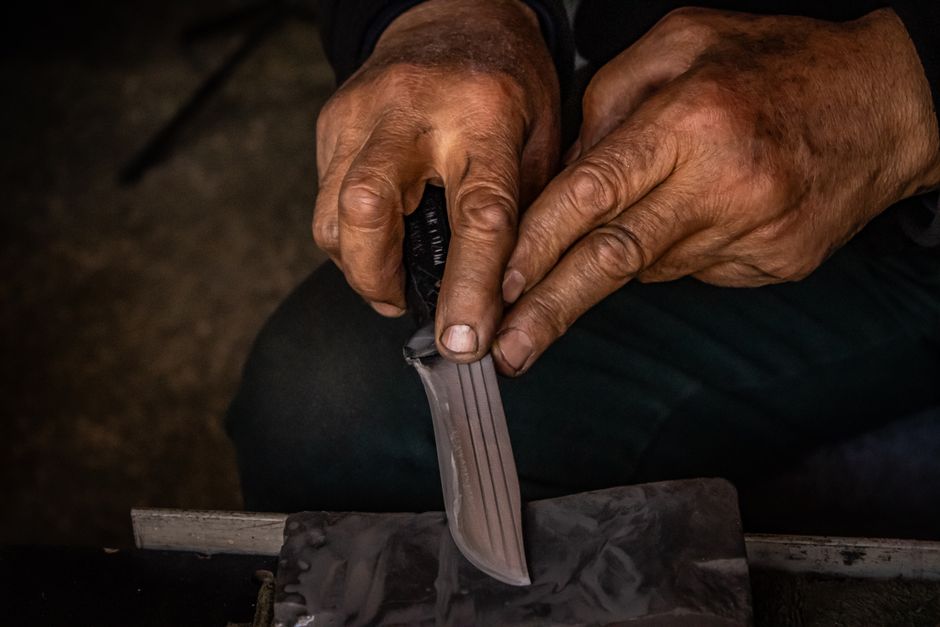
The Lansky sharpening system holds its angles with rods that pass through a stamped clamp head at fixed positions. Every insert-and-remove cycle wears those fork holes, and the clearance that develops translates directly into degrees of wander at the edge. The failure is gradual and easy to misread: sessions feel less consistent, bevels widen, and owners blame their technique for a year before blaming the tool.
Two things keep it honest at its price. The replacement clamp is cheap and takes minutes to swap, so the first failure mode is also the least expensive one in this entire comparison. And the rod-mounted hones are generic enough that the consumable stream stays modest. For a roughly $40 entry point, designing the wear into one inexpensive part is almost a feature.
KME, Rods and Bearings Next
The KME knife sharpener moves the precision into a bearing-guided rod that pivots around the blade, and that rod system is also its wear path. Long-term owner reports commonly converge on two issues: play developing where the rod meets the guide block, and visible rod flex on longer blades, which rounds the bevel toward the tip where rod overhang is greatest. For a long-horizon perspective, a years-long owner review on BladeForums is worth reading alongside the marketing.
None of it is fatal, and that is the point of the ranking. KME's wear items are rods and bearings, both replaceable for far less than a new frame. Mid-tier money buys hardware that outlives its first set of consumables, which is more than the tier below can promise.
Edge Pro, Stones Wear Before the Fixture
The Edge Pro Apex sharpening system inverts the usual story: the aluminum fixture is close to immortal, and the abrasives are the real purchase. Stock water stones are soft, cut fast, and dish in the middle under normal strokes. A dished stone no longer presents a flat plane to the edge, which is the same accuracy loss as a sloppy bearing, only faster arriving. Edge Pro maintains a standing catalog of unmounted water stones, which tells you the manufacturer treats replacement as routine.
Flattening on a diamond plate or float glass stretches each stone's life considerably. Even so, plan on a stone stream as part of ownership. The fixture will typically outlive several generations of its own abrasives, and anyone pricing the system should price a decade of stones alongside it.
Wicked Edge, Precision With a Discipline Tax
Wicked Edge long-term review problems cluster around one user-induced failure rather than frame drift: bent vise jaws. The machined vise and dual-arm assembly are the most precise hardware in this comparison, and they are built around light clamping force distributed across multiple contact points, with blade stops carrying lateral load. Carry old habits over, torque the screws like the previous design, and the flexible jaws take a permanent set. The hardware rewards discipline, which is why the Wicked Edge knowledge base is worth reading before the first session rather than after the first bent jaw.
The second cost is the ecosystem. Diamond and CBN paddles are priced like precision tooling, because they are, and they only fit Wicked Edge arms. More on that math below.
Tormek, Slow Wear by Design

A wet wheel knife sharpener like the Tormek T-8 ages slowest here because its main wear item is designed to be maintained instead of replaced. The stone wears grooved with use; the TT-50 truing tool dresses it back to flat and true. That single design choice reframes stone truing versus replacement cost: you buy abrasive in shavings and truing passes rather than whole new stones.
The backstop is support. Tormek publishes a spare parts catalog for its machines, and long parts availability is what turns a wet wheel into a buy it for life knife sharpener candidate rather than a decade appliance. The trade is honest: this is a grinding and honing system with its own technique curve, not a clamp-and-rod angle fixture.
Consumable Cost per Decade Can Beat the Machine
Hardware is a one-time purchase. Abrasives are a subscription. Estimate the sharpening system consumable cost over a decade, and the stream on a premium diamond or CBN setup can plausibly approach the price of the machine itself.
Budget the blades before the frame. The vendor whose abrasives you can afford in year eight is the vendor you should choose in year one.
Two details make comparing streams harder than they should be. Grit numbering is not standardized across makers; FEPA grades used in Europe differ from other systems, so a 1000 grit stone from one ecosystem need not match another's micron range. On diamond vs CBN sharpening stones, engineering literature has documented CBN's wear resistance against hardened steel for decades, though at hand-sharpening pressures both last for years and the practical difference is mostly price per sharpened inch.
Then there is lock-in. Wicked Edge paddles fit Wicked Edge arms, Edge Pro stones are cut for Edge Pro fixtures, and Tormek wheels spin on Tormek spindles. Nobody switches ecosystems cheaply, which is why the abrasive catalog deserves more scrutiny than the frame it attaches to.
How to Clamp Thin Blades Without Bowing
This closes the loop from the opening: the blade you bow is the repeatability you lose, and the fix costs nothing but restraint.
- Clamp the thick section. Seat the jaws on the spine-side, bolster-end steel where a kitchen blade is thickest. Distal taper makes the tip end the most bow-prone place to concentrate force, and the edge geometry there is the most expensive to ruin.
- Snug plus half a turn. Turn the screws to contact, feel the resistance change, then add roughly half a turn and stop. Wicked Edge's vise upgrade guide explains the mechanics: conforming pads on each side plus a blade stop below, five contact points doing the holding that torque used to do. The principle transfers to every vise in this comparison, because snug beats cranked everywhere.
- Test at the spine, never the handle. Handle leverage makes any correctly clamped knife feel loose and baits over-tightening. Pinch the blade just ahead of the jaws and push.
- Check repeatability with ink. Mark the bevel with a felt marker, take one light pass, and read the stripe. A clean single band means the angle reference held. Two bands mean the blade shifted or bowed mid-pass.
- If it slips, add a fraction of a turn, then re-ink. Never answer movement with full torque.
The best guided sharpener for thin kitchen knives is any of the five systems above, clamped like you intend to keep it.
The Best Knife Sharpening System for Your Tolerance
Match the first failure mode to the maintenance you will actually perform, and the ranking becomes a buying rule:
- Lansky if you touch up a few pocketknives and want the cheapest guided entry, accepting a clamp swap when the forks wear.
- KME if you sharpen kitchen knives regularly and will check the guide block for play every couple of years.
- Edge Pro if you want freehand feel with an angle reference and can budget stones as a standing consumable.
- Wicked Edge if repeatability is the entire point and you will follow the light-force clamping discipline the design assumes.
- Tormek if one machine should handle knives, scissors, and yard tools, and maintaining a wheel beats replacing paddles. Framed that way, Wicked Edge vs Tormek is dry precision versus wet forgiveness.
Buying used? Three checks predict remaining accurate life better than cosmetic condition: vise jaw play (work the jaws and feel for slop), rod wiggle at bearings and fork holes, and stone dish (rest a straightedge across the abrasive and look for daylight). Price any failed check as a replacement part before shaking hands.
A guided system is a promise about angles. The best knife sharpening system for a decade of use is the one whose promise degrades at a rate you can live with, clamped gently enough that the promise holds.
Stay in the loop.
Get the latest posts and exclusive content delivered to your inbox.
Join 36 readers. No spam. Unsubscribe in one click, anytime.
About the author
Priya Raman
Repair and Restoration Writer
Priya maintains and restores everything she owns, from cast iron to mechanical watches, and has spent years in the right-to-repair community. She writes about maintenance, warranties, and repairs, the half of buy-it-for-life that keeps good gear out of landfills.
Related Posts
Buy It for Life Scissors Ranked by Pivot and Steel
Buy it for life scissors ranked by pivot serviceability and sharpenability, plus why induction-hardened edges can turn tough shears into consumables.

The Best Utility Knife Is Not the Week-One Winner
The best utility knife for a decade of work is not the week-one winner. We re-rank 9 tested knives by failing parts and 10-year blade cost.

The Best Tool Belt Is the One That Fails Last
The best tool belt is the one that fails last. We rank leather and nylon rigs by the parts that break first, with cost-per-year math by trade.