Polycarbonate Carry-On $150 vs $500, What Actually Lasts
Polycarbonate carry-ons run $150 to $500. This tier teardown shows which upgrades in wheels, zippers, and warranty service actually buy 20-year survival.

A $150 polycarbonate carry-on and a $500 one print the same material word on the spec sheet, which is why every luggage forum eventually produces the same question, if they are all polycarbonate, what is the extra money buying? The honest answer is that the material label is the least informative line on the page. Two bags both stamped 100% polycarbonate can differ more in real toughness than a pure polycarbonate bag differs from a cheap ABS one, because the three variables that govern shell behavior, thickness, resin grade, and molding quality, are almost never disclosed by anybody.
Stay in the loop.
Get the latest posts and exclusive content delivered to your inbox.
Join 25 readers. No spam. Unsubscribe in one click, anytime.
What separates a twenty-trip bag from a twenty-year one is the hardware attached to that shell, and it wears out in a predictable order: wheels and zippers first, handles next, the shell last. That failure order, not the feature list, is the right yardstick for price. Paying more only makes sense if the difference buys sealed wheel bearings, a heavier zipper chain, a stiffer handle tube, or a repair network that still stocks parts a decade from now. This teardown walks the ladder rung by rung and labels every dollar jump as engineering, service, or margin.
Why every hardshell listing says polycarbonate
Polycarbonate took over the hardshell market because of how it fails. ABS tends to hold a dent or crack when a bag lands on its corner, while polycarbonate flexes and rebounds, which is why manufacturer resources such as Travelpro's shell materials guide describe it as the more impact-tolerant material. Shoppers learned that distinction in shorthand, the word became a proxy for hardshell durability, and once buyers began filtering by it, the label migrated onto nearly every box, including bags molded from PC-ABS blends that behave much closer to ABS than the headline suggests.
So the label names a family of plastics, not a guarantee. It says nothing about virgin resin versus regrind, one-piece shells versus joined panels, or whether the textured finish is styling or camouflage for sink marks. A $150 shell and a $600 shell can share the word while differing in every variable that matters, which is exactly why prices vary so wildly across polycarbonate suitcases that look identical in photos.
The five deltas behind every polycarbonate carry-on price
Strip the branding and five subsystems set the entire ladder:
- Shell: thickness and resin formulation
- Zipper chain and slider: the closure pulled a thousand times over its life
- Wheel bearings: the parts grinding through thousands of revolutions
- Handle assembly: tubes, staged locks, fasteners
- Warranty service depth: parts, labor, and goodwill after year three
Grading rule: a price delta only counts if it moves a failure date. Anything that merely changes how the bag photographs is polish.
The framework holds up because luggage does not wear out evenly. Industry resources such as Travelpro's repair guide point to wheels, zippers, and telescoping handles as the most common repairs, and reviewers who roll bags for months at a stretch, like the team behind Wirecutter's carry-on testing, keep circling back to the same three parts. Shells almost never top anyone's list. When you ask which parts fail first on a spinner, the answer is the moving ones, so any serious comparison starts there.
Shell thickness, resin blends, and the squeeze test
Shell quality is real, and it is also the most oversold variable on the ladder. Tenths of a millimeter of thickness change how a shell absorbs impact, and virgin resin tolerates repeated flex cycles better than blends heavy on regrind, distinctions that polycarbonate luggage design write-ups cover in depth. Molding matters too. A shell drawn as one deep piece flexes as a unit, while joined panels put seams near the corners where stress concentrates.
The squeeze test is where shoppers get fooled, because any of these shells passes it fresh out of the box. Polycarbonate flexes and rebounds on demand, thin or thick, blended or virgin. The differences surface after years of load cycles, thermal swings, and stacking abuse, when a marginal shell fatigues early while an adequate one keeps springing back. No one selling a $150 polycarbonate carry-on prints millimeters or resin percentages, so the gap stays invisible in the aisle and only shows up on the failure timeline. How long a polycarbonate suitcase lasts is decided less by the shell than by everything bolted to it, and a mid-grade shell will usually outlive its first set of wheels and its original zipper slider. Buy enough shell, then stop paying for more.
Zipper chain and slider quality
Zipper quality is where mid-tier money buys something you feel on every trip. Budget hardshells commonly run a small coil chain that splits more easily when a bag is overpacked, paired with a stamped slider that misfeeds under tension. Step up the ladder and the chain elements get heavier, the slider becomes machined metal that tracks smoothly, and the tape gets reinforced where it meets the shell. What the upgrade buys is smoothness, jam resistance, and burst strength. What it does not buy is security.
Coil zippers can be pushed open with a ballpoint pen in seconds and resealed by running the slider back over the split, a weakness the ballpoint pen attack demonstrated years ago, and one that zipper upgrades do not address. TSA locks do not help either, because the lock never touches the chain. If theft is the worry, a strap cinched over the zipper pulls does more than any premium zipper brand.
Zipperless hardshells replace the coil with a frame and twin latches, which removes both the pen vulnerability and the overpack-split failure in one move. The trade is weight, price, and a different failure surface: a bent frame or a failed latch is a far more invasive repair than a swapped zipper. For most travelers, a heavy chain plus a strap covers the same risks for less money.
Wheel bearing architecture, the first failure point
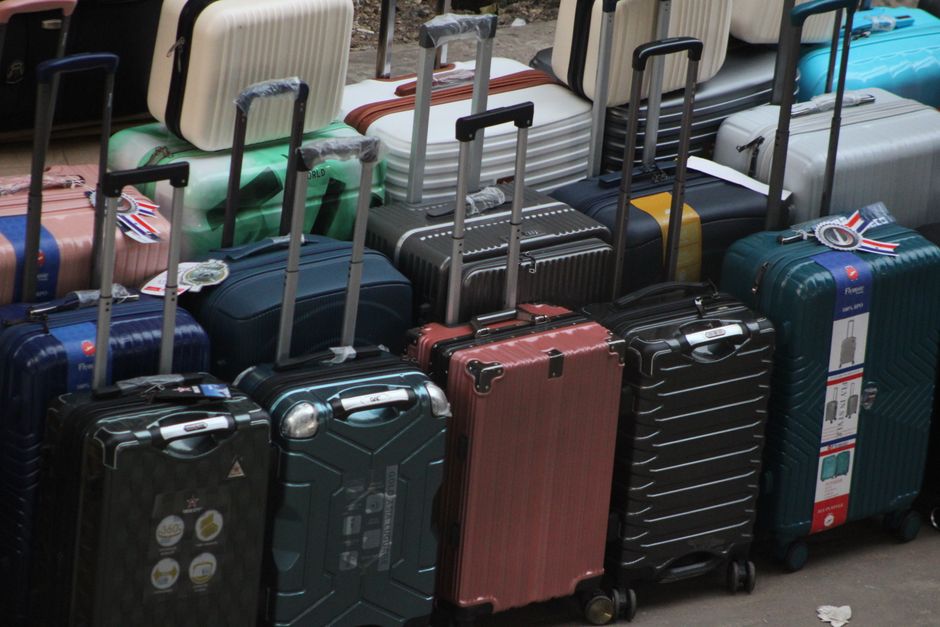
Eight small wheels turning thousands of fast revolutions per trip make spinner bearings the highest-frequency failure point on the whole bag. This is also where the jump from budget to mid-tier does its best work.
Sealed bearings versus sleeve bearings
Budget wheels spin on sleeve bearings, a steel pin riding in a plain plastic or metal sleeve. Quiet on day one, they collect grit, wear their sleeve, develop play, and start dragging or squealing within a few hard years. Sealed ball bearings put rolling elements between pin and wheel and seal the cartridge against grit, which is why they typically outlast sleeve setups by years. Detailed spinner wheel bearing guides cover the architecture in full, but the in-store proxy is a five-second test. Spin a wheel and count the coast. Long and quiet suggests rolling elements; a short, gritty stop suggests a sleeve.
Replaceable wheel assemblies
Bearing type decides how long wheels live. Attachment decides what happens when they die. Cheap bags integrate or rivet the housings, so one dead wheel can doom the bag, while better bags bolt housings on with standard screws and sell replacement cartridges, turning a terminal failure into a ten-minute fix for the cost of lunch. Between bearing type and replaceability, wheel architecture is the strongest engineering lever anywhere on the ladder, and it is precisely what the climb from $150 to the low $300s pays for.
Handle tube gauge and repairability
Telescoping handles fail less often than wheels, but they fail expensively when the design fights repair. Three variables matter.
- Tube gauge. Thin-walled tubes flex and rattle; thicker walls resist the bending moment of a loaded bag yanked at an angle.
- Staged locks. Multiple detents spread wear and give shorter travelers a usable height, and most wobble complaints trace to worn detents or loose fasteners rather than the tube itself.
- Fasteners and part numbers. Screw-attached assemblies with printed references can be opened, cleaned, and re-shimmed for years. Riveted assemblies have to be drilled out, and once drilling starts, most owners write the bag off.
The common thread question about handle housings eating packing space has a mundane answer: layout quality, more than price, decides the intrusion. Two thin tubes buried flat in the shell generally leave a flatter packing floor than one fat central channel. In store, extend the handle fully and lock every detent. Rattle on day one is a fastener problem, and fastener problems only grow.
Warranty and repair service depth

Past the mid tier, build gains get marginal and the warranty quietly becomes the product. The spectrum runs wider than most shoppers expect.
What the fine print actually says
Limited lifetime warranty is a marketing phrase with no standard definition. Some warranties cover manufacturing defects for a few years and exclude airline damage, normal wear, and abuse, which rules out most of the damage a bag actually takes. Others go much further, and Briggs & Riley advertises the clearest version, promising repair for damage from any cause, including airline handling, for as long as you own the bag. A real luggage warranty comparison reads three lines: who pays shipping both ways, whether repairs run through an in-house network or a replacement-only process, and how long the brand has historically kept parts on the shelf.
How repair networks change the math
A warranty that covers airline damage through an actual repair network can turn a mid-priced bag into a twenty-year asset, because it converts the two most common terminal failures, a crushed corner and a torn wheel housing, into scheduled repairs. That is the honest pitch for the top of the ladder. Past roughly $600 you are increasingly buying service depth and brand margin rather than tougher plastic, and that trade only pays if you fly enough to use it.
The tier-by-tier verdict, $150 to $1,000
With the failure order as the yardstick, the table below grades every band on the polycarbonate carry-on ladder. Street prices drift with sales, so treat the bands as approximate and verify current prices on official listings before judging value.
| Band | Typical examples | Where the money goes | Verdict on the jump |
|---|---|---|---|
| ~$100 to $160 | Samsonite Omni PC, warehouse house brands | Adequate shell, sleeve bearings, small coil chain, riveted bits | Solid shell, expendable hardware |
| ~$200 to $300 | Level8, Monos | Sealed bearings, heavier chain, screw-on assemblies | Genuine engineering |
| ~$300 to $450 | Away, premium Delsey lines | Better hardware, plus design, colors, retail polish | Half engineering, half brand |
| ~$600 to $1,000 | Rimowa Essential | Precision manufacturing, premium hardware, deep repair network | Mostly service depth |
| Past $1,000 | Tumi 19 Degree | Status finishes and concierge-level repair | Mostly margin, some service |
Two jumps matter. The first, roughly $150 into the low $300s, reliably buys measurable engineering, including sealed bearings, heavier chains, stiffer tubes, and screw-attached assemblies. That jump moves failure dates, and almost every traveler should make it. The second, the service jump into $600-plus territory, is worth real money to frequent flyers and little to anyone else, because shells and wheels up there differ modestly from good mid-tier rivals. For a concrete anchor, Away's Bigger Carry-On shows the classic tier-three proposition of decent hardware wrapped in design and retail polish, while Tumi's 19 Degree carry-on shows what flagship positioning costs, typically well north of $1,000 for polycarbonate luggage that fails in the same order as everything else. Is expensive luggage worth it, then? The engineering gains flatten after the mid tier while service depth keeps climbing, so match the second curve to how much you actually fly.
Sixty-second checks before you pay
Run this sequence on any spinner, in the aisle or inside the return window, and you will know more than the product page tells you.
- Spin each wheel and count the coast. Long and quiet suggests rolling bearings; a short, gritty stop suggests a sleeve.
- Wiggle each wheel side to side. Play in a new housing means wobble and drag within a few years.
- Look for screws at the housings. Visible fasteners mean replaceable wheel assemblies, the cheapest life extension in luggage.
- Run the zipper the full track, both ways. Misfeeds and tight spots on a new bag only worsen.
- Pinch the coil and check the slider. Heavier elements and machined metal indicate the chain class that survives overpacking.
- Press both shell faces. You are checking for symmetric flex and quiet joins, not absolute stiffness; creaks at the seams hint at panel construction.
- Lock every handle detent and shake. New rattles are fastener problems that grow with every gate check.
- Find the warranty's exclusion sentence. The line that matters names whether airline damage is covered, and whether repair goes through a real network.
None of this requires brand loyalty or a big budget. A polycarbonate carry-on announces its likely lifespan through its bearings, chain, tubes, fasteners, and warranty, long before the shell enters the conversation. Spend to the low $300s on sealed bearings, a heavy chain, and screw-on everything, confirm the warranty covers the damage you actually expect, and the word on the box becomes the least interesting thing about the bag for the next twenty years.
Stay in the loop.
Get the latest posts and exclusive content delivered to your inbox.
Join 25 readers. No spam. Unsubscribe in one click, anytime.
About the author
Reggie Calloway
Heritage and Craft Editor
Reggie writes about the makers behind lifetime gear, from third-generation tanneries to family-owned foundries. A former magazine editor, he profiles the brands, materials, and craftsmanship that justify keeping a tool or a jacket for the next generation.
Related Posts

Durable Sling Bags Ranked by the Parts That Fail First
Durable sling bags ranked by what fails first: strap junctions, adjusters, buckles, and zippers, with a Bellroy Sling Lite Mini vs budget verdict.

Amusement Park Backpacks Ranked by How They Die
How do amusement park backpacks die? Chlorine soaks, closet mold, and strap failure at Disney and Universal. See which five popular bags survive.

Timbuk2 Clark Backpack Graded on What Kills Commuter Bags
We grade the Timbuk2 Clark backpack on what kills commuter bags, from DWR decay to rain-soaked zippers, then run the warranty and repair math.