Super-Automatic Espresso Machine Longevity Splits in Two
Super-automatic espresso machine longevity splits into cartridge-service and sealed designs. Compare both against a Gaggia Classic plus Baratza stack.

A version of this post appears in coffee and buy-it-for-life forums like clockwork. Someone owns a Gaggia Classic, a Baratza grinder, a scale, a knock box, and a small kitchen the gear has slowly annexed. They make two flat whites most mornings, the coffee is good, nothing is broken, and they are eyeing a one-touch machine anyway. They do not expect better coffee. They want the counter back and a weekday routine their partner will actually use, with one non-negotiable condition: no single small failure should turn a four-figure machine into e-waste. That condition decides everything, because super-automatic espresso machine longevity is two different properties wearing one name, and the line between them runs straight through the brew group.
Stay in the loop.
Get the latest posts and exclusive content delivered to your inbox.
Join 7 readers. No spam. Unsubscribe in one click, anytime.
One Box or Two for the Next 20 Years
Forums treat the Classic plus Baratza stack as the default buy-it-for-life answer in coffee, and the reputation is earned. Both boxes are designed to be opened, and both companies sell the parts to open them. The real question for anyone tempted by an integrated machine is whether it can honor the same bargain of buying once and maintaining forever. Sometimes it can. Whether it can is settled by three tests, none of which appear on a feature chart:
- Parts access. Can an owner buy the pump, the valves, the seals, and the control board, or only an authorized center?
- Assembly removal. Does the part that moves under load on every shot come out in your hand, or does it live behind a service panel?
- Repair economics. Do typical repairs cost a small fraction of replacement, or do the quotes drift toward it?
Run those tests and the integrated-versus-modular framing dissolves. Whether an integrated espresso machine is a good long-term buy was never really the question. The 20-year question is serviceable versus sealed.
Two Service Classes Decide Super-Automatic Espresso Machine Longevity

Bean-to-cup machines split into two service designs, and the major brands sort cleanly between them.
Cartridge-service machines put the brew group, the assembly that tamps the grounds and drives water through them, on a slide. Press a release and it drops into your hand for a rinse under the tap. De'Longhi documents exactly this routine for the Magnifica line, with weekly rinse guidance. The Gaggia Cadorna manual publishes a brew group lubrication schedule alongside its cleaning intervals. Philips sells the brew group directly as a user-installable part, which tells you the company expects owners to swap it. Saeco, the lineage Philips absorbed, built the same architecture into its machines.
The design consequence matters more than the convenience: the most failure-prone assembly in the machine, the one packed with seals and moving parts soaking in coffee oils, is a consumable. When its O-rings harden, you buy a seal kit or a complete group for a small fraction of the machine's price. The repair never sees a service bench.
Sealed-service machines, notably Jura and Miele, fix the same assembly permanently inside the chassis. A sealed brew group is the tell: the unit is not owner-removable, and most of the rest of the machine follows its example.
Integrated semi-automatics like the Breville Oracle sit in a middle band, and the same three tests apply. Judged on parts access alone they usually land closer to the two-box stack than to a sealed bean-to-cup, but check board and grinder availability model by model.
The one-minute showroom test. Ask to see the brew group removed. The question of which super-automatics have a removable brew group answers itself in one motion. If it slides out into the demonstrator's hand, the machine is cartridge-service and a legitimate 20-year candidate. If the answer involves a screwdriver, a technician, or an appointment, it is sealed-service. That answer predicts more about year 15 than any spec sheet.
Why Sealed Machines Become Scheduled Scrap
Sealed service is a parts-channel strategy, not an engineering accident.
Jura and Miele have historically restricted spare-parts sales to authorized channels, in many markets down to the present day. Jura's warranty terms route service through its authorized network, and Miele's coffee system service is structured the same way. The restriction is defensible from the manufacturer's side: safety and quality control are real arguments, and inside the warranty window it costs you nothing. The bill arrives afterward.
Consider an out-of-warranty failure. The pump dies. You cannot buy the pump, and independent shops generally cannot either. With no competitive repair market holding prices down, your quote comes from one channel: list-price part, service labor, and shipping both ways. When the failed part is a control board or a pump on a several-hundred-dollar scale, that quote frequently lands near the sale price of a comparable new machine. Once repair and replacement converge, the machine is a consumable by design, whatever its original price tag.
The lifespan math follows from those economics, not from build quality. Industry bean-to-cup lifespan estimates commonly run 5 to 10 years, and a well-kept premium sealed machine tends to sit at or past the top of that range while it lives. What the premium does not buy is a repair option once the warranty ends. Owner threads treat the first out-of-warranty major failure as the usual exit and price in a replacement somewhere around the decade mark. Quiet, polish, and drink quality do not change that arithmetic.
A quieter cost compounds the first. Sealed machines steer owners toward proprietary filter programs instead of descaling, which raises the espresso machine maintenance cost of a decade and, on hard water run past the change interval, still leaves scale in the paths the filter never touched.
How a Gaggia Classic and Baratza Stack Ages
This is the baseline an integrated machine has to beat.
The Gaggia Classic's core design has been in continuous production for roughly three decades, which is the single best predictor of parts availability in a small appliance. A long production run builds a deep catalog, and the Classic has extensive parts listings, OEM and aftermarket, covering gaskets, valves, boiler fittings, and complete subassemblies. Reports of two-decade Gaggia Classics still in daily service are common enough to count as forum small talk rather than news.
The Baratza side is the same story in a smaller box. Baratza sells burrs and parts directly to owners, so a stalled grinder is usually an evening fix, not a warranty claim. The company also publishes repair walkthroughs for its grinders.
A decade on this stack has a known cadence. The group gasket and shower screen get refreshed every year or two. Burrs get replaced after several years of daily double shots. The OPV and solenoid occasionally need a rebuild, with inexpensive parts and documented procedures. The pump is the rare big-ticket item, and even that is owner-installable with guides everywhere. None of it is free, and almost none of it is hard. The second property is the one that buys you 20 years.
The Ten-Year Cost Ledger for Both Setups
The Gaggia Classic plus Baratza vs super-automatic debate usually gets argued over running costs, so start there, with an honest caveat: espresso machine cost per decade swings on water hardness, drink count, and where you buy tablets. What matters is the shape of the ledger, and the shape is similar. Annual maintenance cost breakdowns for super-automatics and the Classic parts catalogs above land in the same order of magnitude, dominated by filters, descaler, and tablets on one side and gaskets, burrs, and descaler on the other.
| Ledger line | Cartridge super-automatic | Gaggia Classic + Baratza |
|---|---|---|
| Water care | tablets or proprietary filters | descaler, optional inlet filter |
| Wear parts over a decade | brew group seals, O-rings, possibly one group | gaskets, screens, one or two burr sets |
| Big-ticket risks | grinder burrs, pump, control board | pump, solenoid, OPV |
| Parts channel | open, owner-installable | open, owner-installable |
| Fatal failure mode | board failure on some models | rare; nearly everything is a part |
Two conclusions fall out. First, a well-maintained cartridge-service machine and a well-maintained two-box stack cost broadly the same to run over a decade, so running cost decides nothing. Second, because the money ties, the deciding variables are parts access and owner labor. The stack wins slightly on parts depth. The cartridge machine wins by putting its riskiest assembly behind a consumer-replaceable door instead of a service bench. The sealed machine loses both columns.
What Actually Kills Espresso Machines
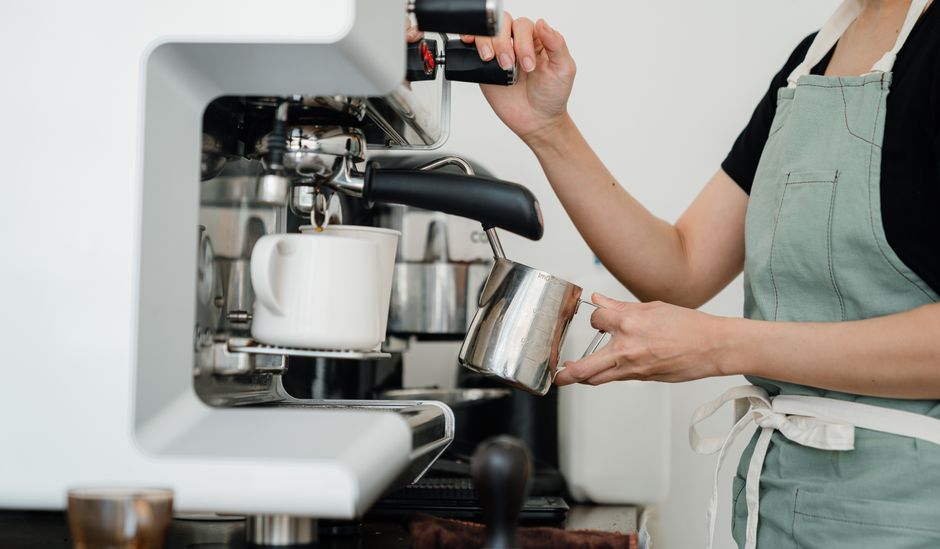
Ask technicians what ends machine life early and brand tier rarely comes up. Water does. The killers are shared across every path here; the service design decides whether each one is a part you buy or an event you schedule.
Scale is the leading killer, patient and preventable. Hard water deposits limestone in the boiler, valves, and pump; flow drops, pressure climbs, the pump works harder, and the machine that "died suddenly" actually spent two years clogging itself. The mechanics of water hardness and scale are well documented: the harder your feed water, the shorter your safe descaling interval. The class verdict: a scaled-up pump on the Classic stack or a cartridge machine is an evening job with a purchasable part; on a sealed machine it is a single-channel quote.
How long do super-automatic espresso machines last, then? Industry espresso machine lifespan guides commonly put bean-to-cup machines in the 5-to-10-year range, and the service class decides what happens at the end of it: a repair or a replacement. The remaining killers, judged the same way:
- Hardened seals from infrequent use. Gaskets set hard when a machine sits for months and leak on restart. Cartridge and Classic owners swap the gasket themselves; sealed owners meet the service channel.
- Pump and valve wear, accelerated by scale and dry tanks. The common big-ticket failure, purchasable on the stack and on cartridge machines, not on sealed ones.
- Electronics. Rare, and the one killer whose fatality is class-dependent: a dead board is fatal only where boards are not sold as parts, which is why the ledger flags it for some cartridge models.
The implication is inconvenient for loyalists on both sides: water discipline governs super-automatic espresso machine longevity more than machine price does. A cartridge-service machine on filtered water with honest descaling will outlive a neglected Classic on hard well water, and the reverse holds too.
Counter Space and the Daily Labor Trade
The Reddit poster's motivation is spatial and social, so take it seriously rather than dismissing it as convenience.
Space. Consolidating from two boxes to one returns roughly one machine footprint of counter, plus whatever the scale and knock box give back. The gain is real in a small kitchen and smaller than the brochure implies, because a super-automatic demands its own clearances: height for the bean hopper and service access, room to slide the drip tray, and a tray that fills fast on a two-flat-white morning.
Labor. The manual routine on the stack runs about five minutes a session: weigh, grind, distribute, tamp, pull, steam, wipe. The super-automatic trades that for one button plus a hidden schedule: rinse cycles at startup and shutdown, daily milk-path cleaning for milk drinks, weekly brew group rinsing, periodic lubrication per the Cadorna manual, and descaling or filter changes the machine counts down for you. Total owner hours over a decade are not obviously lower on either side. They are distributed differently, small daily increments on the stack versus scheduled compliance blocks on the machine.
The honest framing is that you trade a skill routine for a compliance routine. People who enjoy the fiddly part undercount the second routine's weight. People who hate the first one overcount the space savings.
Decision Rules and the 20-Year Maintenance Plan
Everything above compresses into five rules, because super-automatic espresso machine longevity is mostly decided before the box is unpacked.
- Run the showroom test. Brew group comes out in the hand: cartridge-service, a legitimate 20-year candidate. Comes out with tools or a technician: sealed-service, and owner threads price in a replacement somewhere around the decade mark.
- Run the parts-channel test before buying. Search for the machine's pump, brew group, and board as purchasable parts. Consumer-listed parts mean real espresso machine repairability at year 12. If every result says "contact authorized service," you are buying a long rental.
- Set the repair-or-replace cutoff now. When a quoted repair approaches roughly a third to half of a comparable replacement, or when parts are channel-locked and no independent will service the machine, replace it. Deciding this in advance turns a breakdown into arithmetic instead of an argument.
- Test your water first. Very hard tap water makes descaling a monthly fact on every path, so budget the time and chemicals, or filter at the source, before choosing any machine.
- Apply the labor honesty test. Cartridge machines are only cheap if the rinse and lube cycles actually happen. If you know you will ignore the maintenance light, keep the stack and accept the ritual, or buy sealed knowing the end date.
Who Should Buy Which
- Keep or buy the Classic plus Baratza stack if you enjoy the routine, want maximum parts depth, or want a setup where no single failure is fatal.
- Buy a cartridge-service super-automatic (De'Longhi, Gaggia Cadorna, Philips, Saeco) if one-touch workflow wins and you will honor the schedule.
- Buy a sealed machine (Jura, Miele) only with the end date priced in: premium experience, decade-scale appliance economics by forum consensus.
The 20-Year Maintenance Cadence
| Interval | Cartridge machine | Classic plus Baratza |
|---|---|---|
| Daily | rinse cycle, empty drip tray, clean milk path if used | knock the puck, wipe the basket, purge the wand |
| Weekly | remove and rinse the brew group | clean the group head and shower screen |
| Monthly to quarterly | descale per water hardness, lubricate the group per manual | descale per water hardness, inspect gasket and screen |
| Yearly | deep clean the grinder path and chute | replace the group gasket, check burr wear |
Adjust the intervals to your water and drink count; the manual's schedule is the floor, not the ceiling.
The Reddit poster can have the counter back without regret. Buy cartridge-service, honor the schedule, test the water, and the one-touch machine is a legitimate 20-year purchase. Buy sealed and enjoy it, with a calendar reminder around year ten. The durable machine is a parts catalog plus a maintenance calendar, never a category or a price point, and both are visible before you spend a dollar.
Stay in the loop.
Get the latest posts and exclusive content delivered to your inbox.
Join 7 readers. No spam. Unsubscribe in one click, anytime.
About the author
Priya Raman
Repair and Restoration Writer
Priya maintains and restores everything she owns, from cast iron to mechanical watches, and has spent years in the right-to-repair community. She writes about maintenance, warranties, and repairs, the half of buy-it-for-life that keeps good gear out of landfills.
Related Posts
Buy It for Life Grain Mills Ranked by the Parts That Die
We rank buy it for life grain mills by the parts that die first, from crank bearings to sealed motors, with burr costs and 20-year survival scores.
Oil Sprayers Ranked by Why They Stop Misting
Oil sprayers die in the head, not the bottle. Our failure-mode ranking explains why misters stop spraying and which oil sprayer designs last for years.
Coffee Bean Storage Canister Ranked by 10-Year Survival
Coffee bean storage canisters ranked by which mechanism survives ten years of daily use, with cost per year math that asks if the free degassing bag wins.