Buy It for Life Kitchen Gear Worth Thrifting, Ranked
Buy it for life kitchen gear is worth thrifting when the fatal flaw is inspectable at the shelf and the wear parts still exist. This ranked list shows which.

Every buy it for life kitchen gear debate collapses into folklore eventually. Grab the cast iron. Skip the nonstick. Worship old Pyrex. The advice survives because it is roughly right, and it fails the moment you meet an item the folklore never named, which is most of what is actually on the shelf. Resale keeps growing its share of retail, as resale industry data keeps showing, and the winners at the thrift aisle are the shoppers who can tier an unfamiliar piece in under a minute. That takes a rule, not a list.
Stay in the loop.
Get the latest posts and exclusive content delivered to your inbox.
Join 36 readers. No spam. Unsubscribe in one click, anytime.
The rule: a used kitchen purchase only pays off when two conditions both hold. The item's dominant fatal failure has to be visible or hand-testable in the aisle, rust, warp, wobble, pinholes, delamination, gearbox slop. And its wear parts must still be manufactured, gaskets, jars, blade assemblies, attachments. This article ranks the category on that two part test, gives you the no-outlet hand tests for the gear you cannot plug in, shows where the parts economies are still alive, and runs the used versus new math so you can replicate it on anything, including items no listicle has named.
The Two Part Test for Buy It for Life Kitchen Gear
Condition one is inspectability. Every category dies a characteristic way, and the question is whether that death shows at the shelf. A skillet dies by crack or warp, both visible. A kettle dies by heating element, sealed out of sight. When the kill mode is buried, the discount simply prices a bet you cannot verify.
Condition two is the parts economy. Anything with a consumable component, a gasket, a jar, a coupler, a gear, is only as durable as its supply chain. A pristine machine whose seals were discontinued years ago is a countdown with a cord.
Regulators have converged on the same logic from the other direction. France's repairability index scores new appliances on disassembly, spare parts access, and documentation, on the theory that these predict real lifespan better than brand cachet does. The thrift shelf version compresses that scorecard into thirty seconds, and it explains why the rule beats folklore. Folklore covers the five items everyone already knows. The rule tiers the obscure thing in front of you, brand name or not.
Tier One, Usually Better Used Than New
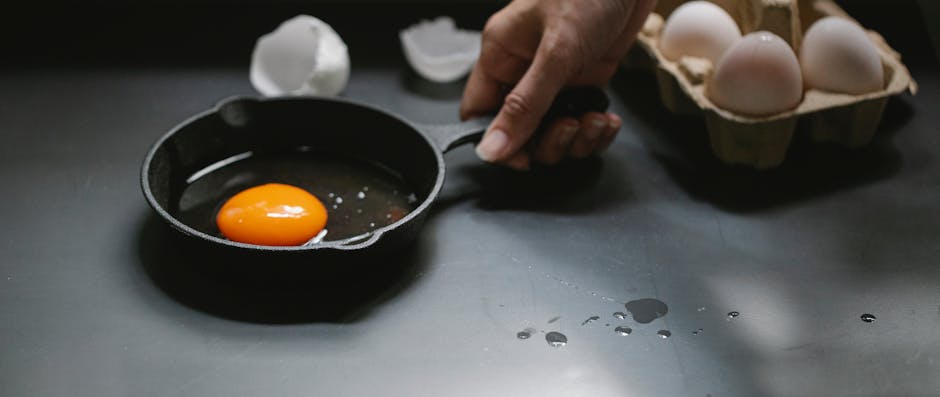
Cast iron, carbon steel, bare copper, and fully clad stainless share a profile: their fatal flaws are surface-level and their consumables are trivial or nonexistent. This is the heart of the buy it for life cookware tier, and the safest place to start with secondhand cookware overall.
Cast iron and carbon steel
Is a thrifted cast iron skillet worth it? Almost always, with one exception. Cracks are terminal; everything else negotiates. Rust is an evening project with soap, steel wool, and oil, and even serious pitting usually just becomes the seasoning's problem. A previous owner's seasoning is free value, and if it looks like a science experiment, redo it with official seasoning instructions from any major maker.
The shelf tests take ten seconds. Tap the pan with a knuckle: a bright ring is good, a dull thud means a crack, walk away. Set it on a flat counter and press a corner: rocking means warp, which matters more on a glass top than on gas but never improves. Carbon steel runs the same logic in a lighter body. Its kill modes, warp and loose rivets, are equally visible, and neither has a consumable attached.
Copper
Bare copper dies one way. The tin lining wears through to salmon-pink copper, usually in the stir zone opposite the handle. That is not a rejection, it is a pricing input. Copper cookware retinning cost is the real question, and services commonly quote north of a hundred dollars per pan depending on size, so look up current pricing on your phone before committing. If shelf price plus retinning lands comfortably under a comparable new lined pan, buy. If the math only works because you hope retinning is cheap, leave it. Stainless-lined copper sidesteps retinning entirely, which makes a used stainless-lined piece nearly a free pass.
Vintage and fully clad stainless
Buying used stainless steel cookware is close to a free lunch once you know the two kill modes: ply separation and warped bases. Run a fingernail around the rim of All-Clad's bonded D3 cookware or any fully clad equivalent, feeling for bubbles, lips, or steps where layers are parting. Then do the counter spin: a flat base stays flat, and a wobbly base wobbles forever. Discoloration means nothing. Used fully clad routinely sells for a small fraction of new with an identical service life, which is how patient shoppers furnish whole kitchens.
Vintage glass, calibrated
The vintage kitchenware premium on old Pyrex has real physics in it. Vintage clear Pyrex was made with borosilicate glass, while modern US made Pyrex uses tempered soda lime glass, and the two differ measurably in thermal shock behavior, which partly explains the secondhand price gap on clear pieces. Two calibrations keep you honest. The borosilicate advantage applies to clear ware; decorated opal mixing bowls were already tempered soda lime, so their prices ride collectibility, not materials. And borosilicate takes thermal shock better but mechanical impact worse, so the premium is worth paying for bakeware that moves freezer to oven, and worth skipping for a bowl that gets dropped.
Tier Two, Good Only With the Right Model

Stand mixers, blenders, and gasket-dependent gear can be steals or slow losses, and the difference comes down to model era and parts supply rather than brand reputation. Both conditions of the test are checkable here, but only if you actually check.
Stand mixers
Any used stand mixer buying guide should start with the worm gear. In KitchenAid style mixers the most common fatal failure is a stripped worm gear, a nylon part deliberately designed as a sacrificial fuse to protect the motor. Because it is designed to fail, it is still manufactured, and KitchenAid's official parts store stocks gears, planetary assemblies, bowls, and attachments for machines going back decades.
How to inspect a used stand mixer without an outlet takes three moves. Grasp the planetary, the hub the beater locks into, and turn it by hand: rough, gritty rotation or dead spots says the gear is chewed, which is a cheap repair and a negotiating point. Then wiggle the planetary side to side: slop points to worn internals, a heavier job. Finally check the attachment hub and bowl lock for cracks. A chewed gear is a haggling chip. A bent shaft or cracked housing is a pass.
Blenders
A thrifted blender is worth buying on the strength of its parts economy, not its motor badge. Most thrift shelves have no outlet, so a dead motor is exactly the failure you cannot rule out, and even a test run says little about bearing life. Price the motor as a gamble and verify everything else by hand. Inspect the jar for stress cracks around the base and chipped threads. Spin the blade and feel for a gritty or loose bearing, and check for residue where the blade assembly meets the jar, the signature of a failing seal. Inspect the rubber teeth of the coupler on the base for stripping. What to check before buying a used Vitamix is those same three items, and because Vitamix containers and blade assemblies remain catalog parts, a tired jar does not kill the deal. With brands whose jars are orphaned, it does, and no motor reputation fixes that.
Pressure cookers and gasket gear
A used pressure cooker is only a buy while the exact gasket is still in production. An orphaned seal turns a safe pressure vessel into scrap, because gaskets are neither generic nor safely improvised, so the used pressure cooker gasket replacement check comes before any price negotiation. The test is a phone lookup: find the model number on the base, then confirm the current seal and overpressure plug exist at Presto's part finder or the equivalent maker's site. Stovetop models with living gaskets are quiet tier two winners. Electric ones add the sealed-electric problem coming up next.
The Traps, What to Skip at Any Discount
Coated nonstick
Should you buy used nonstick pans? No, and for a better reason than the one most people reach for. Coating safety draws the headlines, and agencies including the FDA field those questions in their PFAS guidance, but safety is not what sinks the used purchase. Arithmetic does. Coating life is finite, part of it is already spent, and remaining life cannot be dated from appearance, because a shelf-pristine pan can be a hundred cycles from the bin. You would be buying a consumed consumable at an unknown depth of consumption, and no discount prices that risk correctly.
The enamel carve out
Enameled cast iron is the exception that proves the test. Exterior chips are cosmetic. Interior chips expose bare iron and cannot be patched food safe, and they are plainly visible under store lighting. Because the kill mode is inspectable and enamel has no consumables beyond its own surface, an unchipped interior makes a used enameled dutch oven a legitimate buy at the right price. Run a fingernail across the interior for hairline cracks, check the rim where the lid strikes, and treat any chip inside the cooking zone as terminal.
Sealed electrics
Budget rice cookers, kettles, pod machines, and cheap air fryers fail both conditions at once. Their likeliest deaths, the heating element and the control board, sit inside glued or clip-sealed shells never designed to open, and no thrift shelf offers an outlet to even attempt a power test. The discount buys an untestable risk, and the previous owner's reason for donating is precisely the thing you cannot inspect. Pass unless the store lets you plug it in first.
The In Aisle Inspection Checklist
Keep this on your phone. It tiers anything on the shelf in about a minute.
- Find the model number, then search it plus "parts". No living parts ecosystem, no buy.
- Flat surface test. Rock the pan, spin the pot. Rocking and spinning mean warp.
- Tap cast iron. A bright ring is good; a dull thud means a crack.
- Fingernail the rims of clad stainless. Bubbles, lips, or steps mean ply separation.
- Hold glass to the light. Straw lines and star patterns mean stress, treat as near failing.
- Hand turn gearbox shafts. Rough rotation or dead spots mean a chewed sacrificial gear; bent means dead.
- Wiggle blades and shafts. A gritty or loose blade bearing means jar replacement; price it in.
- Confirm the exact gasket is currently sold before buying any pressure vessel.
- Look up the new price and run the decade math below before reaching the register.
- If it fails either condition, put it back, whatever the brand is.
Cost per Decade, Used Versus New
The formula is purchase price plus parts to restore, divided by realistic service years. All the discipline lives in the assumptions, so here they are worked, with the caveat that prices swing by region and store.
Cast iron skillet. A new basic pre-seasoned skillet commonly runs $30 to $45. A thrifted one at $8 to $15 plus an evening of labor delivers effectively identical decades of service. Both pans are immortal, so used wins on entry price, and the savings are real but modest.
Stand mixer. A new mid-tier tilt-head commonly sits in the mid hundreds of dollars. A working used one at $50 to $100, plus a worm gear replacement whose part costs a modest sum, can deliver another decade or two with service stops along the way. The honest version prices the used unit as if the gear is already chewed, since at a no-outlet shelf it might be, and still usually comes out far ahead per decade.
Copper saucepan. A $20 thrifted tinned pan plus a retinning bill that can run $100 or more still lands well under a comparable new tinned pan, which often starts several times higher. The math only works while that gap holds, which is why the retinning quote comes before purchase, not after.
Run the same three lines on anything else. The point is not these numbers, it is that you can replicate them in the aisle.
What to Buy New Instead
Some categories fail the test so badly that new is the only rational buy, and a few new prices are low enough that the used savings are trivia.
- Sealed electrics, unless you can plug them in first.
- Nonstick when you genuinely need nonstick: buy decent, treat it as a consumable, stop paying premiums for it.
- Sheet pans and racks. New ones are cheap, and used ones are usually on the shelf because they warped.
- Silicone and plastic tools. Cheap new, hard to sanitize, and degraded in ways you cannot see.
Two questions, in order, before any register: can I see or feel how this item dies, and do its wear parts still exist. Buy it for life kitchen gear, at the thrift shelf, is less a brand list than a habit of asking both about everything, including the pieces no folklore has reached yet.
Stay in the loop.
Get the latest posts and exclusive content delivered to your inbox.
Join 36 readers. No spam. Unsubscribe in one click, anytime.
About the author
Reggie Calloway
Heritage and Craft Editor
Reggie writes about the makers behind lifetime gear, from third-generation tanneries to family-owned foundries. A former magazine editor, he profiles the brands, materials, and craftsmanship that justify keeping a tool or a jacket for the next generation.
Related Posts
Buy It for Life Immersion Blenders Ranked by What Breaks
Buy it for life immersion blenders ranked by the parts that actually die: coupling, shaft bearings, seal, and switch, with the 1980s Braun as benchmark.
Buy It for Life Grain Mills Ranked by the Parts That Die
We rank buy it for life grain mills by the parts that die first, from crank bearings to sealed motors, with burr costs and 20-year survival scores.

Oil Sprayers Ranked by Why They Stop Misting
Oil sprayers die in the head, not the bottle. Our failure-mode ranking explains why misters stop spraying and which oil sprayer designs last for years.