Buy It for Life Mugs Ranked by How They Die
Buy it for life mugs ranked by how they actually die, from rim chips to thermal shock, with MiiR's first ceramics collection as the breakage test case.

No mug in your cupboard is wearing out right now. Fired ceramic shrugs off decades of hot coffee, glaze does not measurably thin, and handles do not fatigue from ordinary lifting. Mugs die in sudden, discrete breakage events, the way phones die, and that fact quietly invalidates most mug coverage. Reviews score design, capacity, and heat retention, the three variables that matter least across a 30-year ownership story. This guide builds a buy it for life mug ranking on the one variable that decides everything: which failure mode reaches your mug first, and how bad the outcome is when it arrives.
Stay in the loop.
Get the latest posts and exclusive content delivered to your inbox.
Join 36 readers. No spam. Unsubscribe in one click, anytime.
The timing makes the stakes concrete. MiiR, the Seattle brand built on stainless drinkware backed by a limited lifetime warranty, has just shipped its first handcrafted ceramics collection. A company famous for warranting metal is now selling the one material class whose dominant failure mode is the one thing warranties exclude. Whether that is a category mismatch or a reasonable bet is exactly what a failure-mode ranking can answer.
Why Mug Reviews Score the Wrong Thing
Standard mug coverage measures three things: how it looks, how much it holds, and how long it keeps coffee warm. Those are comfort features. None of them predicts whether the mug survives the next decade, because mug survival is actuarial. Your mug's expected life is the sum of small daily hazards, mostly sink and dishwasher contact, plus a few rare catastrophic events like drops and thermal shocks.
Reviews also lean on the "dishwasher safe" binary, which answers the wrong question. That label tells you whether one cycle passes. It says nothing about whether ten thousand cycles pass, and it says nothing at all about impact. A double-wall tumbler and a hand-thrown stoneware mug can both carry the same dishwasher-safe label while living in completely different risk categories.
So the right scorecard is short. Name the ways mugs actually die, rank materials by their exposure to each death, and only then weigh comfort features. Heat retention, for the record, is the most over-scored variable in mug reviewing. The vessel that holds 90 minutes of warmth can still die on day two against a faucet.
What the MiiR Ceramics Launch Actually Tests
MiiR's reputation rests on stainless bottles and tumblers with a strong warranty story. Its new MiiR ceramics special release moves the brand into handcrafted ceramic mugs, a three-piece line per the launch page. This is not a conventional MiiR handcrafted ceramics collection review; plenty of coverage will handle form and finish. The question here is survival, and survival turns on the warranty.
So, what does the MiiR lifetime warranty cover? Like essentially every drinkware warranty in the industry, MiiR's warranty terms are structured around manufacturing defects under normal use, not accident insurance. That structure is standard, and it is not a knock on MiiR. It simply means the following:
A defect warranty and an accident policy are different products. Rim chips, drops, and thermal shock are the dominant mug failures, and they are exactly the perils a defect warranty does not pay for.
That makes the ceramics launch a clean stress test. When you buy MiiR stainless, the warranty and the material align, because the material rarely fails in ways the warranty excludes. When you buy MiiR ceramic, the warranty covers the factory's mistakes, while the failure that will most likely kill the mug, an impact event in your own kitchen, stays uninsured. You are betting on the brand's glaze quality control, which is real, while accepting that the main risk was never insurable in the first place.
The Four Kill Modes That End a Mug
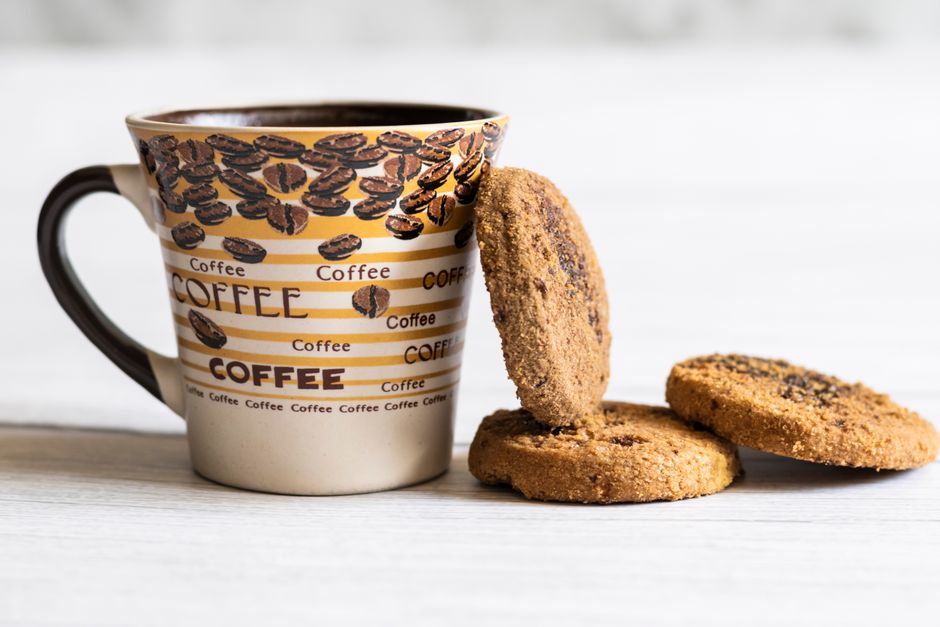
Almost every mug death traces back to one of four mechanisms. Learn them and you can diagnose risk in any mug you already own.
1. Rim chips
Why do mugs chip on the rim? Geometry. Every other surface of a mug is a curved, supported shell. The rim is the free edge of that shell, usually the thinnest cross-section on the piece, with the least clay beneath the glaze. It is also the first point of contact in nearly every collision: the faucet, a plate lowered on top of it, the tine of a dishwasher rack.
A rim chip is not cosmetic. It removes glaze, exposes the porous body to water and stains, and leaves a sharp edge at the exact spot your mouth goes. Most ceramic mugs that get retired in ordinary households are retired for rim chips, not shattering. To check your own stock, run a fingertip slowly around each rim. Any catch or roughness is the beginning of the end.
2. Handle joint failure
A handle is a lever bolted to a curved wall, and levers multiply force. Most handle failures initiate at the upper or lower attachment point, where a minor knock to the handle gets concentrated into a small patch of clay. The upper joint usually carries the load when you lift a full mug, which is why it fails disproportionately.
Quality matters here. Handles formed as part of the mug, or attached carefully at the leather-hard stage, generally outperform slip-joined handles on cheaper ware. Diagnosis is easy: look for hairline cracks ringing the joints, and retire anything that shows one, because a full mug plus a failed handle equals a floor event.
3. Glaze crazing
Crazing is the slow kill. A glaze and its clay body cool and expand at slightly different rates; when the fit is imperfect, the glaze sits in tension and eventually relaxes into a fine spiderweb of cracks. Ceramics references describe this glaze crazing mechanism as a thermal expansion mismatch, and the consequences compound: the crack network absorbs water with every wash, the body weakens, and stains settle into lines that no scrubbing lifts.
Is glaze crazing unsafe? Calibrated answer: the crack network can harbor bacteria and is hard to sanitize fully, and in old or uncertified wares there is a further concern about what the cracks expose. Modern food-safe certified glazes lower that risk. The bigger practical issue is structural, since a heavily crazed mug is a mug halfway to failure, and repeated hot dishwasher cycles are an accelerant.
4. Thermal shock
Thermal shock is the only kill mode that works in a single event. Ceramic is strong in compression and weak in tension. Plunge a hot mug into cold water and the surface tries to contract faster than the interior, putting the skin in tension; research on thermal shock fracture mechanics treats this rapid-cooling crack propagation as a defining failure of brittle materials. The crack, once started, runs instantly and audibly.
Non-tempered ceramic and ordinary annealed glass are the vulnerable classes. The defense is behavioral: preheat gradually with warm water before pouring boiling liquid, and never move a hot mug straight to a cold counter under a running tap.
The 30-Year Dishwasher Attrition Math
One dishwasher cycle per day is 365 cycles a year, and about 10,950 cycles across 30 years. Each cycle contributes three insults: wash and dry heat well beyond what hands tolerate, aggressive detergent formulated to strip food films, and mechanical rattle against rack tines and neighboring ware. None of this appears on any spec sheet, and no "dishwasher safe" label prices it in, because the label certifies a single cycle rather than the compounding load.
The attrition lands on exactly the kill modes above. Heat cycles push a marginal glaze fit toward crazing, and rack contact nibbles at rims. Production ceramics are engineered and tested for this grind, which is why restaurant ware survives it; handcrafted glazes vary batch to batch, which is why artisan mugs carry wider variance under the same load.
Can enamel mugs go in the dishwasher? Generally yes, the coating tolerates it, but with a caveat that matters over decades: any chip that exposes the steel core gives water a place to sit, and rust at chipped edges is how enamelware slowly degrades. Many makers suggest hand washing for that reason, and drying fully after washing extends life further.
Six Mug Materials Ranked by Failure Mode
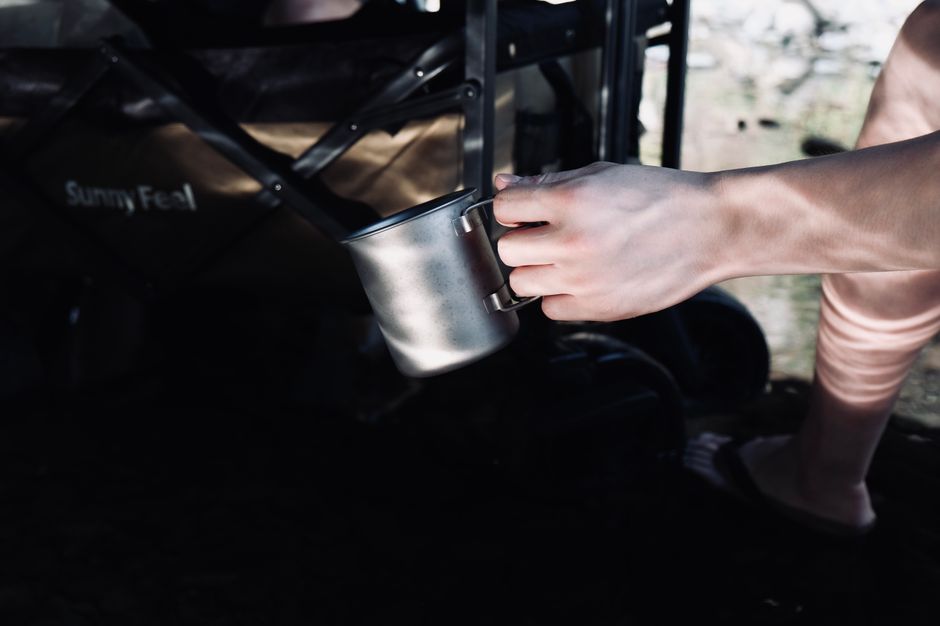
Here is the hierarchy that the kill modes produce. Ranks 3 through 5 can shuffle depending on your household's failure profile, but the top and bottom are stable.
| Rank | Material | Most likely death | 30-year survival odds | Heat retention | Feel |
|---|---|---|---|---|---|
| 1 | Titanium, single wall | Loss or theft, not breakage | Excellent | Weak, cools fast | Ultralight camp tool |
| 2 | Double-wall stainless | Misplaced, or vacuum fails after a hard dent | Excellent | Best in class | Sturdy, no microwave |
| 3 | Enamelware on steel | Chips that rarely end function | Good, graceful | Moderate | Rustic, ages visibly |
| 4 | Vitrified restaurant porcelain | Rim chip after years of abuse | Good, for a breakable | Good | Heavy and substantial |
| 5 | Tempered glass | Rare total shatter into granules | Moderate | Moderate | Clean and thin |
| 6 | Handcrafted artisan ceramic | Rim chip or thermal shock | Widest variance | Good | Best in the hand |
Three rows deserve comment.
Titanium and stainless, the only true lifetime categories. Does titanium keep coffee hot? Poorly, in the common single-wall format. A titanium vs stainless conductivity comparison shows both alloys conduct heat similarly poorly, but titanium mug walls are so thin that heat escapes quickly anyway. Titanium buys indestructibility and low weight, not warmth. Double-wall stainless is where vacuum insulation does the retention work, and stainless steel mug durability is the benchmark the rest of this table is measured against. The realistic exit for both metals is loss, or a dent that compromises a vacuum seal.
Enamelware, the graceful-failure compromise.Vitreous enamel on steel is glass fused to metal at high temperature, and it fails like a coating, not like a vessel. The enamel vs ceramic mug question resolves to failure style: enamel chips and keeps working, ceramic fractures and does not. That distinction reshapes what "dead" means per material, and it is why enamelware outranks every breakable despite cosmetic decline.
Vitrified restaurant ware, the best breakable bet. The most durable coffee mug you can buy that still feels like a mug is commercial-grade vitrified porcelain. Alumina-reinforced porcelain research underpins why restaurants specify it: reinforced bodies absorb impacts that destroy decorative ware. It is heavier and less romantic than artisan ceramic, and it is the rational choice if you want ceramic that survives.
Five Mugs, Five Predicted Deaths
The hierarchy is abstract until you apply it. Five archetypes, each with a most probable cause of death, plus MiiR's own stainless as the control.
MiiR handcrafted ceramic mug. Predicted death: rim chip against the faucet or a neighboring dish in a crowded sink, most likely within the first years of careless ownership. With single-user hand washing, the same mug plausibly reaches decade four. Handcrafted variance is the story; two mugs from one kiln can age differently.
The control, a MiiR stainless tumbler. No predicted breakage death. The realistic exits are misplacement or a dented wall that compromises the vacuum, and even then it still holds coffee.
Heavyweight vitrified diner mug. A diner mug guide explains why these feel immortal: thick vitrified walls engineered for commercial abuse. Predicted death: the upper handle joint, decades in, after a knock lands exactly on the handle's edge.
Classic enamel camp mug. Predicted death: a chip on the rim or base exposing steel. The mug keeps functioning, which is the definition of graceful failure. Retirement comes when rust rings form or flaking reaches the drinking edge.
Duralex-style tempered tumbler. Tempered glass, and the maker's own Duralex glassware benefits page leans on impact and thermal resistance. Predicted death: a single sharp strike on a hard edge, producing a total but relatively safe shatter into small granules. It will outlast the dishwasher almost indefinitely, right up until the one blow that ends it completely.
Titanium camp cup. No predicted breakage death at all. The most probable exit is a river crossing or a house move.
Can Any Mug Be a Buy It for Life Mug?
Yes, with an honest ceiling. Titanium and double-wall stainless qualify unconditionally; they fail by loss, not fracture. Enamelware qualifies conditionally, since function outlives appearance. Vitrified restaurant ceramic is the best bet among true ceramics, and handcrafted pieces, MiiR's included, qualify only under a care regime that most households will not sustain for 30 years.
Match the category to your household:
- Clumsy household, kids, stone counters: double-wall stainless. This is the real-world unbreakable coffee mug, and it doubles as the daily desk driver.
- Camp, travel, pack weight: a titanium mug, accepting that coffee cools fast.
- You want ceramic warmth: buy restaurant-supply vitrified ware for daily use, and treat the artisan mug as the special-occasion piece.
- You already love a discontinued glaze: buy a second one now. Glazes do not come back.
Do ceramic mugs last a lifetime? They can, in a single-user, hand-washing, careful-sink household. Averaged across real kitchens, they do not, and that gap is the honest ceiling on any buy it for life mug claim in ceramic. The rest of your BIFL kitchen gear, cast iron and clad stainless, is unconditional in a way no fired clay can be. The longest lasting coffee mug material is titanium, with double-wall stainless effectively tied for home use.
Mug Care Rules by Kill Mode
Every rule below counters a named kill mode, so each one buys measurable years.
- Preheat before boiling pours. Warm the mug with tap-hot water first, and never take a hot mug straight to a cold rinse. This deletes thermal shock, the only single-event ceramic death.
- Hand wash handcrafted pieces. Keep artisan glazes out of the daily 10,950-cycle grind; reserve the dishwasher for restaurant ware, tempered glass, and enamel without chips.
- Protect rims in the sink. Wash mugs separately or use a sink mat, never stack them, and make sure rims clear the dishwasher tines rather than resting against them.
- Check handle joints seasonally. Look for hairlines at the upper attachment, and retire a mug the moment one appears, before it retires itself onto your floor.
- Inspect glaze under bright light. Run a fingertip over the surface each season; a spiderweb texture or stains that will not lift mean the crazing clock has started.
- Buy two of anything you would mourn. The cheapest lifetime insurance for a ceramic mug is a spare in the closet, because the warranty never covered the drop anyway.
That last rule is the whole MiiR question in miniature. Buy their stainless for the warranty-backed decades. Buy their ceramic with eyes open, enjoy the best-in-hand feel, and keep a spare, because in fired clay the physics, not the brand, always gets the final word.
Stay in the loop.
Get the latest posts and exclusive content delivered to your inbox.
Join 36 readers. No spam. Unsubscribe in one click, anytime.
About the author
Cal Whitmore
Durability Testing Lead
Cal has spent a decade in product testing, from tool labs to outdoor gear reviews, and treats every claim of a lifetime warranty as a hypothesis to break. He writes about the materials, joinery, and failure modes that actually decide whether gear lasts twenty years or two.
Related Posts

Buy It for Life Kitchen Gear Worth Thrifting, Ranked
Buy it for life kitchen gear is worth thrifting when the fatal flaw is inspectable at the shelf and the wear parts still exist. This ranked list shows which.
Buy It for Life Immersion Blenders Ranked by What Breaks
Buy it for life immersion blenders ranked by the parts that actually die: coupling, shaft bearings, seal, and switch, with the 1980s Braun as benchmark.
Buy It for Life Grain Mills Ranked by the Parts That Die
We rank buy it for life grain mills by the parts that die first, from crank bearings to sealed motors, with burr costs and 20-year survival scores.