Danner Mountain Light Graded for 20 Years of Recrafts
Danner Mountain Light boots graded for 20-year ownership: recraft costs, rebuildable vs terminal wear parts, and why the JJJJound collab changes nothing.
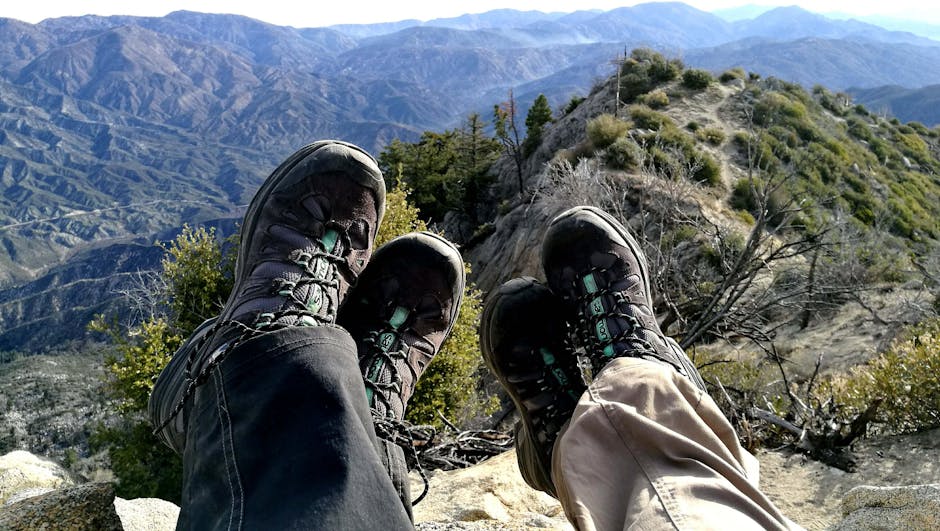
When the JJJJound take on the Danner Mountain Light arrives in the FW26 drop cycle, it will sell on two colorways, a glossy black pair and a charcoal suede pair. Neither will add a single day of service life over the stock boot sitting on Danner's site right now. Same stitchdown construction, same one-piece upper, same rebuildable platform, same eventual trip to the recraft bench in Portland. The collaboration is a styling story. The Mountain Light itself is a systems story, and the systems story is the one a durability buyer needs.
Stay in the loop.
Get the latest posts and exclusive content delivered to your inbox.
Join 52 readers. No spam. Unsubscribe in one click, anytime.
This piece grades the Danner Mountain Light the way a fleet manager grades a vehicle, as a 20-year cost-per-year system with rebuildable parts and terminal parts. What a factory recraft actually replaces each cycle, what it costs relative to a new pair, which wear points no resole can fix, and whether the JJJJound premium buys anything a longevity buyer should care about. Three questions open here and close at the end: what kills a Mountain Light, when the expensive boot becomes the cheap boot, and what the hype drop is actually selling.
What the Danner Mountain Light Platform Actually Is
The lineage runs back to the Danner 6490 of 1973, when serious hiking boots could weigh around five pounds per pair, by the history Danner retells around the model. The 6490's pitch was less boot done better: a single-piece leather upper with fewer seams to abrade, leak, or rub, a Vibram outsole, and a break-in measured in days rather than weeks. That one-piece upper still defines the boot and matters more than any colorway ever will, because the upper is the one major component a recraft refurbishes rather than replaces.
What makes this a platform rather than a product is construction plus service loop. In the Danner stitchdown vs Goodyear welt comparison, both methods produce resoleable hiking boots, but they get there differently. A Goodyear welt stitches a leather strip to the upper, then stitches the outsole to that strip. Stitchdown construction flanges the lower edge of the upper outward and stitches it directly to the midsole, with no intermediary. The practical consequences are a slightly wider platform underfoot, a seam that sheds water well, and a sole joint that can be cut open, recut, and restitched at the factory that built the boot. Cemented construction, the default on most mid-priced hiking footwear, glues the outsole on instead, which is why the list of which boots can be resoled stays short and cemented models stay off it. Most Danner Mountain Light review coverage stops at fit and leather feel. The durability story lives one layer down.
For the audit ahead, the boot decomposes into six wear items: the Vibram outsole, the midsole, the footbed, the lace and hardware set, the one-piece leather upper, and the waterproof bootie, a GORE-TEX liner in this model. Two of those six set the platform's real ceiling, and neither is the outsole.
Inside a Danner Factory Recraft Cycle

What does a Danner recraft replace? More than most owners expect. Danner's recraft service tears the boot down toward the upper, then rebuilds everything below it: a fresh outsole, a new or rebuilt midsole, a new footbed, new laces, and hardware inspected and replaced as needed. The upper gets cleaned, conditioned, and restitched where the years have pulled seams. A boot that arrives with worn tread and a dead midsole comes back with what amounts to a new chassis under the ankle line.
Two operational facts shape the ownership experience. First, eligibility for recrafting is model-dependent, and Danner publishes which boots qualify; the Mountain Light's stitchdown construction puts it squarely in the program's wheelhouse, but confirm before you buy assuming the service. Second, turnaround runs multiple weeks, so own interim footwear and time your send for the off-season.
On the Danner Mountain Light recraft cost question, I will not quote a dollar figure, because program pricing moves and stale numbers do more harm than none. The structural fact, consistent across the program's history, is that a full recraft has been priced well below the cost of a new pair. That gap is the entire arithmetic of 20-year ownership: every recraft year is bought at a discount, and the discount compounds the longer the upper survives. For the bench-level view of what survives a rebuild, Danner's own recrafting team's AMA is worth an hour of your time.
Rebuildable Versus Terminal Wear Points

How long do Danner Mountain Light boots last? The honest answer is that the boot runs six clocks, and they tick at very different speeds.
| Component | How it wears | Recraft verdict |
|---|---|---|
| Vibram outsole | Tread abrasion on rock and pavement | Replaced every cycle, effectively unlimited |
| Midsole | Compression set, crumbling, dead feel | Replaced in a recraft |
| Footbed and laces | Packing out, fraying | Replaced in a recraft |
| Speed hooks and eyelets | Snags, bending, pull-out | Replaceable while the upper holds |
| One-piece leather upper | Creasing, drying, cracking, heel-liner abrasion | Refurbished, never replaced |
| Waterproof bootie | Delamination, leaks, lost breathability | The terminal risk, not a routine swap |
The failures that actually retire Mountain Lights look specific. A heel liner worn through by years of sock friction, which no resole touches. A speed hook snagged on a branch that tears the leather eyelet row rather than breaking the hook. A midsole compressed flat until the boot feels dead, which owners sometimes tolerate long enough for altered gait to grind the upper's creases open. That last one is self-inflicted, and catching it early is the cheapest durability move in this entire article.
The bootie is the clock that ends ownership. The GORE-TEX liner is built into the upper, and once it delaminates or starts leaking, restoring waterproofness is not a routine line item the way an outsole is. Depending on the boot's condition and current program terms, a failed liner can make the rebuild uneconomical even when the exterior still looks healthy. Treat the liner as the platform's service ceiling, treat upper care as the lever that protects it, and confirm with Danner what the current recraft scope covers rather than assuming the liner is replaceable.
The JJJJound Collab Versus the Stock Mountain Light
Is the JJJJound Danner Mountain Light worth it? As a styling decision, that is your call and your budget. As a longevity purchase, the spec sheet answers no. Per the FW26 collaboration launch details, the drop spans a glossy black pair, monochrome with polished silver-tone eyelets, and a charcoal suede pair with black sole and laces, each carrying a JJJJound label woven into the tongue. Construction is unchanged: same one-piece upper, same Vibram outsole, same round laces. Pricing was unconfirmed at announcement, with launch coverage expecting at least the standard version's roughly $470.
| Dimension | Stock Mountain Light | Danner JJJJound Mountain Light |
|---|---|---|
| Construction | Stitchdown, factory rebuildable | Identical |
| Upper | One-piece leather | Identical, gloss black or charcoal suede |
| Outsole | Vibram | Identical |
| Hardware | Standard eyelets | Polished silver-tone |
| Recraft eligibility | Yes | Yes, same platform |
| Longevity delta | Baseline | Zero |
| Price | Roughly $470 | Unconfirmed, expected at least as much |
| Resale | Modest | Likely premium, styling-driven |
Every dollar of secondary-market premium on the collab is scarcity and styling value. That is a legitimate thing to buy if the colorway is the point. It buys zero additional service years, a recraft treats both boots identically, and paying double the drop resale for a colorway on an unchanged chassis is a fashion decision dressed up as a gear decision. Buyers optimizing for durability get nothing from the premium except a smaller recraft fund.
20-Year Cost per Year Versus Cemented Boots
The Danner Mountain Light cost per year question needs its assumptions on the table, because the answer moves with them. Assume a purchase at roughly $470 for the stock boot. Assume a placeholder recraft price of $175 per cycle, to be verified against Danner's current pricing before you budget. Assume a recraft every four to five years under regular mixed use, a reasonable planning cadence for a boot that gets rotated rather than worn daily.
| 20-year path | Assumptions | Total outlay | Cost per year |
|---|---|---|---|
| Mountain Light, easy cadence | $470 plus 4 recrafts at $175 | $1,170 | About $59 |
| Mountain Light, hard cadence | $470 plus 5 recrafts at $175 | $1,345 | About $67 |
| Mid-range cemented | $200 a pair, replaced every 3 years | About $1,400 | About $70 |
| Budget cemented | $150 a pair, replaced every 4 years | $750 | About $38 |
| Premium cemented | $260 a pair, replaced every 2.5 years | About $2,080 | About $104 |
Read that honestly. Against premium cemented boots, the Danner wins outright. Against mid-range replacements on a three-year cadence, it roughly ties, then pulls ahead the longer the upper lasts, because the cemented path's cost stays flat while each recraft keeps amortizing the original $470 further. Against genuinely cheap boots swapped every four years, the Danner never catches up on raw dollars, and the case shifts to support, comfort, waste, and the residual value a recraftable pair holds versus a dead cemented pair in a landfill. The crossover is real but conditional: it depends on recraft pricing and on how often the cheaper route actually replaces boots, which in practice is usually more often than buyers budget for.
Buying for Two Decades Instead of One Drop
Execution is boring on purpose.
Buy the stock platform. Pick the colorway you will still wear in year fifteen, follow Danner's official sizing guidance, and expect a real but short break-in on the one-piece upper. Bank the collab delta: if you were prepared to pay drop prices, that difference funds your first two recrafts before you have walked a mile.
Care cadence
Rinse mud off after dirty hikes. Air-dry away from heat sources, never beside them. Condition the leather upper a few times a year, more in dry climates, because a supple upper resists the crease cracking that shortens boot life. Rotate pairs if you can, since leather recovers between wears.
When to send for a recraft
Send when any of these trigger, and before secondary damage compounds them:
- Tread worn smooth at the edges, well before it is worn smooth everywhere
- Midsole compression, the moment the boot starts feeling flat or dead
- Heel breakdown or liner wear at the back of the boot
- Visible cracking at the major creases, which means the conditioning habit slipped
One dependency to verify before relying on any of this math: the 20-year plan assumes Danner's factory recraft program remains available at sub-new-pair pricing. Program scope, eligibility, and cost can change, so check current terms before you count on the service loop.
Final Grade for 20-Year Ownership
| Subsystem | Grade | Why |
|---|---|---|
| Stitchdown construction | A | The enabler; the sole joint is rebuildable by design |
| Factory recraft loop | A- | Historically priced far under a new pair, with a weeks-long turnaround |
| Leather upper | B+ | Refurbishable, but only as good as your conditioning habit |
| Waterproof bootie | C+ | The terminal risk and the platform's true ceiling |
| JJJJound premium, judged for longevity | F | Buys styling and resale optics, zero service years |
| Platform as a 20-year purchase | B+ overall | Conditional on recraft continuity and upper care |
Closing the three loops from the top. What kills a Mountain Light is the bootie or a neglected upper, not the outsole everyone photographs. The expensive boot becomes the cheap boot at mid-range replacement assumptions and loses only to the cheapest path on raw dollars, while winning everywhere on waste and comfort. And the JJJJound drop is selling a colorway on an unchanged chassis, which is fine to want and wrong to buy for durability reasons. Buy the stock boot, condition the leather, watch the midsole, recraft on schedule, and the Mountain Light earns its place among genuine buy it for life boots with arithmetic behind it rather than a slogan.
Stay in the loop.
Get the latest posts and exclusive content delivered to your inbox.
Join 52 readers. No spam. Unsubscribe in one click, anytime.
About the author
Naomi Estrada
Value and Comparisons Analyst
Naomi came to durable goods through cost-per-use economics, running the numbers on cheap-versus-quality for a personal-finance site before going all-in on BIFL. She builds the head-to-head comparisons and best-of rankings so readers stop guessing and buy the right product the first time.
Related Posts

Buy It for Life Socks Ranked by How They Die
Buy it for life socks ranked by how they die and who pays the bill, with Bombas vs Darn Tough cost per decade math that answers the Reddit obsession.

Nike ACG Jacket Durability Audit, Can It Last a Decade
A durability audit of the Nike ACG jacket comeback, grading seams, zippers, DWR lifespan, repair options, and cost per wear against repairable shells.
Can a Buy It for Life Leather Jacket Cost $200?
A buy it for life leather jacket is judged by tannage, thread, zippers, and lining, not thickness. Use this failure-mode checklist before you buy.