Buy It For Life Electronics Exist If You Dodge 3 Kill Modes
Buy it for life electronics exist, but only if they pass three kill modes: sealed batteries, dead firmware, and cloud shutdowns. Use this checklist first.
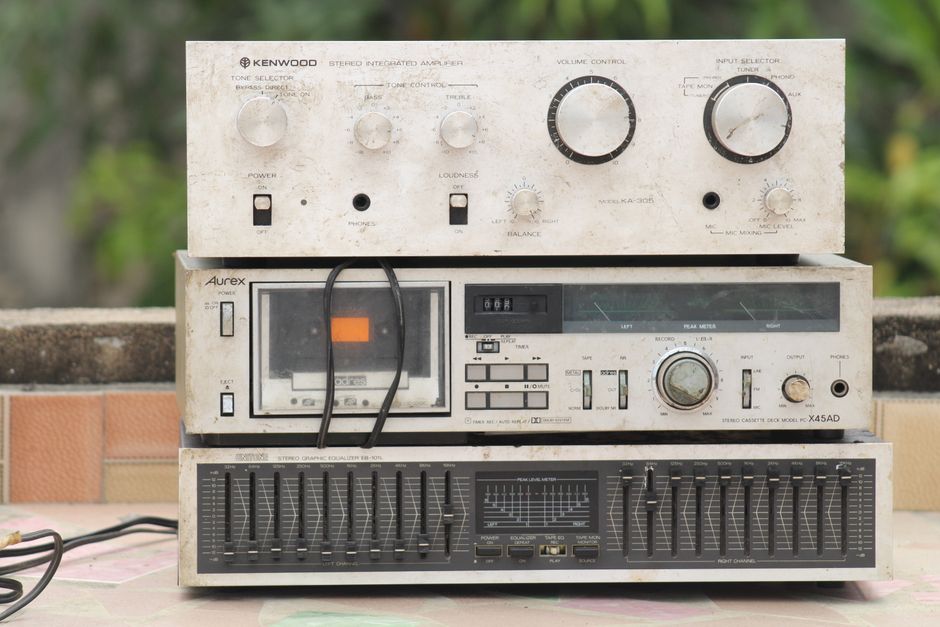
Electronics can be buy it for life. The list of true buy it for life electronics is short, boring, and entirely predictable, because gadgets die in exactly three ways a cast iron pan never does. The 3 kill modes are sealed lithium batteries that expire on a chemical schedule, firmware and cloud dependencies that die when a vendor stops paying its server bills, and single-board integration that turns one cracked solder joint into a total loss. Clear all three before purchase and decade survival stops being a matter of brand loyalty and becomes a checkable property of the design.
Stay in the loop.
Get the latest posts and exclusive content delivered to your inbox.
Join 25 readers. No spam. Unsubscribe in one click, anytime.
A trusted logo tells you nothing here, and neither does the price. A modest passive speaker can outlast a flagship smart speaker at several times the cost, because money buys materials and performance while architecture decides lifespan. This article walks each kill mode down to battery chemistry, server economics, and integration cost, then converts them into a six point checklist and a category map. Ten minutes with any product page and you have the verdict before the box ships.
Why Gadgets Die Differently Than Hand Tools
BIFL thinking grew up on mechanical gear, and mechanical gear fails honestly. A bearing wears, a blade dulls, a thread strips. The damage is gradual, visible, and local, and the dying part is rarely the whole tool. The Livermore centennial bulb, still burning in a California fire station more than a century after its 1901 installation, is the extreme case: its only failure mechanism is a filament slowly thinning, a wearing surface in the same sense a bearing is. Nothing inside it expires on a calendar.
Electronics stack three failure layers on top of that honest mechanical base. Consumable chemistry, since a lithium cell degrades from time and heat whether or not you touch the device. Software dependency, since the product's function can live partly on someone else's servers. And integration, since a modern gadget fuses dozens of components into one board, so faults stop being local. Planned obsolescence gets blamed for all of this, and sometimes it really is deliberate. More often the deaths are just architecture doing what architecture does. Either way, electronics that last decades are identifiable by design, which is exactly why a brand list cannot answer this question and a test can.
Kill Mode 1, the Sealed Lithium Battery

Every lithium-ion product carries two countdown timers, and they run independently of each other.
Cycle aging, the limit everyone expects
Battery degradation from use is the timer people know. Every charge and discharge cycle wears the electrodes slightly, and Battery University's cycle data puts typical consumer lithium-ion cells at roughly 300 to 500 full cycles before capacity falls to around 80 percent of rating. The slide continues from there. Run the math on earbuds worn all night for sleep: eight hours can drain a tiny cell most of the way, so a battery rated for a few hundred full cycles can reach that 80 percent mark within the first year. When the cell no longer lasts the night, the product is functionally dead no matter how good the drivers inside it are.
Calendar aging, the limit nobody budgets for
The second timer runs whether you use the device or not. Electrolyte side reactions slowly consume a cell's capacity in storage, and laboratory calendar aging studies document measurable fade in cells that were barely cycled. A sealed gadget sitting in a drawer is still dying on schedule. Heat accelerates the process, which is unkind news for anything that lives in a pocket, against an eardrum, or permanently on a charger.
None of this would matter if the battery were treated as the consumable it is, like a brake pad or a filter. Glue is what converts a ten minute service job into a funeral. The sealed battery vs replaceable battery lifespan gap is not subtle: a screw-open battery door means the device outlives several batteries, while a glued shell means the battery outlives the device. Regulators have effectively agreed this is a design defect rather than normal wear, because the EU battery regulation will require user-replaceable batteries by 2027 in most portable devices sold in the bloc.
Kill Mode 2, Firmware Death and Cloud Shutdowns
Feature freeze versus the full brick
People lump two very different failures under "software death." A feature freeze means updates stop while the device keeps doing everything it did on day one. That is survivable, even boring. A brick means the product needs a server handshake, a signed app, or an online license check to function at all, so the end of support is the end of the device. What happens when a smart device loses cloud support was decided at design time: built for local control, it degrades gracefully; built for the cloud, it dies.
The documented record
The case studies are not hypothetical. In 2016, Revolv's hub shutdown after Google's Nest acquisition permanently disabled home automation hubs that had sold for hundreds of dollars, with Nest offering compensation only after customer backlash. In 2019, Sonos Recycle Mode invited owners to trade working speakers for a discount, but only after a process that permanently disabled them; the program was eventually scrapped, though Sonos had already announced an end of support for its legacy products. The pattern repeats often enough that roundups of bricked smart home gadgets read like obituary columns.
So how long do smart home devices last before servers shut down? Roughly as long as the vendor's goodwill and business case, which historically has been shorter than the life of the components inside the box. That is the uncomfortable truth of device end of life: a cloud dependent smart device is never fully owned. You are renting function from a server operator under lease terms nobody wrote down. The contrast shows software itself is not the culprit. The GitHub Archive Program aims to preserve open source code for a thousand years, and a gadget running open local firmware can be maintained by anyone long after its maker moves on. Software rarely rots on its own; tethering is what kills it.
Kill Mode 3, the Unrepairable Single Board

Mechanical gear survives minor faults because faults stay local. Strip a gear in an old hand drill and the motor still spins. Single-board electronics invert that property. One cracked solder joint under a chip, one failed trace, one dead charging circuit, and a machine with ninety-nine working parts becomes scrap, because repairing one fault on one fused board rarely makes economic sense.
Repairability is decided at design time, long before you buy. Glue instead of screws, proprietary connectors, ribbon cables bonded to everything, and parts pairing, where serialized components refuse to function after a swap, all push minor faults toward total losses. iFixit's AirPods teardowns are the canonical evidence, scoring glued-together earbuds at or near zero repairability year after year, where replacing a modest battery means destroying the product. That teardown record is also how to check repairability before buying a gadget: look up the score, then check whether anyone sells the parts at all.
Policy is now catching up on three fronts. The FTC's Nixing the Fix report found that manufacturer repair restrictions, from parts monopolies to software locks, impose real costs on consumers and independent shops. The right to repair movement has started winning too, with state right-to-repair laws now covering parts availability and, in some states, parts pairing. And since June 2025 the EU ecodesign rules require smartphone and tablet makers to keep spare parts available for at least seven years after a model leaves the market, in designs that actually come apart. Repairable gadgets are becoming a legal requirement in some markets. Until that reaches everything you might buy, the teardown database is your pre purchase proxy.
The Pre Purchase Checklist for Decade Survivors
Every kill mode converts into a question you can answer from a product page, a manual, and a teardown video. Run all six before money changes hands.
| Check | What passes | Two minute verification |
|---|---|---|
| Power | Mains power, or a battery that swaps without a heat gun | Search the model name plus "battery replacement" |
| Offline operation | Core functions work with Wi-Fi off | Check the manual for a mandatory app or account |
| Updates | Optional, never load bearing | Ask whether day one firmware is fully functional |
| Teardown | Screws, standard cells, published service info | Read the iFixit score or a teardown video |
| Parts and connectors | USB-C, 3.5mm, replaceable cables, spares for sale | Search for replacement parts before the gadget |
| Vendor history | No record of bricking end of life hardware | Search the brand plus "bricked" or "shut down" |
The first two checks carry the most weight. Gadgets that work without an app or internet, powered from a wall socket, have eliminated the two kill modes no screwdriver can fix later; the rest of the checklist is damage control for kill mode 3. This table is what separates buy it for life electronics from expensive disposables, and it works on any category.
The Category Map for Buy It For Life Electronics
Which electronics are buy it for life? Run the map and the pattern is boringly consistent. The categories that pass are the ones with no battery, no server, and discrete replaceable parts.
| Category | Verdict | Why |
|---|---|---|
| Passive loudspeakers | Pass | No chemistry, no server, drivers and crossovers stay replaceable for decades |
| Wired headphones | Pass | Replaceable cables and pads, standard 3.5mm, nothing sealed |
| Mains powered analog audio | Mostly pass | Discrete components, serviceable designs, standard power sockets |
| Mechanical keyboards | Mostly pass | Replaceable switches and keycaps, wired, offline |
| Repairable laptops | On the bubble | Swappable battery, RAM, and ports, but silicon and support windows still expire |
| E-readers | Fair trade | Sealed batteries, though firmware runs locally and support runs long |
| Smart speakers and displays | Never | Kill modes 1, 2, and 3 stacked in one product |
| Smart locks | Never, and worse | Cloud dependency attached to a security function |
| Earbuds and wearables | Never | Glued cells, glued shells, tiny batteries cycled daily |
Notice what the pass column does not contain: premium brands. Price buys materials, performance, and warranty service, never architecture. The realistic smart speaker lifespan is the length of its cloud support contract, while a garage sale amplifier from the 1980s is still on duty in somebody's living room. Hold onto one inversion and it pays for the whole article: the more a device does, the more ways there are to kill it.
When a Short Lifespan Is a Fair Trade
Treating every short-lived gadget as a scam is how BIFL thinking loses credibility. A $35 pair of sleep earbuds that survives three years costs about $12 a year, and if noise masking is the difference between sleeping and not sleeping, that can be a rational purchase. The real problem is short life you never budgeted for, hidden inside a price and a brand that implied permanence.
The honest metric is cost per expected year of service, decided before checkout. If the checklist says a device will die in three years, divide the price by three and see whether the value still holds. If it does, buy it as a conscious consumable with a recycling plan. If it does not, walk away. The point of the three mode test is precision, not austerity.
Your Ten Minute Verdict
The routine compresses to three questions. Find the power source to clear kill mode 1, find the cloud dependency to clear kill mode 2, find the screws to clear kill mode 3. Three minutes each, with the product page, the manual, and a teardown video open side by side.
Run it once as a worked example, shopping for a kitchen speaker. The smart display candidate: a sealed battery in the portable version, a setup flow that refuses to proceed without an app and an account, assistant features computed on remote servers, and a glued unibody shell. Three out of three kill modes, at any price. The alternative, a used pair of passive bookshelf speakers on a basic amplifier: wall powered, playing the instant you plug in a source, drivers replaceable with a screwdriver and a soldering iron, and no account that anyone could ever delete. One of these is a ten year purchase. The other is a subscription you paid for up front.
The rule of thumb to carry forward: if a device needs your Wi-Fi password to justify its existence, you are renting it. If it works with the plug in and the internet down, someone can keep it alive, including you. Buy it for life electronics are a design pattern rather than a myth or a brand list, and you now hold the test that finds it.
Stay in the loop.
Get the latest posts and exclusive content delivered to your inbox.
Join 25 readers. No spam. Unsubscribe in one click, anytime.
About the author
Priya Raman
Repair and Restoration Writer
Priya maintains and restores everything she owns, from cast iron to mechanical watches, and has spent years in the right-to-repair community. She writes about maintenance, warranties, and repairs, the half of buy-it-for-life that keeps good gear out of landfills.
Related Posts

Buy It for Life Essentials Ranked by 20-Year Math
Buy it for life essentials for your first home, ranked by repairability, parts availability, and 20-year cost per year instead of brand folklore.

5 Buy It for Life Mattresses Ranked by Repairable Parts
Buy it for life mattresses ranked by repairable parts, from swappable comfort layers to flippable builds, with warranty math and cost per decade.

Buy It for Life Area Rugs Ranked by How They Die
Buy it for life area rugs are decided by construction, not fiber. Learn the flip and inspect test, the glued-back failure mode, and cost-per-year math.