Buy It for Life Sweaters Ranked by How They Die
Buy it for life sweaters ranked by how they die. We grade Shetland knitwear on yarn ply, twist, and construction so your next sweater lasts decades.

Buy it for life sweaters are rarely the softest ones on the rail. The knits that clear thirty winters, plied Shetland crews, dense handknit Arans, honest lambswool, usually feel slightly crisp on day one, because the yarn structure that resists pilling and abrasion also resists the plush hand that sells sweaters in the first hour. Softness is a fitting-room measurement. It says nothing about how a knit dies, and knitwear dies in five predictable ways: pills and thinning, unraveling seams, exhausted ribbing, felting, and moth larvae eating the fiber itself.
Stay in the loop.
Get the latest posts and exclusive content delivered to your inbox.
Join 7 readers. No spam. Unsubscribe in one click, anytime.
This guide ranks the category by kill mode instead of by comfort or brand story. The specs that defend against each death, plied high-twist yarn, tight gauge, fully fashioned construction, point in the opposite direction from what softness rankings reward. That inversion is why a fully fashioned plied crew like a Harley of Scotland Shetland can outlast a fine-gauge merino knit by decades, staying alive through ten minutes of amateur darning while the merino gets replaced.
Why Your Softest Sweater Dies First
Makers pull the softness lever with three moves: finer fibers, fewer plies, less twist. Each is survivable alone. Stacked, they form a countdown.
Fine wools tend to run shorter in staple length, which means more fiber ends per centimeter of yarn. Fewer plies leave those ends unanchored. Low twist gives them room to migrate. Add friction from a bag strap or a desk edge, and the freed ends tangle into pills at the cuff and underarm while the fabric beneath them goes thin. The cloud you tried on in the shop is often the sweater that looks tired after two winters.
Hardwearing knits take the other side of every trade. Two or more plies trap fiber ends between strands. Firm twist raises the friction inside each strand. A tighter gauge spreads abrasion across more stitches. None of this is exotic technology, just spinning choices that mid-century mills made by default because customers expected one sweater to serve for years.
None of that makes fine merino a scam. Next-to-skin comfort is a real goal and fine merino delivers it. But softness is a poor proxy for lifespan, and for the question this article answers, which sweater outlives the rest, it is actively misleading. What follows replaces it with failure modes, then with the hangtag specs that predict them.
The Five Kill Modes of a Sweater
Every dead sweater in a closet was killed by one of five mechanisms. Learn them once and you can autopsy any knit in seconds.
1. Pilling and thinning. Friction works short fiber ends loose, they tangle into pills, the pills abrade away, and the base fabric gets thinner wherever the sweater touched something. Textile research on pilling ties the problem mainly to yarn structure, with fiber fineness, staple length, twist, and ply as the dominant variables. A single-ply, low-twist fine merino sits at the bad end of all four. A firmly twisted 2-ply sits at the good end.
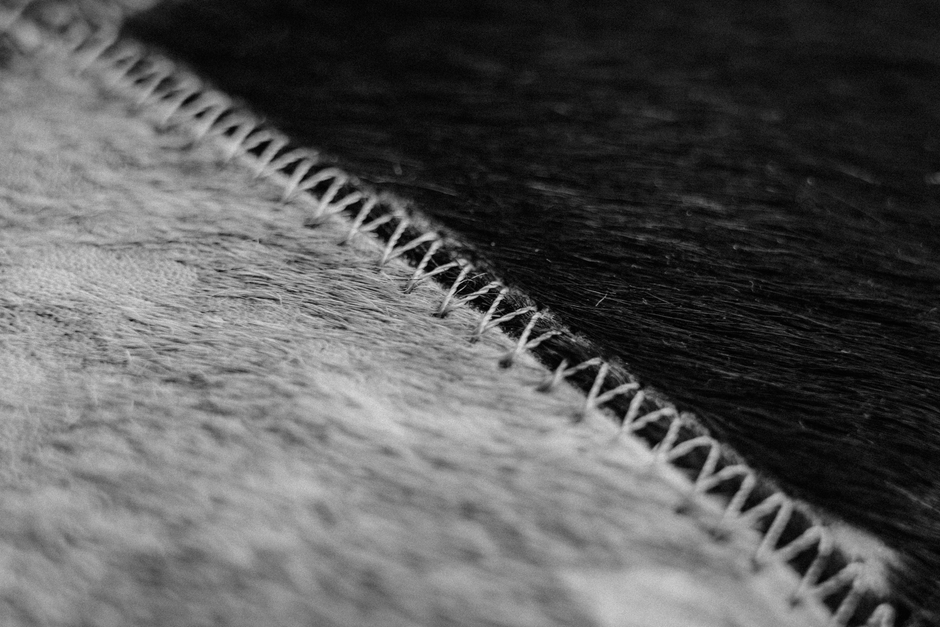
2. Unraveling from cut seams. Knitwear is a grid of interlocked loops, so construction decides whether a snag stays local. Fully fashioned panels are knitted to their final shape and linked together, which is why a ladder in a fashioned garment tends to stop at the shaped edge. Cut-and-sew construction stamps panels out of a sheet of knitted fabric and overlocks the raw edges, leaving severed stitch columns along every seam. One pulled thread at the wrong angle can run across an entire panel. The fully fashioned versus cut-and-sew choice is one of the most durability-relevant decisions a maker makes.
3. Ribbing fatigue. Cuffs, collars, and hems fail before panels do, because elastic recovery degrades with every stretch cycle. Deep, tightly tensioned ribs keep snapping back for years. Shallow, loose ribs go wavy, then baggy, then drafty, and cheap knits almost always cut corners here because nobody checks rib tension in a fitting room.
4. Felting. Wool fibers are covered in microscopic scales. Heat, moisture, and agitation together ratchet those scales into one another until the fibers interlock permanently. A single hot wash with agitation can shrink and harden a sweater past wearing in one cycle, which makes felting the cheapest kill mode to eliminate: it requires no better sweater, only a better washing habit.
5. Moths. The adult moths fluttering in your closet do not eat wool. Their larvae do, digesting the keratin in the fiber, and they prefer wool soiled with sweat or food residue. A dirty sweater in dark, still storage is a nursery.
The Hangtag Reading Order, Ply and Twist First
Reading a sweater hangtag takes one session and pays for decades. Run these five checks in order, most predictive first, and you can grade any knit in under a minute.
| Order | Check | What strong looks like | What it predicts |
|---|---|---|---|
| 1 | Ply | "2-ply" or higher, or two strands when you untwist a thread | Anchored fiber ends, slower pilling and thinning |
| 2 | Twist | Dense, firm strand rather than lofty and fuzzy | Abrasion resistance at the cost of immediate softness |
| 3 | Gauge | Tight stitch definition, skin barely visible when stretched | Wear spreads across more stitches, snags stay small |
| 4 | Seams | Shaped panel edges and flat linked seams, not overlocked ridges with cut stitch ends inside | Ladders stop at seams instead of crossing panels |
| 5 | Ribs | Deep cuffs and hem, firm snap-back | Years of extra life at the wear points |
Does single-ply merino pill faster? Generally, yes, and the tag often tells you outright, because makers of single-ply knits tend to advertise the softness the single ply creates. If the tag promises machine-washable wool, you are looking at superwash, a treatment that strips or masks the fiber scales and coats them in polymer so they cannot interlock in the wash. How superwash works explains the trade: the sweater forgives your machine, but the treated surface can wear and stretch differently over the years. Superwash neutralizes kill mode four and leaves the other four untouched.
Hangtags cannot tell you staple length or true twist, so finish with a crude but useful shop test: rub a patch of sleeve briskly between thumb and fingers a dozen times. Loose fiber surfacing immediately on a brand-new knit is a bad sign for year three.
Grading Shetland Knitwear, With Harley of Scotland
Shetland wool sweater durability owes less to brute fiber than people assume. Shetland fleece runs fine and soft for a traditional wool, per the Shetland Sheep Society, closer to the comfort end of wool than to rug territory. What makes the best Shetland sweaters that last decades is what happens after shearing: the wool is spun into firm plied yarn and knitted at a solid gauge, exactly the structure the kill modes punish least.
A Harley of Scotland sweater pushes construction a step further. The mill knits largely seamless, fully fashioned garments on traditional machinery, so a crewneck has no cut side seams at all. With no severed stitch columns anywhere, a pulled thread has no raw edge to unravel from and a snag tends to stay local to its few stitches. Darning, a ten-minute repair, is the only service most owners ever perform. That is the entire thesis of this article in one product.
Honest peers fill out the tier. Jamieson's of Shetland spins its own yarn on the islands and knits plied crews in the same survival pattern. Inverallan handknits Arans at a gauge so dense the sweater reads as outerwear, heavier and slower to dry, but nearly armor against abrasion, and any competent handknitter can rebuild a cuff.
The compromise is real: a traditional Shetland crew feels crisper than fine merino for the first month. Then it breaks in, holds its surface, and keeps going while softer knits cycle out of your drawer.
Every Sweater Category Ranked by How It Dies
If you are shopping specifically for buy it for life sweaters, this table is the short version of the whole article.
| Knit category | Examples | Strong against | Usually dies by | Repair outlook |
|---|---|---|---|---|
| Plied, fully fashioned Shetland crew | Harley of Scotland, Jamieson's | Pilling, thinning, unraveling | Felting by user error, moths if stored dirty | Excellent; darning and reknitting suit it |
| Handknit Aran | Inverallan | Abrasion, pilling, tears | Felting in the wash, moth holes | Excellent; handknitters can rebuild anything |
| Mid-tier lambswool crew | Traditional Scottish mills | Most pilling, general wear | Ribbing fatigue, moths | Good |
| Fine-gauge merino crew | Softness-first labels | Felting only, if superwash | Pilling and thinning within a few seasons | Poor; thin fabric darns badly |
| Cotton knit | Loopwheeler tees, jersey crews | Moths and felting entirely | Elbow abrasion, collar stretch | Poor; thread grips loosely in slack cotton |
On the lambswool vs merino durability question, lambswool, the first shearing of a sheep, is typically a touch coarser than fine merino and is usually spun plied for mid-tier crews, enough to move it a full tier up the table. Fine-gauge merino is not structurally doomed, and a plied, fashioned merino knit can do well, but the softness market mostly rewards the versions that die young.
Cotton is the outlier. It skips two kill modes entirely, with no keratin for moth larvae and no scales to felt. It dies instead by slow elbow abrasion and collar stretch, and repairs rarely pay, because darning thread holds insecurely in slack cotton fabric and the knit around a patch keeps giving way.
Ribbing Fatigue, Felting, and Moth Defense
Buying well gets you half the lifespan. Three habits get the other half.
Slow the ribbing death
Ribbing fails from repeated stretch, so cut the stretch cycles and buy better ribs. Store knits folded, never on hangers, since hanging loads shoulders and collar for hours. Give a worn sweater a day of rest so the rib recovers its set instead of being stretched while still loose. When a cuff starts to wave, act early: a reknitted cuff costs a fraction of a sweater, while a dead rib that keeps getting stretched can drag the panel shape with it.
Prevent felting, the one-way failure
How wool felts is well documented: heat plus moisture plus agitation lets the cuticle scales ratchet over each other and lock. The mechanism explains why each factor alone is harmless, since warm water without agitation is fine. Woolmark's washing guidance for wool sweaters boils down to cool water, wool cycle or hand wash, no wringing, dry flat. Can a felted wool sweater be saved? Fully felted, no, because the fibers are irreversibly interlocked and no blocking restores the stitch grid. A lightly shocked knit can sometimes be relaxed partway in lukewarm water with a little conditioner, but treat that as salvage of a house sweater, not a restoration.
Stop moths at the larvae
Since larvae, not adults, do the eating, wool sweater moth prevention targets eggs and grubs. Clothes moth biology from university extension sources is blunt about their preferences: soiled fibers. Launder or thoroughly air and brush a sweater before long storage, because sweat and food residue are what draw females to lay. Then seal it, airtight bins or bags deny adults access entirely, which is why collection care relies on sealed storage. Freeze anything suspect before it goes into the bin, following the English Heritage freezing guidelines museums use to kill insects at every life stage. Cedar helps only in a sealed space at high concentration, and pheromone traps monitor rather than control.
Repair Economics and Cost per Decade
Repairability is a spec, and for wool it is the cheapest one to exercise. Darning a wool sweater takes a needle, a darning mushroom, and leftover yarn, so a moth hole closes for pennies and, done in contrast thread, becomes decoration. Swiss darning, or duplicate stitch, is the underrated move: you stitch a new row over stitches that are thinning but unbroken, which makes it the only technique that acts before the hole exists. Run it over the elbows of any knit you plan to keep.
Past amateur scope, professional knit repair services reknit cuffs, collars, and holes by re-looping the actual knitting. Budget tens of dollars for holes and more for a full cuff, then confirm current prices rather than trusting any article's number, including this one.
The cost per decade of a good wool sweater makes the decision obvious. Illustrative math, assumptions shown: a $250 fully fashioned plied crew worn 20 years with one $60 reknit costs $310 total, about $15.50 a year. A $90 fine merino replaced every three and a half years costs roughly $513 over the same two decades, about $25.65 a year, and the plied knit still wins with two paid repairs. Across the realistic ranges, $150 to $300 knits lasting 15 to 30 years against $60 to $100 merinos replaced every three to four years, the gap only widens. The footprint points the same way: WRAP clothing longevity research estimates that even nine extra months of active life meaningfully cuts a garment's carbon, water, and waste footprints, and one sweater worn for decades is that logic taken to its limit.
Decision rules: a hole smaller than a pencil eraser gets darned. A dead cuff on a knit you love gets a reknit quote. Panel-wide thinning means retirement to the house drawer.
The Buy It for Life Sweaters Checklist
Screenshot this and skip the rest on shopping day.
- Spec order: 2-ply or better, firm twist, tight gauge, fashioned or linked seams, deep firm ribs.
- Habits: cool wool cycle or hand wash, dry flat, fold never hang, wash before storage, airtight containers, freeze anything with moth suspicion.
- Repair rules: darn small holes early, duplicate-stitch the thinning spots, quote a reknit before replacing anything that fits.
If DurablePicks were buying one sweater first, it would be a plied, fully fashioned Shetland crewneck from Harley of Scotland or Jamieson's, in a heather shade chosen to hide the darns that will eventually decorate it. Accept the one compromise, a crisper first month than a merino buyer enjoys, because the payoff is a sweater that moths, wash days, and desk edges cannot easily kill, and that gets repaired instead of replaced for as long as you keep a needle in the house.
Stay in the loop.
Get the latest posts and exclusive content delivered to your inbox.
Join 7 readers. No spam. Unsubscribe in one click, anytime.
About the author
Priya Raman
Repair and Restoration Writer
Priya maintains and restores everything she owns, from cast iron to mechanical watches, and has spent years in the right-to-repair community. She writes about maintenance, warranties, and repairs, the half of buy-it-for-life that keeps good gear out of landfills.
Related Posts

Buy It for Life Women's Robes Ranked by Construction
Buy it for life women's robes ranked by weave, cuff construction, and belt anchoring, with failure-mode analysis and cost-per-wear math for decade-plus wear.

Durable Travel Dresses Ranked by How They Die
Durable travel dresses ranked by failure mode, from elastane decay to zipper hardware, with a buying rubric and cost-per-wear picks that survive years.
Buy It for Life Work Shirts Ranked by How They Die
Buy it for life work shirts ranked by five failure points, from collar roll to side seams, and why stitched sashiko reinforcement beats raw fabric weight.