Buy It for Life Women's Robes Ranked by Construction
Buy it for life women's robes ranked by weave, cuff construction, and belt anchoring, with failure-mode analysis and cost-per-wear math for decade-plus wear.

The most specific robe request you will find on r/BuyItForLife asks for a slim fit, ribbed or elastic cuffs that push up the forearm, heavy cotton or waffle, nothing fuzzy, because the poster overheats easily. She names the sleeve as the make-or-break detail and points out that every thread she found ignores it. The replies she received are the standard brand swaps and plush-robe testimonials, which is also what the rest of the search results offer anyone hunting a buy it for life women's robe: softness scored in week one, styling notes, occasionally a GSM figure.
Stay in the loop.
Get the latest posts and exclusive content delivered to your inbox.
Join 7 readers. No spam. Unsubscribe in one click, anytime.
Almost no robe dies because its fabric wears through; it dies because the cuff elastic went slack, a belt loop ripped out of the side seam, or an armhole gave up where a fitted cut concentrated every reach. The body is usually still decent when the robe gets demoted to rag duty. Durability lives in the components, and components can be inspected in about sixty seconds. That is the case this article makes: how each weave fails in the wash, why knit ribbing and sewn elastic age on different schedules, where belt loops tear out, five candidates checked against those criteria, and the cost-per-wear math that settles whether the expensive robe is actually the expensive one.
How Robes Actually Die, Component by Component
Take apart a robe that got thrown out and the shell is usually the healthiest thing in the pile. The cuffs sag, the loops are gone, a side seam has split. Three separate failure schedules killed one garment, and the slowest schedule, the fabric, is the only one a softness roundup ever measures.
Sewn elastic cuffs run on a chemistry clock rather than a wear clock. The band inside a typical cuff carries spandex (elastane) fibers, and textile research on elastane documents what laundry does to that polymer: heat accelerates chain breakdown, chlorine attacks it directly, and time plus body oils grind it down whether or not the robe is being worn hard. A hot dryer is the accelerant. You know the outcome because you have owned the robe: cuff still attached, zero recovery, sleeves sliding down by breakfast.
Belt loops fail mechanically and tend to fail first, because they are small fabric tabs absorbing yanks sized for the whole garment. Seams in a fitted silhouette fail by fatigue, thousands of small loads landing on the same lines. Both get their own section below, including what good construction looks like on the rack.
This is why the honest answer to the buy-it-for-life question, for any robe on any shelf, is no, not literally. Elastic is a consumable, loops are wearing parts, and even excellent cotton slowly thins at the creases. The realistic standard is a decade-plus garment whose wear points are inspectable before you pay and repairable after. Once you accept that reframing, what makes a long lasting bathrobe is robe construction quality, and the brand name becomes a hint at best.
Robe Weave Types and How Each One Fails

Wash day is what kills robes, so the weave, which governs how fabric behaves in the machine, is the first durability decision you make.
| Weave | New feel | Failure mode | Fits you if |
|---|---|---|---|
| Loop terry | Plush, very absorbent | Snagged and pulled loops, gradual loop and weight loss | You wash gentle and live without velcro pets |
| Waffle | Light, textured, breathable | Early shrinkage that largely stabilizes after a few washes | You run hot and will size up once |
| Velour | Smooth, dense, sheared terry | Pile flattens into shiny wear patches | You want drape without fuzz and accept sheen aging |
| Polyester fleece | Softest in week one | Pilling and matting, permanent | Almost nobody, on a decade timeline |
A few notes the table cannot carry. Studies of washed terry towels show loop loss and weight loss accumulating over repeated laundering, which is why terry cloth robe durability tracks loop density and cotton staple length far more than first-week plushness. Waffle is the mirror image: a waffle weave robe has no loops to snag and no pile to pill, and its shrinkage is front-loaded into the first few cycles, so a pre-washed garment or one size up neutralizes most of it. Fleece robe pilling after washing is the terminal case, because pills do not wash back out and the mat only tightens.
The industry knows all of this, which is why real durability testing looks nothing like a softness roundup. AATCC Test Method 124 exists specifically to grade how fabrics look after repeated home laundering, because appearance in week one predicts almost nothing about appearance in year five. GSM is the same trap in a number: it measures warmth and weight, not lifespan.
Cuff Construction, Knit Ribbing vs Sewn Elastic
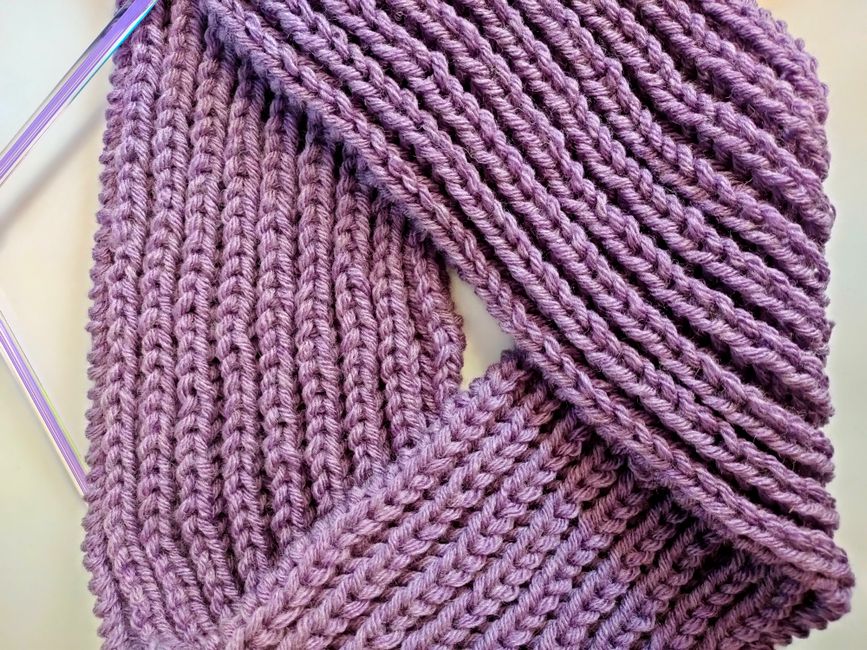
The cuff decision rule is short. Knit-in ribbed cuffs are made of the robe's own fiber, knitted in a rib structure that recovers mechanically, with no elastane inside to decay, so a ribbed cuff robe ages on roughly the fabric's schedule. A sewn elastic cuff contains a spandex component on the chemistry schedule above, typically a few years of laundering before recovery visibly drops.
That does not disqualify elastic; it changes what you are buying. Elastic is acceptable when it sits inside a sewn channel you can open, because elastic cuff replacement is a fifteen-minute job with a safety pin and a meter of new elastic. Elastic serged directly into the hem with no opening is the version to skip. When that dies, the repair is surgery instead of maintenance.
Two rack tests settle it. First, recovery: stretch the cuff hard around your knuckles, release, and count. A healthy rib or fresh elastic snaps back within about two seconds; anything that stays ruffled or crawls back slowly is showing you its year-three self. Second, construction: look for the channel seam. Rib knit, good. Open channel with elastic inside, acceptable. Elastic locked into the hem, pass.
The push-up detail from the Reddit request turns out to be the same question wearing a different hat. Ribbing holds a pushed sleeve in place with structure and friction, and slack elastic holds nothing. The fit request and the durability request are the same request.
Belt Anchoring and Seam Stress in Slim Fits
Why do robe belt loops tear out? Because the belt is the load path. You cinch it every morning, a dog grabs it, it catches on a door handle, and every one of those forces routes through two or three small tabs stitched to the shell. A single-stitched loop on a single layer eventually rips out and takes body fabric with it, which is what makes the failure terminal rather than cosmetic.
Good anchoring is visible without training. Look for bar tacks, dense stacked zigzags of thread, or doubled box-X stitching at each loop. Look for a second layer of fabric behind the attachment point, and loops set into the seam allowance rather than topstitched onto the surface. Interior waist ties earn their fabric too, because they spread the cinching load across the side seams instead of concentrating it on the loops.
Slim cuts change the stress map. A loose wrap drapes and moves with you, while a fitted silhouette binds slightly at the side seams and armholes every time you sit, reach, or lift, thousands of small loads landing on the same lines every year. Same cotton, different seam demand. A slim fit robe that lasts years therefore needs denser stitching along the sides and armholes plus wider, finished seam allowances inside. Turn it inside out on the rack: skimpy allowances and raw edges are a fitted cut on a countdown.
Five Buy It for Life Women's Robe Options Ranked
Ranked on construction logic rather than styling, with one standing caveat: makers change specs season to season, so confirm cuffs, loops, and stitch density on the live listing before you buy. What does a buy it for life women's robe look like in practice? Usually one of these five.
| Rank | Robe | Why it ranks | Watch-outs |
|---|---|---|---|
| 1 | Coyuchi's organic robe collection waffle | Waffle logic, no loops to snag, no pile to pill, organic cotton | Front-loaded shrinkage; verify current cuff construction |
| 2 | Boll & Branch waffle | Same waffle case in organic cotton | Same shrinkage caveat; inspect loop stitching |
| 3 | Parachute's Cloud Cotton robe | Light and breathable, best here for hot sleepers | Lighter weave carries less decade margin |
| 4 | Brooklinen's Super-Plush robe | Dense Turkish cotton loop terry, very absorbent | Warm for hot sleepers; loops can snag |
| 5 | Matouk terry | Hotel-grade dense terry, the most decade-capable fabric on this list | Price; still verify loop stitching |
Two honest footnotes. First, if warmth beats breathability for you, invert the order, because dense long-staple terry is arguably the most durable women's robe fabric here and simply the wrong answer for someone who overheats. Second, none of these is a true slim-cut robe in the pattern sense; most quality robes are wraps. The closer move is one size down with a belt you actually cinch, paired with the seam and loop checks from the previous section, which is what protects a fitted look.
Cost per Wear vs the Fleece Replacement Treadmill
Cost per wear is the calculation the buy it for life women's robe question actually needs, and it is simple: price divided by total wears, where total wears is wears per year times years kept. Every assumption is visible, so rerun it with your own numbers.
| Fleece treadmill | Cotton keeper | |
|---|---|---|
| Assumptions | $28 robe, pilled out and replaced every 18 to 24 months | $120 robe kept 10 years |
| 10-year spend | $140 to $196 for 5 to 7 robes | $120 |
| Daily wear | $0.04 to $0.05 per wear | about $0.03 per wear |
| Every other day | $0.08 to $0.10 per wear | about $0.07 per wear |
One assumption to notice: if both robes get washed on the same weekly schedule, the fleece replacement cycle stays roughly 18 to 24 months even when worn less, because pilling is wash-driven while the wear count halves. Under that assumption, the cotton crosses under the fleece at daily wear somewhere around years six through nine, depending on whether your fleece dies at 18 or 24 months, and the gap widens every year after. Push the cotton price to $150 and each extra $25 adds roughly a year to the crossover. The fleece column also hides its own taxes: the replacement errands, and the month of pilled ugliness before each swap.
The same arithmetic has a footprint version. WRAP's clothing longevity research estimates that extending a garment's active life by nine months cuts its carbon, water, and waste footprints by around 20 to 30 percent. The robe you keep for a decade is also the cheapest one to feel good about.
The 60-Second Inspection Checklist and Care Rules
Run this in order, on the hanger, before you pay.
- Cuffs. Stretch and release; recovery should take about two seconds. Identify rib knit, channel elastic, or locked-in elastic, in descending order of preference.
- Belt loops. Bar tack or box-X stitching, doubled fabric behind the attachment, loops set into the seam allowance.
- Stitch density. Eyeball an inch of side seam. Dense, even stitching survives fitted-silhouette loads; sparse stitching does not.
- Seam allowances. Inside out, look for wide, finished or overlocked allowances, especially at the armholes.
- Weave. Match it to your washer behavior using the table above.
- Care label. Read it as a confidence signal.
That last step deserves a sentence of explanation. In the US, the FTC's care labeling rule requires care instructions with a reasonable basis behind them, so the label is the maker telling you what laundering the garment was built to survive. A cotton robe cleared for warm wash and tumble dry is announcing confidence. A delicate-only label on an everyday robe is announcing the opposite, and the elastic inside it will pay for every hot cycle regardless.
Care habits then set how fast the clocks run:
- Wash cold or warm, never hot; heat is the accelerant for both elastane and cotton.
- Air dry when you can. The dryer is where elastic dies and terry loops take abuse.
- No chlorine bleach. It attacks elastane and degrades cotton.
- Skip fabric softener on terry, because it coats the loops and cuts absorbency.
- Wash the belt in a mesh bag so it cannot lever against the loops in the drum.
- Re-tack a loop at the first broken thread, and swap channel elastic when recovery drops, not when it shreds.
For the poster who started this, the sleeve instinct was right all along. A waffle robe with knit ribbed cuffs and properly anchored loops answers her spec, with one size up absorbing the early shrinkage, and Coyuchi and Boll & Branch are the leading candidates. For everyone else, the sequence is shorter than the search that precedes it: pick the weave that matches your washer, verify cuffs and loops on the rack, and let the per-wear arithmetic defend the receipt. A decade-plus robe is a real, buyable thing; an immortal one is not, and the difference between them is about ten minutes of repair across ten years.
Stay in the loop.
Get the latest posts and exclusive content delivered to your inbox.
Join 7 readers. No spam. Unsubscribe in one click, anytime.
About the author
Priya Raman
Repair and Restoration Writer
Priya maintains and restores everything she owns, from cast iron to mechanical watches, and has spent years in the right-to-repair community. She writes about maintenance, warranties, and repairs, the half of buy-it-for-life that keeps good gear out of landfills.
Related Posts

Durable Travel Dresses Ranked by How They Die
Durable travel dresses ranked by failure mode, from elastane decay to zipper hardware, with a buying rubric and cost-per-wear picks that survive years.
Buy It for Life Jeans Ranked by Repairability
Buy it for life jeans ranked by crotch blowout resistance and repairability, with a fade odometer rubric for choosing heavyweight denim worth darning.

Buy It for Life Sweaters Ranked by How They Die
Buy it for life sweaters ranked by how they die. We grade Shetland knitwear on yarn ply, twist, and construction so your next sweater lasts decades.