Hemp vs Cotton T-Shirts, Judged Where Tees Actually Die
Hemp vs cotton t-shirts judged at the fiber level, what hemp changes about collar and under-strap failures, and when it earns its price premium.

A r/BuyItForLife thread recently assembled the cleanest durability dataset most of us will ever produce at home: three organic cotton t-shirts bought inside one year, washed on the same gentle cycle, mostly hang-dried. All three died in the same two places. The collar rib went wavy and stopped snapping back, and the fabric pilled and thinned along the path of a backpack strap. The owner had paid extra for organic over multipacks expecting longevity, and got the same funeral at a higher price.
Stay in the loop.
Get the latest posts and exclusive content delivered to your inbox.
Join 25 readers. No spam. Unsubscribe in one click, anytime.
That log is exactly how hemp vs cotton t-shirts should be judged, because t-shirt durability is not a single property one fiber wins. A tee dies zone by zone, and each zone fails by its own mechanism. Grade the zones honestly and the hemp question splits cleanly: hemp's bast-fiber properties genuinely improve one failure mode, the marketing explanation for another runs backwards, most tees sold as hemp quietly dilute the advantage, and the poster's main complaint, the collar, is barely a fiber problem at all.
The One-Year, Three-Tee Wear Log
The standard comparison instrument is broken before it starts. Reviews grade week-one softness, drape, and whether a shirt "feels premium," none of which predict anything at month twelve. Durability only reveals itself at specific zones after real time, and the Reddit poster's record, three identical failures under identical care, is a controlled experiment by accident.
Run the same audit on your own dead tee. Lay it flat and mark what actually failed:
- Zone A, the collar rib. Waviness, growth, a neckline that no longer lies flat
- Zone B, the strap paths. Pilling and thinning across shoulders and chest where a backpack sits
- Zone C, the underarms. Surface abrasion and seam stress
- Zone D, overall growth. A body that bagged out without any single hole or tear
Once the tee is graded this way, "do hemp t-shirts last longer than cotton" stops being one question. It becomes four, and the honest answer is that hemp only addresses some of them. Zones A and D are recovery problems, governed by knit architecture. Zone B is a fiber and surface problem. And note what the organic premium already demonstrated: certification governs how cotton was farmed, not how the garment was built, so paying more without checking construction predicts nothing.
Hemp vs Cotton T-Shirts at the Fiber Level
Cotton is a seed hair. Hemp is a bast fiber, the long structural bundles pulled from the plant's stem, and that origin is where the durability reputation starts. In standard textile testing, hemp runs longer in staple and higher in tenacity than cotton, and it holds that strength whether dry or saturated, per technical hemp bast fiber specifications and a recent review of hemp fabric properties.
| Property | Cotton | Hemp | Where it shows up on a tee |
|---|---|---|---|
| Staple length | commonly mid-20s to low-30s millimeters for upland types | technical fibers run far longer, and even cottonized spinning stock generally stays longer | longer staples anchor better, leaving fewer loose ends to pill |
| Tenacity (strength per fineness) | moderate | typically above cotton in published comparisons | slower thinning wherever fabric rubs |
| Strength when wet | slightly above its dry strength | keeps its advantage wet as well | neither fiber is weakened by water itself |
| Moisture regain (commercial standard) | about 8.5 percent | around 12 percent in ASTM commercial regain values | sweat buffering and drying, mostly a comfort story |
| First-week hand | soft immediately | firmer, softening over washes | has almost nothing to do with lifespan |
Only two of those rows do real durability work. Tenacity and fabric abrasion resistance govern how fast a knit thins under a strap; staple length governs pilling. Moisture regain gets retold as a durability story far more often than it earns. And the wet-strength row sets up the most repeated myth in hemp marketing.
The Wet Cotton Myth Behind Hemp Marketing
The pitch goes like this: cotton loses strength when wet, hemp does not, so every wash quietly kills your cotton tee. The fiber science runs the other way. Cotton is one of relatively few fibers whose saturated strength measures slightly above its dry strength, a property long documented in cotton fiber strength research. The fiber famous for collapsing when wet is viscose, not cotton.
So what actually degrades a cotton tee in the laundry? Heat and mechanics, with water as the delivery vehicle. A hot dryer relaxes the knit and damages any elastane. Agitation flexes and abrades yarns against the drum and against other garments. Strong alkaline detergents and bleach attack dyes and finishes. Hemp's wash resilience is real, since bast fibers hold their strength wet, but the popular mechanism is backwards, and a backwards mechanism points you at the wrong fix. If wash damage comes from heat and mechanics, buying hemp for that reason spends money where a colder cycle and a lower spin speed would have done more.
What a 55/45 Hemp Blend Actually Buys You
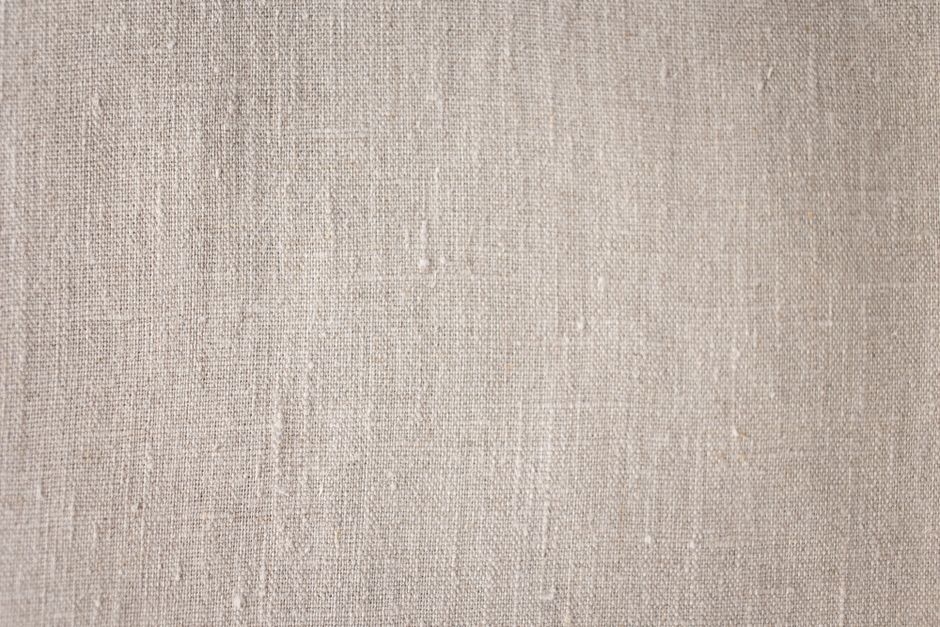
Flip most tees marketed as hemp and you find a blend tag, frequently near a 55/45 split of hemp to cotton, with plenty sitting at 50/50 or below. Blending is close to universal for three reasons. Hemp fibre is a sliver of world textile fiber supply, per UN fiber production figures, so it stays expensive and supply-constrained. Spinning cottonized hemp alone into fine, even jersey is difficult, and cotton carries the yarn. And most buyers reject the stiff, boardy hand of 100 percent hemp before it ever softens.
The dilution math is blunt. For every 100 grams of hemp cotton blend fabric in a 55/45 tee, 45 grams behave like the ordinary cotton you already own. Blend studies generally find mechanical properties landing between the parent fibers, weighted toward the majority component rather than inheriting the hemp extreme, per research on hemp-cotton blend yarns. Whatever strength advantage the marketing cites for pure hemp, a near-majority cotton fraction hands a large share of it back, and pilling resistance slides toward cotton behavior simply because nearly half the surface fibers are short cotton staples.
Label literacy, in one rule: components list in descending order. A tag reading "cotton, hemp" is a cotton tee with a hemp story.
Why the Collar Rib Dies First Regardless of Fiber
How a Collar Rib Fails
The collar is a separate strip, usually a 1x1 rib, attached with a coverstitch, and its stretch comes from loop geometry: columns of knit loops swing open under load and, in a healthy rib, swing back, as covered in any decent collar construction reference. Recovery is a system. Rib architecture does most of the work, yarn twist adds spring, and better tees bind in a few percent elastane for snap, which is exactly what garment makers check with collar rib recovery testing.
Collars rarely tear outright. The dominant failure is growth: loops progressively set in a stretched shape, twist fatigues, and elastane loses its snap after enough heat and stretch cycling. Once loops are set and any spandex is cooked, the wavy neck is permanent. Nothing in that mechanism consults the body fiber's tensile strength. A tee can have a heroic body fabric and a mediocre rib and still die precisely on schedule, which is why those premium organic tees with ordinary ribbing went wavy anyway. If you are wondering why t-shirt collars stretch out, the answer is rib recovery, not fiber weakness.
Collar Specs That Predict Lifespan
None of the specs below appear on a fiber hangtag:
- Dense, fine-gauge rib with tight loop spacing
- Elastane or high-recovery yarn actually in the rib, not just the body
- Instant snap-back in the store. Stretch the collar once; a rib that creeps back over several seconds is telling you its future
- Flat coverstitch attachment rather than a single strained seam line
- Taping across the shoulder-to-collar seam, which shares load
Under-Strap Wear, the Failure Hemp Can Fight

Now the zone where the fiber swap has a real mechanistic case. A loaded strap abrades the knit surface. Short, poorly anchored staples migrate outward, loose ends entangle into pills, and continued rubbing shears those pills off, taking surface fiber with them until the fabric visibly thins. Studies of pill formation tie it directly to staple migration and surface friction, which is why pilling mechanism research keeps staple length front and center.
Where Hemp Genuinely Helps
Hemp attacks both inputs. Longer staples mean fewer free ends and better anchorage, so there is less raw material to build pills from. Higher tenacity and the generally strong fabric abrasion resistance of hemp-containing knits slow the thinning that follows. This is the honest core of every "hemp outlasts cotton" claim: translated into mechanism, it is mostly a claim about this one failure mode, and it holds up.
Where Fiber Stops Mattering
A 55/45 blend puts cotton staples on close to half the surface, returning part of the advantage. Knit and finishing can override fiber identity entirely: a loose, brushed, or heavily bio-polished knit pills no matter what it is made of, while compact-spun or singed cotton yarns pill far less than cotton's reputation suggests. The strap itself is a design variable too, so before asking how to stop t-shirt pilling under backpack straps, consider wider straps, padding, or repositioning a chest strap so the load crosses differently. That can cut input friction more cheaply than any fiber upgrade. As for whether hemp fabric gets denser or just soft and baggy: hemp tends to soften by flexing rather than by shedding surface fibers, but bagging is knit recovery again, so a poorly recovered hemp knit will still grow.
When Hemp Earns Its Premium and When Cotton Wins
The whole hemp vs cotton t-shirts question reduces to matching the fix to the failure. Hemp tees commonly cost meaningfully more than comparable organic cotton tees, sometimes close to double, so the premium only pays against the diagnosis:
Diagnose the dead tee first. Hemp earns its premium only against fiber-driven wear. Collar collapse calls for a better rib, not a better fiber.
| The evidence on your dead tee | The diagnosis | The buy |
|---|---|---|
| Wavy collar, body still solid | Rib recovery failure | A cheaper organic cotton tee with a dense, elastane-bound rib that snaps back instantly |
| Pilled and thin under straps, collar fine | Staple migration and abrasion | The highest hemp content you can find and afford, or compact-spun cotton |
| Both at once | Two separate mechanisms | Fix the collar with construction first, then consider hemp for the body |
So is a hemp t-shirt worth the price? Against strap-zone wear, plausibly yes, at the highest blend ratio you can get. Against collar collapse, no: a cheaper cotton tee with a better rib wins that fight and saves money doing it.
A buying checklist for either fiber: read the composition tag (descending order, with percentages); snap-test the collar rib; inspect the attachment stitching; look for combed, compact-spun, or singed yarns; hold the knit up to light and prefer the denser fabric at the same weight.
Care Choices That Change Lifespan More Than Fiber
The poster's routine was already gentle, and that matters: consumer research on clothing longevity repeatedly ties cooler temperatures and gentler handling to slower garment degradation, per one clothing longevity study. What is left to change is mostly heat and geometry.
- Wash cold and inside out to cut drum abrasion on the face of the knit
- Skip the tumble dryer, since heat is what relaxes knit recovery and kills elastane in the rib
- Dry flat or folded over a rail below the collar, never hung by wet shoulders, which is slow-motion collar stretching
- Fold for storage instead of months on a hanger, and rotate several tees so no single shirt absorbs daily strap duty
Be honest about the ceiling. Care slows the next failure; it does not reverse the last one. A set rib and cooked elastane are permanent, which is exactly why the collar deserves construction scrutiny before any fiber loyalty, and why no washing trick is how to keep t-shirt collars from stretching once recovery is gone.
That closes the audit. Cotton does not weaken when wet, so that marketing line should retire. Most hemp tees are majority blend, so read tags, not hangtags. The collar is a knit-architecture problem, so buy ribs, not fiber myths. The strap zone is where hemp genuinely fights, and that is the one failure worth paying its premium for.
Stay in the loop.
Get the latest posts and exclusive content delivered to your inbox.
Join 25 readers. No spam. Unsubscribe in one click, anytime.
About the author
Naomi Estrada
Value and Comparisons Analyst
Naomi came to durable goods through cost-per-use economics, running the numbers on cheap-versus-quality for a personal-finance site before going all-in on BIFL. She builds the head-to-head comparisons and best-of rankings so readers stop guessing and buy the right product the first time.
Related Posts

Buy It for Life Women's Robes Ranked by Construction
Buy it for life women's robes ranked by weave, cuff construction, and belt anchoring, with failure-mode analysis and cost-per-wear math for decade-plus wear.

Best Heavyweight White T-Shirt Is Not the Heaviest Fabric
The best heavyweight white t-shirt is not the heaviest fabric. Collar binding, ringspun yarn, and side seams predict real durability and slim fit.

Sashiko Repair Ranked by Cost per Wear for BIFL Apparel
Sashiko repair for buy-it-for-life apparel, ranked by cost per wear. Find which knees, elbows, and stress points repay stitching and when replacing wins.