Best Heavyweight White T-Shirt Is Not the Heaviest Fabric
The best heavyweight white t-shirt is not the heaviest fabric. Collar binding, ringspun yarn, and side seams predict real durability and slim fit.

The best heavyweight white t-shirt on the rack is rarely the one with the biggest number printed on its hangtag. Shoppers have learned to chase ounce-per-square-yard figures the way car buyers chase horsepower, treating density as a proxy for toughness that rarely holds up. Fabric weight tells you how a shirt feels on day one, but it predicts almost nothing about whether the collar still lies flat after its fiftieth wash, whether the body shrinks two sizes by year three, or whether the cotton pills into fuzz before the seasons change. The shirts that genuinely survive a decade do so because of mechanical construction choices hidden inside the knit, and learning to read those details is what separates a thirty-dollar shirt you keep from a sixty-dollar shirt you give away.
Stay in the loop.
Get the latest posts and exclusive content delivered to your inbox.
Join 25 readers. No spam. Unsubscribe in one click, anytime.
That reframe matters most for one reader in particular: the slim build who wants a heavyweight white tee that tucks in without billowing at the belt. Heavier fabrics drape wider, which is why so many dense cotton shirts fit like a tent. The good news is that a handful of affordable options use side seaming and tapered patterning to hold a slim silhouette, and when you grade them on construction rather than marketing, several post a better cost per decade than the premium names.
Why Fabric Weight Is a Marketing Shortcut
Walk into any store and the hangtags sell you on a single metric: ounces per square yard. Fabric weight measures the mass of cotton in a given area of knit, and it is a useful number, just not the one that decides longevity. An eight-ounce shirt made with loosely twisted open-end yarn and a weakly bound collar will sag, pill, and stretch out of shape faster than a six-ounce shirt built with ringspun yarn and proper collar binding.
Weight dominates the conversation because it is easy to print on a tag and easy for a shopper to feel between their fingers. Density reads as quality at the point of sale. What it cannot tell you is how the yarn was spun, how the collar was bound, whether the fabric was compacted to control shrinkage, or whether the cut uses side seams to hold its shape. Each of those factors matters more for decade-long survival than a couple of extra ounces.
This is the core problem with most lists ranking the best heavyweight white t-shirts: they sort by weight, declare the heaviest the winner, and never inspect the construction that actually determines whether the shirt stays wearable.
The Anatomy of a Decade-Proof White Tee
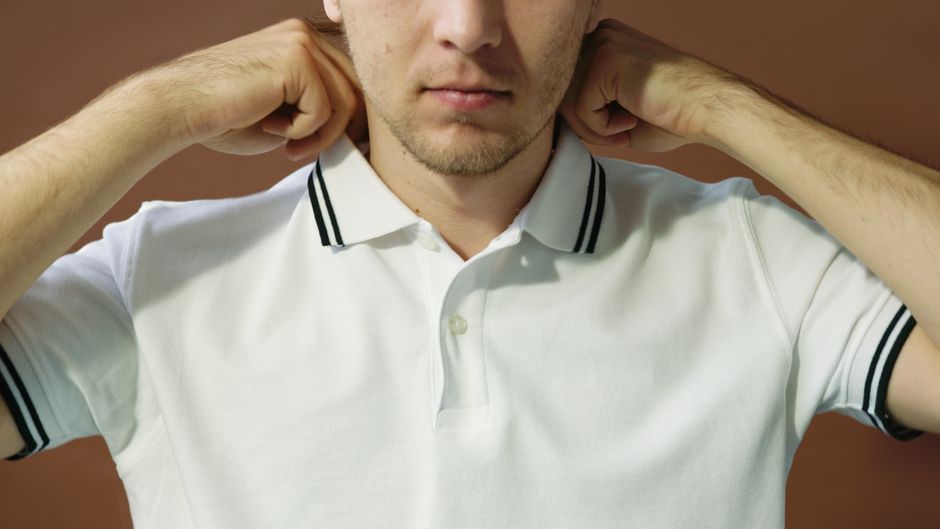
If you want to predict which shirt will still look good in 2034, ignore the weight tag and inspect four structural features instead. Each one addresses a specific failure mode that kills shirts long before the cotton itself wears through.
Collar Binding and Stretch Recovery
The collar is the first thing to go on most tees. A wavy, sagging neckline makes an otherwise intact shirt look ruined, and the cause is almost always the binding, not the fabric weight. Collar binding construction determines how well the neckline recovers its shape after being stretched over your head and laundered dozens of times. A properly constructed ribbed collar with good elastic recovery snaps back wash after wash, while a poorly bound collar relaxes permanently within a season or two.
High fabric weight alone does not prevent collars from sagging if the binding lacks proper stretch recovery. This is why you see dense shirts with collars that look destroyed after six months while a lighter shirt with superior collar construction stays crisp for years. When you shop, tug the collar gently. It should stretch and snap back immediately. If it stays stretched, the shirt will not last, no matter how heavy the body feels. This is the single most reliable durability test you can perform in a fitting room.
Ringspun Versus Open-End Yarn
The way cotton is spun into yarn changes everything about how the fabric ages. Ringspun cotton is produced by continuously twisting and thinning fibers, which compacts them tightly and aligns them along the length of the yarn. Open-end yarn is produced faster and cheaper by wrapping fibers around a rotating rotor, creating a looser, hairier thread.
The practical difference shows up in two places. Ringspun yarns compact tightly and resist pilling better than open-end yarns, extending the wearable lifespan of the garment. Open-end yarns tend to fuzz and pill because the loosely wrapped fibers break free and tangle at the surface. A heavyweight shirt made from open-end yarn will look tired and rough long before a mid-weight ringspun shirt does. If a brand does not advertise ringspun or combed cotton, assume open-end and adjust your longevity expectations accordingly. The durability gap between ringspun and open-end yarn is large enough to outweigh several ounces of extra fabric weight.
Compaction and Shrinkage Control
Heavy cotton is especially vulnerable to shrinkage, and severe shrinkage is what turns a well-fitting shirt into a crop top after three washes. The defense is a finishing process called compaction, which pre-shrinks the fabric by mechanically compressing it so it has already done most of its shrinking before it is cut and sewn. Mechanical compaction finishing is one of the most important and least-discussed steps in producing a stable heavyweight knit.
Skip the compaction step and the fabric exits the dryer two sizes smaller. You cannot feel this at the rack, which is why brand reputation and return policies matter here more than hand feel. A factory's broader finishing discipline, visible in separate wet processes like reactive dyeing, is a loose signal of compaction quality, not a technical guarantee.
Stitch Density and Seam Type
Look at the stitching on the collar and hem. Industry references typically cite 10 to 14 stitches per inch for quality tees; stitch counts well below that range often indicate corner-cutting that will show up as seam failure within a year. Double-needle stitching on hems and sleeves adds redundancy, so a single broken stitch does not unravel an entire seam, while single-needle stitching produces a cleaner but less forgiving seam. On hems, a coverstitch (two parallel rows on the face with a chain on the back) holds up better than a simple chainstitch, which unravels under tension. Loose stitching at the collar accelerates the binding failure discussed earlier, letting the neckline stretch before the cotton itself wears out. This is easy to inspect in person and reveals how much attention the factory paid to longevity.
Solving the Heavyweight Fit Problem for Slim Builds

Here is the catch that the Reddit poster already discovered: heavyweight fabrics tend to fit wide. A dense knit hangs heavier and drapes wider, and most budget heavyweight tees are cut as tubes rather than shaped garments. The result is the exact problem described in the original post, a shirt that bunches awkwardly at the belt when tucked.
The culprit is tubular construction. Tubular versus side-seamed construction is the single biggest factor in whether a heavyweight tee fits your body or fits a rectangle. A tubular tee is knit as a seamless cylinder, which is cheap to produce but gives zero control over body shape. It comes out straight up and down, wide through the waist, with no taper. Side-seamed construction cuts the front and back as separate panels and sews them together, which lets the pattern include a tapered waist, shaped armholes, and a slimmer sleeve.
Tubular knit heavyweight fabrics often result in a boxy fit, requiring side seaming and tailored patterning for a slim silhouette. If you want an affordable slim fit heavyweight tee that flatters a slim build, side seams are non-negotiable. Look for shirts described as tailored, fitted, or athletic cut, which signal that the pattern includes waist suppression and narrower sleeves rather than a straight body.
The Uniqlo Supima that the original poster tried is soft and accessible, but it fails on two counts: the fit is too boxy and the fabric is quite see through. Sheerness was a stated dealbreaker, not just the cut. The fix is not to buy heavier, because heavier tubular knits make the bunching worse. The fix is to buy a side-seamed shirt with a tapered pattern, even if it means choosing a six-ounce ringspun tee over an eight-ounce tubular one.
Best Heavyweight White T-Shirt Options Ranked by Construction
The original poster wanted three things: a slim fit, enough opacity to avoid sheerness, and a clean tuck. Here is how five widely available options score against the construction framework above, with the slim-build verdict first. Specs change season to season, so treat these as relative scores, not permanent verdicts.
The pick for slim builds: Bella+Canvas 3001. Yes, it is a mid-weight shirt at roughly 4.2 oz, lighter than a true heavyweight. It still wins because the thesis of this article is construction over weight. The 3001 uses side-seamed construction with a tapered body, combed ringspun cotton, and a softer hand than any tubular competitor here. For a slim build who needs a tucked tee that holds its silhouette, it is the best option on this list despite carrying less fabric weight than the Beefy-T.
| Shirt | Collar | Yarn | Seam | Shrinkage | Fit | Opacity | Tuck |
|---|---|---|---|---|---|---|---|
| Bella+Canvas 3001 (~4.2 oz) | Strong | Ringspun | Side-seamed | Good | Slim | Fair | Clean |
| Hanes Beefy-T (~6.1 oz) | Fair | Ringspun | Tubular | Fair | Boxy | Opaque | Bunches |
| Carhartt K87 (~6.75 oz) | Mixed | Ringspun | Tubular | Fair | Loose | Opaque | Bunches |
| Gildan Heavy Cotton (~5.3 oz) | Fair | Open-end | Tubular | Weak | Boxy | Opaque | Bunches |
| Uniqlo Supima (~4.4 oz) | Strong | Ringspun | Tubular | Good | Boxy | Sheer | Bunches |
Hanes Beefy-T. Dense and durable but tubular knit, meaning a boxy straight cut. A layering workhorse, a poor tucked shirt for slim builds.
Carhartt K87. Built for worksite abuse with reinforced stitching. Some owners report collar stretch over time despite the heavy fabric. Fit runs loose and long, failing the tuck test.
Gildan Heavy Cotton. The cheapest entry. Open-end yarn keeps the price low but accelerates pilling. Weak on every construction metric that predicts decade-long survival.
Uniqlo Supima. Affordable long-staple cotton that resists pilling. The fit skews boxy and the fabric is quite see through, which is why it failed the tuck test.
The pattern holds across all five: the heaviest tubular options fail the slim-fit tuck test, while the mid-weight side-seamed shirt wins on the criteria that matter most to this reader.
Calculating the Real Cost per Decade
Construction quality, not weight or price, is the real cost-per-decade driver. Cost per wear methodology is the tool that makes that visible. Applied to three ranked shirts above, it reveals why the cheapest-looking option often costs the most over time.
Each shirt's projected lifespan is tied to the specific construction failure mode that will eventually retire it from your drawer.
| Shirt | Approx. Price | Failure Mode | Projected Lifespan | Cost per Decade |
|---|---|---|---|---|
| Bella+Canvas 3001 | ~$6 | Collar binding relaxes last (ringspun, side-seamed) | 7 years | ~$9 |
| Hanes Beefy-T | ~$9 | Tubular body stretches wide, tuck becomes unwearable | 4 years | ~$23 |
| Gildan Heavy Cotton | ~$4 | Open-end yarn pills, collar flattens early | 2 years | ~$20 |
These projections are illustrative, not measured lifespans. The Gildan dies fastest because open-end yarn pills into fuzz and weak collar binding ages the neckline early. The Beefy-T survives longer on density alone, but its tubular knit stretches wide and ruins the tuck within a few years, retiring it from a slim-build rotation long before the cotton itself wears out. The Bella+Canvas costs a fraction as much per decade because ringspun yarn, side-seamed taper, and strong collar binding all extend its usable life.
The cheapest shirt is the one still in your drawer. Construction quality is what keeps it there.
Care Routines That Extend Collar and Fabric Life
The construction features that make a shirt worth buying are the same ones you can destroy in the wash. Every care rule below defends a specific structural detail, not a generic preference.
Wash cold to protect compaction finishing. Hot water relaxes the mechanical compaction that pre-shrinks heavyweight cotton, undoing the dimensional stability the factory built in. Cold water on a gentle cycle keeps the fabric at its cut dimensions and reduces the agitation that stresses side seams.
Air dry to preserve collar binding memory. Dryer heat relaxes the ribbed collar binding's elastic recovery, which is the exact feature that keeps the neckline lying flat after fifty washes. Air drying on a flat surface or line preserves both collar shape and fabric dimensions. If you must machine dry, use the lowest heat setting and remove the shirt while it is still slightly damp.
Skip fabric softener to protect ringspun yarn. The tight twist of ringspun cotton is what resists pilling and fuzz, and fabric softener coats those fibers with a waxy residue that accelerates the breakdown the yarn was engineered to prevent. It also reduces the moisture absorption that makes cotton worth wearing in the first place.
Reduce agitation to protect side seams. The side seams that give slim builds their taper are structural seams, not decorative. Aggressive washing cycles pull and distort those seams, gradually widening the body and undoing the tailored fit. Preventing stretch during washing means choosing gentle cycles, avoiding overloading the machine, and folding heavyweight tees instead of hanging them on hangers that pull the neckline out of shape.
Wash whites separately and skip chlorine bleach. Bleach weakens the cotton fibers that give a heavyweight knit its density, shortening the life of a shirt you bought for its toughness. Oxygen-based whiteners brighten without degrading the fibers.
What to Inspect Before You Buy
The best heavyweight white t-shirt is the one with the right construction underneath, not the heaviest fabric on the tag. Tug the collar to confirm stretch recovery, verify the cotton is ringspun, demand side seams if you need a slim fit, and buy from brands that invest in compaction and finishing. Do that, and the affordable slim-fit option will almost always beat the premium heavyweight name on the only metric that counts: how many years it stays in your rotation.
Stay in the loop.
Get the latest posts and exclusive content delivered to your inbox.
Join 25 readers. No spam. Unsubscribe in one click, anytime.
About the author
Reggie Calloway
Heritage and Craft Editor
Reggie writes about the makers behind lifetime gear, from third-generation tanneries to family-owned foundries. A former magazine editor, he profiles the brands, materials, and craftsmanship that justify keeping a tool or a jacket for the next generation.
Related Posts

Hemp vs Cotton T-Shirts, Judged Where Tees Actually Die
Hemp vs cotton t-shirts judged at the fiber level, what hemp changes about collar and under-strap failures, and when it earns its price premium.

Buy It for Life Women's Robes Ranked by Construction
Buy it for life women's robes ranked by weave, cuff construction, and belt anchoring, with failure-mode analysis and cost-per-wear math for decade-plus wear.

Sashiko Repair Ranked by Cost per Wear for BIFL Apparel
Sashiko repair for buy-it-for-life apparel, ranked by cost per wear. Find which knees, elbows, and stress points repay stitching and when replacing wins.