Buy It For Life Multitool Ranked by Pivot and Repair
Buy it for life multitools ranked by pivot wear, steel toughness, and repair policies. The Spirit X wins for a sealed, maintenance-free pivot.

Most multitool reviews treat the unboxing as the verdict. They count implements, slice some cardboard, admire the anodized scales, and crown a winner. None of that tells you whether the same tool will still earn its pocket space in 2036. The real test of a buy it for life multitool is how the pivot holds up under a decade of sideways prying, whether the implement steel snaps or bends when you push it past its design load, and whether the manufacturer actually honors the repair promise printed on the box.
Stay in the loop.
Get the latest posts and exclusive content delivered to your inbox.
Join 25 readers. No spam. Unsubscribe in one click, anytime.
Two things kill pocket multitools early. First, the pivot screw walks loose under repeated stress until the whole assembly develops the wobble that owners quietly learn to tolerate. Second, a hardened blade or driver tip snaps under a prying load it was never engineered for, and the warranty turns out to exclude exactly that failure mode. The pivot and the warranty are the load-bearing structure. Everything else is decoration.
Why Gadget Count Fails the Buy It For Life Test
An eighteen-implement multitool sounds like versatility. In practice, every extra implement is another cutout in the pivot bar, another lock detent to wear, another channel for grit to settle into. The most feature-loaded tools on the shelf are rarely the ones still in a tradesperson's pocket at year ten.
The logic is counterintuitive but straightforward. A heavily loaded pivot bar distributes load across more cutouts and more moving parts, which means more play to develop and more fasteners to walk loose. A lean tool with four implements, each engineered to do real work, almost always outlasts a flagship with a fish scaler nobody asked for. A tool's lifespan under daily carry depends on how the user treats the pivot and implements, regardless of feature count.
Reviews that fixate on feature lists treat the warranty card as an afterthought. The BIFL perspective flips that priority. The warranty and the pivot are the structure. Everything else is interior design.
The Mechanics Behind Multitool Longevity
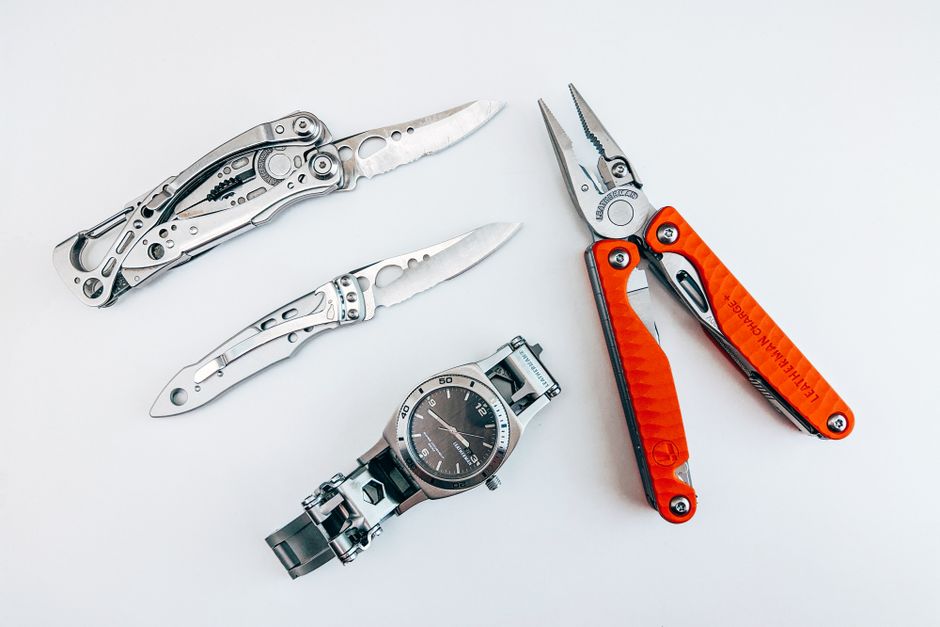
If you want to predict which tool survives a decade, three engineering realities decide the outcome.
Steel hardness and the prying trade-off
Tool steel hardness is measured on the Rockwell C scale. A higher Rockwell hardness (HRC) makes a blade hold an edge longer, but it increases the likelihood of the implement snapping under prying loads. Hardness and toughness pull in opposite directions, and every manufacturer picks a compromise somewhere along that curve.
Leatherman's 420HC typically falls in the mid-50s HRC range, soft enough to deform under abuse rather than shatter. Premium steels like 154CM generally run harder, in the upper-50s to low-60s range, which holds an edge beautifully but fractures more readily when you lever a stuck staple. The Rockwell hardness test is the reference standard behind those numbers, and the 420HC versus 154CM differences matter most when you are prying, not slicing.
For a heavy duty EDC multitool, the softer and tougher steel is usually the safer bet. You can resharpen a dull edge in minutes. You cannot reforge a snapped driver tip at all.
The pivot as the structural weak point
The pivot mechanism is the most common point of structural failure on a heavily used multitool. The reason is purely mechanical. Every time you open a blade, the pivot screw sees rotational torque. Every time you pry sideways, that same screw sees lateral load. Pivot screws and similar fasteners accumulate fatigue from both directions at once, and over thousands of cycles the preload that holds the assembly tight slowly relaxes.
That relaxation is the wobble. A tool that feels bank-vault solid on day one develops a half-millimeter of blade play by year four, and suddenly precision cuts become frustrating. The design question is whether you can retighten the pivot, or whether you are stuck living with the slop.
Outside-accessible versus cascading layouts
Multitools with external opening mechanisms generally experience different pivot wear patterns than those with internal cascading tools. Outside-accessible blades, like the one-handed openers on a Leatherman Wave+, see more individual cycles but spread the stress across a dedicated pivot per implement. Cascading layouts, like a Victorinox SwissTool, share a single pivot bar across multiple implements, which concentrates wear but keeps the structure more rigid.
This multitool buyer's guide frames the same rigidity-versus-access trade-off from a practical standpoint. For pure longevity, the shared-pivot design usually wins because the bar carries load more evenly and has fewer individual screws to walk loose. For convenience, the outside-accessible layout wins because you are not unfolding the whole chassis every time you need a blade.
Comparing Leatherman, Victorinox, and Gerber Warranty Policies
Real-world claim outcomes matter more than printed warranty duration. A 25-year window that gets honored reliably beats a lifetime promise applied at discretion, and that verdict holds up across all three brands once you ask how each manufacturer actually rules on a borderline claim.
No written warranty in this category covers the two failure modes that kill multitools: user-induced prying and accumulated pivot fatigue. Every policy covers manufacturing defects. None promises to replace a blade you snapped while levering a paint can. That gap is where the BIFL decision gets made.
How each brand rules in practice
A broken pivot screw is the closest thing to a covered defect. Leatherman's 25-year warranty covers defects in material and workmanship, and owner-reported precedent suggests structural failures like snapped pivots and bent plier tips are frequently honored. The line between a defective fastener and one that simply fatigued through years of cycling is a judgment call, but the brand reads the defect clause generously.
The linked Victorinox warranty page publishes travel-gear warranty terms, used here as a proxy for the brand's general lifetime posture rather than the cutlery-specific terms. Damage from misuse or wear sits in a discretionary zone. A snapped blade from prying, a chewed driver tip, a fatigued scissor spring all land there. Owner reports suggest Victorinox frequently honors such claims, but discretion cuts both ways, and individual outcomes are not contractual guarantees.
Gerber's limited lifetime warranty covers defects for the original purchaser but draws a tighter boundary between abuse and covered defect than either competitor. Anecdotal reports indicate slower repair turnaround. On multitool repair policies alone, Gerber lands third.
Top 5 Buy It For Life Multitool Picks Ranked

The Victorinox SwissTool Spirit X takes the top slot because it removes the adjustable pivot screw entirely, eliminating the single most common failure mode on this list. The remaining four earn their positions by either mitigating a specific structural weakness or by excelling in a niche where the trade-offs are worth accepting. The ranking criterion is decade-long mechanical survival, not gadget count. Weights cited below are approximate and vary by configuration.
| Rank | Tool | Pivot Type | Steel | Warranty | Price Range (approx.) | BIFL Verdict |
|---|---|---|---|---|---|---|
| 1 | Victorinox Spirit X | Riveted shared bar | Victorinox stainless | Lifetime | $120-140 | No screws to walk; sealed against grit |
| 2 | Leatherman Wave+ | Adjustable screw | 420HC | 25 years | $120-140 | Replaceable cutters extend plier life |
| 3 | Victorinox SwissChamp | Riveted stainless liners | Victorinox stainless | Lifetime | $100-130 | Riveted shared pivot; integrated pliers, zero fasteners |
| 4 | SOG PowerLock | Adjustable screw | Stainless steel | Limited lifetime | $60-90 | Compound leverage stresses its own pivot |
| 5 | Leatherman Surge | Adjustable screw | 420HC | 25 years | $140-170 | Replaceable saw and file; heaviest carry |
1. Victorinox SwissTool Spirit X
Every other tool on this list has at least one adjustable fastener whose preload will eventually relax. The Spirit X has zero. Its shared pivot bar is riveted permanently at the factory, which means there is nothing to tighten and nothing to loosen. The trade-off is absolute: if the pivot ever develops play, you cannot fix it yourself, and you depend entirely on Victorinox's lifetime warranty. The closed-handle layout seals out grit that would accelerate wear. At roughly 285 grams bare tool (per manufacturer specifications) it is not the lightest carry, but for decade-long survival with zero user maintenance, nothing else here matches it.
2. Leatherman Wave+
For users who need pliers and want a tool they can service themselves, the Wave+ is the strongest pick. The pivot runs on Torx screws with factory-applied thread locker, so you can chase developing play with a bit. The design decision that earns this slot is the replaceable hard-wire cutters: when the jaws eventually notch from wire work, you swap a small insert instead of retiring the tool. Outside-accessible blade and file deploy without unfolding the chassis. At roughly 240 grams, it is the most carry-friendly plier tool here. It drops to second because that adjustable pivot will eventually demand your attention.
3. Victorinox SwissChamp
The SwissChamp takes the opposite engineering bet from every Leatherman on this list. Its pliers, blades, and thirty-plus implements are all integrated into a riveted stainless-liner chassis. The critical distinction is that each implement pivots on its own rivet set into the stainless liners, not on a shared adjustable pivot bar with cutouts. Extra implements therefore do not create the cutout-and-detent wear that a cascading pivot bar accumulates. The plier mechanism has no adjustable pivot screw that can walk loose, which is the single most common failure mode on the other tools here. That permanence is the BIFL argument.
The trade-off is that if play ever develops, you cannot retighten it yourself. You depend entirely on the Victorinox lifetime guarantee. Victorinox's undisclosed stainless appears to run softer than 420HC based on observed edge-holding and sharpening behavior, so edge retention is lower but snapping risk under prying is reduced. Deployment is via nail nick, slower than the one-handed outside openers on the Wave+ and Surge. At roughly 185 grams (per manufacturer specifications) with that dense tool complement, the SwissChamp is heavy for its footprint. The factory peening either holds for decades or it does not, and the owner cannot shift that timeline.
4. SOG PowerLock
SOG's value-oriented multitools share a metallurgy problem that undermines the BIFL case. The PowerPint, SOG's compact EDC model, ships with 5Cr15MoV blade steel that testers have called atrocious for edge retention, dulling after days of light use. That steel choice reflects a broader pattern in SOG's lineup where mechanical innovation outpaces material quality, and the PowerLock carries the same category-level risk despite its heavier build. Its compound leverage plier design does deliver genuinely superior gripping force per this hands-on review, and that is a real advantage for plier-heavy trades. But the same gearing amplifies lateral stress through the pivot during heavy crimping, and SOG's tendency toward softer steels means the implements may wear faster under the very loads the leverage advantage invites. SOG's limited lifetime warranty covers defects, though owner reports suggest tighter scrutiny on wear claims than Leatherman honors. At roughly 260 grams, this tool earns its slot only for users who need crushing grip power and accept faster blade wear and more frequent pivot maintenance as the trade-off.
5. Leatherman Surge
The Surge earns its slot with a maintainability feature no other ranked tool offers: user-replaceable T-shank saw and file blades. When the saw dulls or the file wears smooth, you swap standard jigsaw-compatible inserts instead of retiring the tool. The larger frame also runs a thicker pivot pin than the Wave+, spreading crimping torque across more steel and reducing unit-area stress. The adjustable Torx-screw pivot and 25-year warranty carry over unchanged. At roughly 335 grams, the trade-off is sheer weight.
Maintaining Your Multitool Pivot and Avoiding Failure
Three failure modes end multitool lives early, and each is preventable.
- Pivot preload relaxing until the blade wobbles under lateral pressure
- Grit acting as a grinding compound inside the pivot bore
- Hardened implements snapping under prying loads they were never designed for
Reset pivot preload before play develops. The process for adjusting pivot tension on folding tools applies directly here. The target feel is firm resistance through the arc with a solid snap into the detent and zero vertical play when locked open. If you can close the blade by pressing the spine, the preload has gone slack. Loosen the pivot screw, reset the tension until the opening clicks without dragging, and apply thread locker. Do not wait for the wobble. By the time you feel it, the pivot bore has been hammering itself under insufficient clamp force.
Flush the grit channel seasonally. Pocket lint, sand, and workplace grit turn smooth rotation into abrasive wear that widens the pivot bore. The visual cue is dark residue around the pivot head and a gritty, stepped feel during opening. A thorough cleaning and lubrication routine flushes that debris out. Use light machine oil, not thick grease, because heavy lubricants trap grit and accelerate bore wear. A clean pivot keeps the sideways load that fatigues the screw low instead of spiking every time the tool binds.
Never lever with a hardened blade. A higher HRC blade holds an edge longer but fractures under bending stress. The flat driver, the can opener, or a dedicated pry bar absorbs that load with softer, thicker stock. Use the right implement for prying, every time.
For distinguishing a warrantable defect from user wear, the warranty comparison above covers how each brand rules on those claims. The practical move: send the tool in at the first sign of a structural defect, before continued use blurs the line.
The Verdict on the Ultimate Lifetime Multitool
If you want a true buy it for life multitool, two tools are worth defending. The Victorinox SwissTool Spirit X wins on structural rigidity and a true lifetime warranty. The Leatherman Wave+ wins on adjustability and the most reliably honored repair program in the category.
Avoid the trap of buying by feature count. A twenty-implement multitool with a sloppy pivot at year four is e-waste. A lean tool with a single shared pivot, soft-but-tough steel, and a manufacturer that answers the phone is the one that ends up in your kid's pocket twenty years from now.
The Spirit X wins for a sealed, maintenance-free pivot. The Wave+ wins if you need pliers and a tool you can service yourself.
Stay in the loop.
Get the latest posts and exclusive content delivered to your inbox.
Join 25 readers. No spam. Unsubscribe in one click, anytime.
About the author
Cal Whitmore
Durability Testing Lead
Cal has spent a decade in product testing, from tool labs to outdoor gear reviews, and treats every claim of a lifetime warranty as a hypothesis to break. He writes about the materials, joinery, and failure modes that actually decide whether gear lasts twenty years or two.
Related Posts
Buy It for Life Scissors Ranked by Pivot and Steel
Buy it for life scissors ranked by pivot serviceability and sharpenability, plus why induction-hardened edges can turn tough shears into consumables.

The Best Utility Knife Is Not the Week-One Winner
The best utility knife for a decade of work is not the week-one winner. We re-rank 9 tested knives by failing parts and 10-year blade cost.

The Best Tool Belt Is the One That Fails Last
The best tool belt is the one that fails last. We rank leather and nylon rigs by the parts that break first, with cost-per-year math by trade.