Most Durable Home Espresso Machines Built for 20 Years
The most durable home espresso machine lasts 20 years on boiler metallurgy, E61 serviceability, and parts availability. Five commercial standards decide.
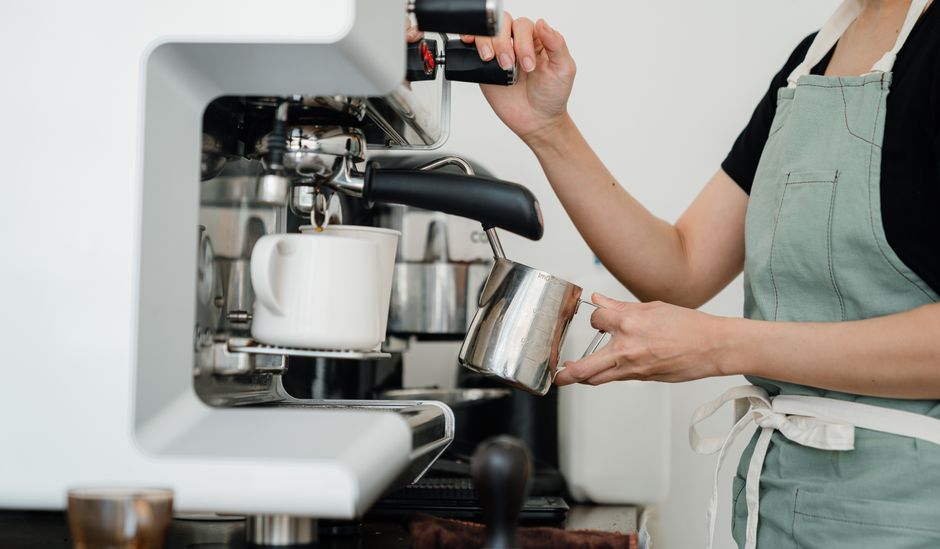
Most home espresso buying guides rank machines by feature count. Touchscreens, app connectivity, programmable shot volumes, built-in grinders. Every one of those features is a failure point waiting to surface, and none of them predict whether the machine on your counter in 2045 will still pull a good shot. The most durable home espresso machine is the one a café technician would recognize, because café owners evaluate durability on a completely different rubric than consumers do. They care about boiler metallurgy, parts availability ten years out, and whether a failed circuit board turns the whole machine into scrap.
Stay in the loop.
Get the latest posts and exclusive content delivered to your inbox.
Join 25 readers. No spam. Unsubscribe in one click, anytime.
This guide applies five commercial survival standards to home espresso machines, so you can evaluate any model the way a café owner would, and skip the ones designed to be replaced.
Why Most Home Espresso Buying Guides Get Durability Wrong
Mainstream review sites score espresso machines on shot quality out of the box and feature density. That framing works for a six-month review window. It collapses when you ask a different question: which of these machines will still be serviceable in two decades?
The features that win review scores are often the ones that kill longevity. A touchscreen interface ties the machine's useful life to a manufacturer's willingness to keep producing replacement displays. A built-in grinder means that when the grinder motor dies, your espresso machine is dead even if the brew side works perfectly. A thermoblock heating system costs less and heats faster, but it corrodes sooner and resists repair.
Café operators have understood this trade-off for years. When professionals evaluate equipment, their priorities converge on consistency, reliability, and serviceability, not feature counts or launch-day novelty. Commercial equipment guides make the same observation: added complexity can introduce inconsistency rather than reduce it, especially when training time is limited. The same logic applies at home, but through a different mechanism: with no staff turnover, the risk shifts from human-error inconsistency to proprietary-tech obsolescence over a longer ownership window.
The Five Commercial Durability Standards That Actually Matter

These are the criteria a repair technician or café owner uses to judge whether a machine will survive. You can apply the same rubric to any home model on any showroom floor.
1. Boiler Metallurgy
The boiler is the heart of the machine, and its material determines how many thermal cycles it can withstand before corroding or cracking. Brass and stainless steel boilers outlast aluminum and thermoblock designs because they resist corrosion and handle repeated heating and cooling over decades of daily use. Aluminum boilers pit and leak over time, especially in hard-water conditions. Thermoblocks, which heat water on demand through a narrow channel rather than storing it in a vessel, are the least durable option and the hardest to service.
If a spec sheet does not name the boiler material, assume aluminum or thermoblock. Manufacturers who use brass or stainless proudly list it.
2. Group Head Serviceability
The group head is where water meets coffee, and it contains gaskets, springs, and dispersion plates that wear out and need periodic replacement. The E61 group head, designed in 1961 and still standard on many prosumer machines, remains the benchmark for serviceability decades after purchase. Its gaskets, springs, and cam paths are commodity parts available from multiple independent suppliers. You can rebuild an E61 group head with parts that cost under twenty dollars and a single wrench.
Machines with proprietary group heads are a gamble. If the manufacturer stops supporting the model, the gaskets become unobtainable and the machine becomes a display piece.
3. Control Simplicity
Mechanical paddle, lever, and rotary-dial controls have fewer failure points than touchscreen or app-driven interfaces. A physical switch either works or it does not, and any technician can diagnose it. A touchscreen depends on a control board, a display driver, and software that may stop receiving updates.
This does not mean all electronics are bad. A simple PID controller with a physical dial is reliable and repairable. The dividing line is between open, replaceable electronics and sealed, proprietary systems.
4. Parts Availability
A machine is only as durable as its supply chain. This is the criterion most consumer guides ignore entirely. Prosumer brands like ECM, Rocket, Lelit, Profitec, and Quick Mill share enough standardized parts that independent repair stays viable well past the warranty window. When community forums compare these brands on long-term maintainability, the consensus is that any of them can be serviced by a competent technician with off-the-shelf components.
Proprietary control boards are the most common reason an otherwise durable machine gets scrapped. When a single PCB fails on an appliance-style machine, the proprietary replacement board is often unavailable or priced high enough that buying new feels more sensible. That is planned obsolescence by economics, whether or not it was designed that way.
5. Non-Proprietary Electronics
The thermoblock versus boiler architecture decision intersects here. Machines built around standard heating elements and mechanical controls can be serviced by any competent technician with a multimeter. Machines built around custom PCBs with embedded firmware cannot. When the board dies and the manufacturer has moved on to the next model year, the machine is done.
A repairable home espresso machine uses controller boards from established third-party suppliers (Gicar is the most common), not custom silicon designed to lock you into one parts channel.
Durability standards at a glance:
| Standard | Favor | Avoid |
|---|---|---|
| Boiler metallurgy | Brass, stainless steel | Aluminum, thermoblock |
| Group head | E61 or serviceable standard | Proprietary, unsupported |
| Controls | Mechanical, PID, lever | Touchscreen, app-driven |
| Parts availability | Multi-supplier standard parts | Single-source proprietary |
| Electronics | Third-party (Gicar) boards | Custom firmware PCBs |
How We Ranked the Most Durable Home Espresso Machines
Each machine below is evaluated against the five criteria above. This is not a shot-quality ranking, because any well-built prosumer machine can produce excellent espresso with decent technique. This is a twenty-year survival ranking.
The Specialty Coffee Association publishes extraction and equipment standards that many of these machines meet or exceed, but SCA certification does not test for longevity. Think of this durability rubric as a separate lens that complements certification rather than replacing it.
For internal layout and repairability, resources like the iFixit coffee maker archive show what technicians see when they open these machines up. Internal layout matters more than most buyers realize: a machine with cramped, glued, or sealed internals is harder and more expensive to service, which means it gets serviced less often, which shortens its life.
Five Home Espresso Machines That Can Outlast Trends

These profiles reflect community consensus and technician experience, not controlled lab testing. Dollar figures are community-sourced estimates. What these machines share is mechanical design that favors serviceability over feature density.
| Machine | Boiler Material | Configuration | Group Head | Commonly Reported Weak Point |
|---|---|---|---|---|
| ECM Mechanika V Slim | Stainless steel | Heat exchanger | E61 | Vacuum breaker valve sticking |
| Rocket Appartamento | Brass | Heat exchanger | E61 | Anti-vacuum and over-pressure valves |
| Lelit Mara X | Stainless steel | Heat exchanger | E61 | OEM pressurestat drift |
| Profitec Pro 600 | Stainless steel | Dual boiler | E61 | Steam boiler refill probe scaling |
| Quick Mill Alexia Evo | Brass | Single boiler | E61 | No simultaneous brew and steam |
ECM Mechanika V Slim
The engineering decision that matters is chassis clearance. ECM gives the boiler compartment enough vertical space that replacing a stuck vacuum breaker takes about ten minutes, versus forty-five on a cramped chassis where you must pull the boiler first. That gap compounds over decades: a ten-minute repair gets done promptly, while a forty-five-minute one gets postponed until the valve fails completely.
Rocket Appartamento
Rocket keeps valve placement consistent across model generations, so a technician who learned the layout on a 2015 unit navigates a current one without relearning the chassis. That platform continuity keeps the anti-vacuum and over-pressure valves, standard parts under $15 to $20, accessible for decades.
Lelit Mara X
The OEM pressurestat is the one cost-cutting decision that affects longevity. It drifts after two to three years of thermal cycling. A PID swap, about $80 to $120 in parts, does not just improve temperature stability. It eliminates the machine's most common failure point, because a PID has no mechanical contacts to pit and arc.
Profitec Pro 600
Dual boilers double the component count in the failure tree. The design choice that matters is the steam boiler refill probe, which sits where mineral concentration peaks. In hard water it scales and misreads the fill level, making annual probe descaling a stricter water-management requirement than a heat exchanger demands.
Quick Mill Alexia Evo
The single-boiler design is not a budget compromise but a deliberate elimination of an entire failure class. A heat exchanger adds internal tubing that can corrode independently of the main vessel. A dual boiler adds a second vessel, probe, and element. One brass boiler removes those paths from the failure tree entirely. The trade-off is no simultaneous brew and steam.
The Design Patterns That Brick a Machine Early
You can spot a machine that will not survive twenty years before you ever plug it in. Here are the design choices that shorten lifespan, and the mechanism behind each one.
Plastic and thermoblock boilers. As the boiler section notes, thermoblocks corrode fastest. The deeper problem is replacement timelines: thermoblock geometry is model-specific, so once a model discontinues, third-party suppliers stop stocking replacements within a year or two. A cracked thermoblock with no available part is a dead machine.
Integrated grinders. In reliability engineering, a two-component system's mean time between failures is bounded by its shorter-lived component. When the grinder motor or burr carrier dies at year five, the espresso side's effective life caps at five regardless of boiler quality, even if the brew system could run another fifteen. Separate purchases decouple those failure modes so one dead component does not scrap the other.
Single-source PCBs. When a machine's brain is a single proprietary circuit board with custom firmware, the machine lives only as long as that board is available. Consumer brands that use sealed, non-standard boards effectively set an expiration date. Compare this to prosumer machines where the controller is a standard PID or Gicar box that any technician can source from multiple distributors.
Sealed chassis. Machines glued shut or assembled with tamper-resistant screws discourage repair. NSF-certified commercial machines often require accessible, serviceable components by regulation. Home machines that adopt commercial-style construction tend to be more repairable than appliance-style machines that prioritize compact aesthetics over technician access.
Maintenance Habits That Push Any Machine Past 20 Years
Maintenance is the single variable that decides whether a prosumer machine reaches twenty years or dies at seven. Routine consumables over twenty years, roughly $200 to $400 in gaskets, grease, and screens, cost less than buying two or three appliance-grade machines to replace one that failed. Budget another $100 to $300 per decade for major parts like a pressurestat, heating element, or pump. The lifetime total still undercuts replacement. Every task below targets a specific physical failure.
- Descale on a schedule tied to water hardness. Scale is mineral deposition that coats boiler walls and heating elements, insulating them so the element overheats and burns out. Soft water users may descale once a year. Hard water users should descale every two to three months.
- Replace group head gaskets every one to two years. Rubber gaskets harden and shrink from repeated thermal cycling, breaking the seal between portafilter and group head. The result is leaks, channeling, and eventually damage to the group head body. E61 gaskets cost under ten dollars and take ten minutes to swap.
- Lubricate the E61 cam path annually. The cam follower and expansion valve depend on smooth mechanical movement. Without food-safe silicone grease, friction accelerates wear until the lever stiffens and the valve leaks.
- Backflush with cleaner weekly. Coffee oils accumulate behind the dispersion screen, turn rancid, and slowly corrode the brass internals of the group head. Regular backflushing dissolves these oils before they cause damage.
- Replace shower screens and dispersion plates every two to three years. These are consumable parts that erode and clog over thousands of shots. Treating them as permanent shortens the life of the gaskets and group head downstream.
When Durability Should Not Be Your Top Priority
A twenty-year machine is not the right purchase for everyone. Be honest about your situation:
- If you rent and move frequently, a heavy prosumer machine (often 40 to 60 pounds plumbed or unplumbed) is a logistics burden, not an asset.
- If you drink espresso occasionally, the maintenance overhead of a prosumer machine may not be worth it. Gaskets still need replacing whether you pull one shot a week or twenty.
- If your budget is under $500, you are in appliance territory. That is a legitimate choice, but understand the machine is likely not repairable long-term, and plan to replace rather than service it.
- If convenience matters more than control, a superautomatic or capsule system will serve you better than a prosumer machine you resent maintaining.
The goal of this guide is not to push everyone toward a commercial grade home espresso machine. It is to give you the framework to decide with clear eyes about what you are actually buying and how long it will last.
The Verdict on Buying Once
If your goal is a home espresso machine that lasts 20 years, the formula is consistent across every machine that survives: brass or stainless steel boiler, E61 group head, mechanical or simple electronic controls, a brand with a proven parts network, and no integrated grinder.
Among the machines discussed, the ECM Mechanika V Slim and Quick Mill Alexia Evo represent the strongest longevity bets. The Mechanika V Slim offers heat exchanger versatility in a genuinely serviceable package. The Alexia Evo strips the design to its simplest form, eliminating failure points by minimizing moving parts and electronics.
The most durable home espresso machine is the one a technician can still fix in 2045. Buy the machine a café owner would recognize, maintain it on a schedule, and it will outlast every trend that brought you to this search.
Stay in the loop.
Get the latest posts and exclusive content delivered to your inbox.
Join 25 readers. No spam. Unsubscribe in one click, anytime.
About the author
Reggie Calloway
Heritage and Craft Editor
Reggie writes about the makers behind lifetime gear, from third-generation tanneries to family-owned foundries. A former magazine editor, he profiles the brands, materials, and craftsmanship that justify keeping a tool or a jacket for the next generation.
Related Posts

Super-Automatic Espresso Machine Longevity Splits in Two
Super-automatic espresso machine longevity splits into cartridge-service and sealed designs. Compare both against a Gaggia Classic plus Baratza stack.

Stainless Steel Cookware Sets Ranked by 20-Year Survival
Stainless steel cookware sets ranked by cladding integrity, handle welds, and warping threshold. Which survive 20 years and can IKEA's $100 set compete?
Buy It for Life Immersion Blenders Ranked by What Breaks
Buy it for life immersion blenders ranked by the parts that actually die: coupling, shaft bearings, seal, and switch, with the 1980s Braun as benchmark.