5 Resoleable Women's Flats Ranked by Sole Construction
Resoleable women's flats exist, barely. See which sole constructions cobblers can resole, five picks that pass, and the math against $100 every 18 months.

Resoleable women's flats are rare because the category was engineered that way, not because cobblers got picky. Flip over almost any flat in a department store and you find the same recipe: a molded unit sole whose rim wraps up around the upper like a bumper, cement-only bonding with no stitch line anywhere, and an insole board made of cellulose fiberboard, which is essentially dense paper. A repair bench cannot restitch what was never stitched, and it cannot resole a shoe whose foundation is flaking pulp. The outcome is the cycle a recent buy-it-for-life forum request described: a flat dead at 18 months, brought to a cobbler who has nothing to grip. For the math ahead, call it a $100 pair worn daily. This guide explains why that construction dominates, ranks the sole types a cobbler can actually service, names the 5 picks that pass, and runs the resole math against your replacement treadmill.
Stay in the loop.
Get the latest posts and exclusive content delivered to your inbox.
Join 36 readers. No spam. Unsubscribe in one click, anytime.
Why Resoleable Women's Flats Are Rare by Design
Three manufacturing decisions make the typical flat terminal, and none of them show up on the price tag as a warning. First, the molded unit sole: the bottom is cast as one piece of rubber or foam with a rim that rises around the upper's edge, so upper and sole are fused rather than joined. There is no welt to cut away, no stitch channel to sew into, and no clean landing surface for bonding a new sole. The choice between a molded unit sole and a resoleable one gets made at the mold, years before your first wear.
Second, cement-only assembly, which by itself is survivable, since cobblers re-glue soles constantly. Third, and this is the quiet killer, the insole board. A welted dress shoe uses a leather insole. A typical flat uses cellulose fiberboard, a compressed paper product that acts as the shoe's chassis, and industry references on insole boards and seat boards treat it as the standard cost-driven option. Fiberboard absorbs foot moisture, softens, and packs flat. Once it collapses, the shoe loses its shape and no outsole, new or old, brings it back.
That is why women's flats so often fall apart inside 18 months without the rubber ever wearing through. The heel wears, the foam footbed flattens, the board cracks, and the upper still looks presentable while the shoe stops holding your foot. The failure is designed in, which is also why construction tier predicts lifespan better than price does. A $250 molded flat dies on roughly the same schedule as a $60 one. The materials age badly even in the closet: polyurethane soles undergo hydrolysis, a decay process that can crumble soles within a few years even in unworn stock, as PU hydrolysis guidance from safety footwear makers warns, while EVA foam compresses permanently into a crease. A stitched rubber outsole can be cut off and replaced on repeat. Sole material and attachment method predict longevity far better than brand or price.
Sole Constructions Ranked by Cobbler Serviceability
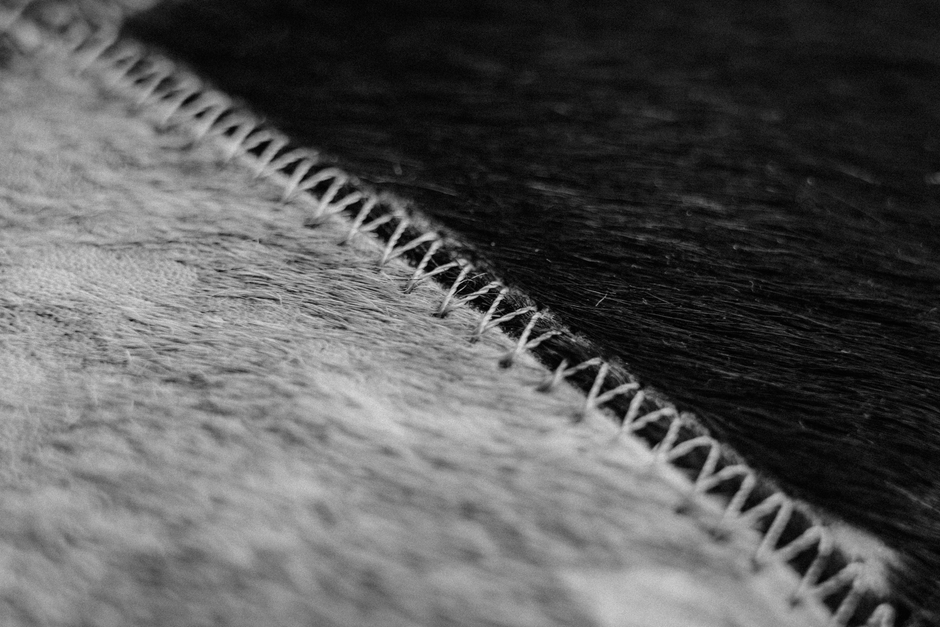
So, can you resole flats? A cobbler can resole women's shoes whenever the sole is stitched or at least stitchable, and the hierarchy below is the whole answer. Cemented versus stitched construction is the frame most buyers know, but the honest version has five tiers, not two.
| Tier | Construction | How the sole attaches | What a resole demands | How findable |
|---|---|---|---|---|
| 1 | Handsewn moccasin, stitchdown | Upper hand-stitched to the sole assembly | Unpick and re-sew the seam, or a factory recraft | Moderate, concentrated where boat shoes are made |
| 2 | Goodyear welt | Welt strip stitched to upper and insole, outsole stitched to the welt | Cut the old outsole off the welt, stitch a new one on | High, any full-service shop |
| 3 | Blake stitch | Outsole stitched through the insole from inside the shoe | A Blake machine, per how shops resole Blake shoes | Medium, Italian-trained benches |
| 4 | Stitchable cemented | Glued onto a flat leather surface that can accept stitching | Prep and re-cement, or sew a new perimeter | High, routine dress-shoe work |
| 5 | Molded unit with knit or synthetic upper | Fused into the sole's rim | Nothing to attach a new sole to | None |
Two clarifications the table hides. A cemented sole is not an automatic death sentence, because shops resole cemented leather dress shoes every week; the actual disqualifiers are a wrapped unit sole, a knit or stretch upper that cannot hold thread, and a crumbled insole board. And welted flats are mostly loafers for a physical reason: a welt adds stack height and edge bulk that reads clunky on a low profile, so resoleable flats cluster in loafer shapes. The one construction thin enough to hide inside a true ballet silhouette is Blake stitch, which is exactly where the real ballet-flat options live.
Five Flats a Cobbler Will Actually Resole

The question under every buy-it-for-life thread about flats is not whether the first resole is possible. It is whether the third is, and whether the upper still deserves it. So each pick below is judged on repeat resoles, not first-cycle eligibility. Together they are the current state of the resoleable women's flats market, spanning handsewn, welted, and Blake construction at street prices (what you actually pay after sales and restocks) running roughly $150 to $700. The list skews toward loafers because women's loafers that can be resoled vastly outnumber true flats, and every ballet profile that qualifies comes from one tier. Factory recraft and restoration programs matter more here than they do for boots, too, because a Blake machine or a handsewn bench is not evenly distributed across the map.
1. Rancourt and Company handsewns
The pick most likely to survive multiple cycles, because the construction was built for them. A handsewn moccasin is stitched, not fused, so a recrafter can unpick the sole assembly, rebuild beneath it, and sew the same upper back on, round after round; the upper is a keeper, not a consumable. The cleanest path is Rancourt's recrafting program, because handsewn resoles demand a skill many general shops decline. Street prices typically sit in the $300s. Caveat: recraft queues run on the maker's schedule, so you are without the pair for weeks.
2. Alden women's loafers
Repeat resoles are structurally routine here. A Goodyear welt sits on a leather insole, and a bench can cut a worn welt off and stitch a fresh one to that same insole more than once, so the upper and the board beneath it, never the sole, set the pair's real lifespan. Alden's restoration service covers full recrafts. Street prices commonly land in the $500s. Caveat: sizes are scarce and often waitlisted, and the resole path is either the factory or a welt bench you trust with an expensive upper.
3. Crockett and Jones women's loafers
The same multi-cycle welted promise with the widest service net. The women's loafer collection is Goodyear welted throughout, so the insole can be re-welted more than once and any competent welt bench can do the work, the factory included. Street prices commonly run $500 to $700. Caveat: the pure cost math washes out at this tier, so you are buying the upper and whole-shoe longevity, not savings.
4. Meermin women's loafers
The cheapest ticket into the multi-cycle welted path. The women's line carries the same Goodyear welt as the men's, making it the clearest case of Goodyear welted women's loafers under $300: buy once, then re-welt for years at the same benches that service boots. Street prices typically sit in the low to mid $200s, and sales pull some styles near $150. Caveat: popular sizes sell out in restock waves, so expect to wait or preorder.
5. Blake stitched Italians, M.Gemi and Velasca
Can ballet flats be resoled? Only in this tier, and the repeat-resole picture is the bluntest of the five. Blake soles are thin and wear through faster than welted rubber, so the pair's lifespan is set by sole replacement cadence and by whether you can find a Blake machine, not by upper durability, which is usually the last thing to fail. M.Gemi sells hand-stitched and Blake-built flats and drivers with bench-made positioning you can verify in M.Gemi review coverage, and Velasca builds its ballerinas on Blake construction, with Velasca owner threads tracking how the shoes wear and repair over time. Street prices run roughly $150 to $350 with sales. Caveat: you need a Blake-capable cobbler or the brand's own service, so budget for more resoles per decade than a welted pair would ever ask.
For contrast, the pairs that will never qualify: knit flats with molded bottoms, molded PU comfort shoes, and most sub-$60 comfort-brand flats. All of them fail on construction, not on price.
How to Tell If Flats Can Be Resoled in 60 Seconds
Run this in the store, or on your screen with zoomed product photos.
- Flip the shoe. A visible stitch channel around the sole perimeter passes. A rim of sole material rising around the upper like a bumper fails; that is a unit sole.
- Flex the waist. Stitched construction flexes and returns. Molded foam creases and holds the crease, and a board-lasted flat folds flat like a slipper because nothing structural spans the arch.
- Peel the sockliner. Leather underneath, with stitch bumps inside the waist, passes. A gray or tan paper edge is fiberboard, and it fails no matter how nice the upper is. This fiberboard insole versus leather insole check is the single most predictive test in shoes.
- Confirm the upper. A leather upper and leather lining hold thread for decades. Knit and stretch synthetics cannot, which kills resoling even when the sole is stitched.
Two emails settle online purchases, and the specificity of the answers is the signal:
Does this model use a stitched sole construction (handsewn, Goodyear welt, or Blake), and if it is cemented, can a cobbler restitch the perimeter during a resole?
Do you offer a refurbishment or restoration service, and what does it currently cost?
Before you buy, check the Shoe Service Institute of America shop finder and call the nearest bench to ask whether they run a Blake machine. Your local capability should help decide which tier you buy into.
Resole Versus Replace, the Honest Math
Assumptions first, so you can substitute your own: one pair worn 4 to 5 days a week, a stitched outsole replaced roughly every 2 years, and the cost to resole women's flats drawn from published cobbler price lists, where quotes run about $40 to $90, so budget $65 for the math.
| 8-year scenario | Purchases | Repairs | Total |
|---|---|---|---|
| $100 cemented pair replaced every 18 months | 6 pairs, $600 | none worth doing | about $600 |
| $220 welted pair | 1, $220 | 3 to 4 resoles, $195 to $260 | $415 to $480 |
| $350 stitched pair | 1, $350 | 3 to 4 resoles, $195 to $260 | $545 to $610 |
| $600 welted pair | 1, $600 | 3 to 4 resoles, $195 to $260 | $795 to $860 |
The six-pair figure comes straight from the cycle: replacements land at months 18, 36, 54, 72, and 90. At these assumptions the break-even purchase price sits around $340 to $405, depending on whether your pair needs three resoles or four. Under roughly $250 the stitched pair wins clearly, which is why the Meermin tier is the sweet spot of this entire category. Between $250 and $400 you are buying a nicer upper as much as savings. Above that, the spreadsheet stops being the reason, and craft plus footbed retention have to carry the purchase.
The cheapest lever on any pair is the heel. A toplift replacement typically costs a fraction of a full resole and addresses the component that wears first for most walkers, so replacing heels on schedule stretches every outsole you own, cemented or stitched.
The honest cases where replacement wins: under roughly $60, cemented comfort flats are usually not worth resoling, because the service approaches the shoe's replacement cost and the upper and board rarely survive a second cycle. Rotation changes the math too, since three pairs worn in rotation each age far slower than one daily pair. And if you will not actually schedule the resole, buy the cheap pair, because an unmaintained $350 flat is just a slower treadmill in nicer leather.
The Verdict on Buy It For Life Flats
Buy a stitched pair in the $200s, back it with a factory recraft program, and service it every couple of years at a bench you have already phoned. That is the strongest play in long lasting women's flats, and it is not the $600 grail. Resoleable women's flats do exist, barely: mostly in loafer silhouettes, where a welt or handseam physically fits, with true low-profile ballet flats narrowing to the Blake tier above. Run the four checks on your current rotation tonight, send the two questions before your next purchase, and pocket the spread the table already shows: the $100-every-18-months treadmill costs about $600 over eight years, while a maintained $220 welted pair runs $415 to $480 with resoles included. Construction decides whether a flat can be saved. You decide whether it gets the chance.
Stay in the loop.
Get the latest posts and exclusive content delivered to your inbox.
Join 36 readers. No spam. Unsubscribe in one click, anytime.
About the author
Cal Whitmore
Durability Testing Lead
Cal has spent a decade in product testing, from tool labs to outdoor gear reviews, and treats every claim of a lifetime warranty as a hypothesis to break. He writes about the materials, joinery, and failure modes that actually decide whether gear lasts twenty years or two.
Related Posts
Can a Buy It for Life Leather Jacket Cost $200?
A buy it for life leather jacket is judged by tannage, thread, zippers, and lining, not thickness. Use this failure-mode checklist before you buy.

Sashiko Repair Ranked by Cost per Wear for BIFL Apparel
Sashiko repair for buy-it-for-life apparel, ranked by cost per wear. Find which knees, elbows, and stress points repay stitching and when replacing wins.

Buy It for Life Women's Robes Ranked by Construction
Buy it for life women's robes ranked by weave, cuff construction, and belt anchoring, with failure-mode analysis and cost-per-wear math for decade-plus wear.