Buy It For Life Luggage Ranked by Repair Economics
Stop throwing out luggage when one part fails. See how buy it for life luggage brands rank by component replacement programs and repair economics.
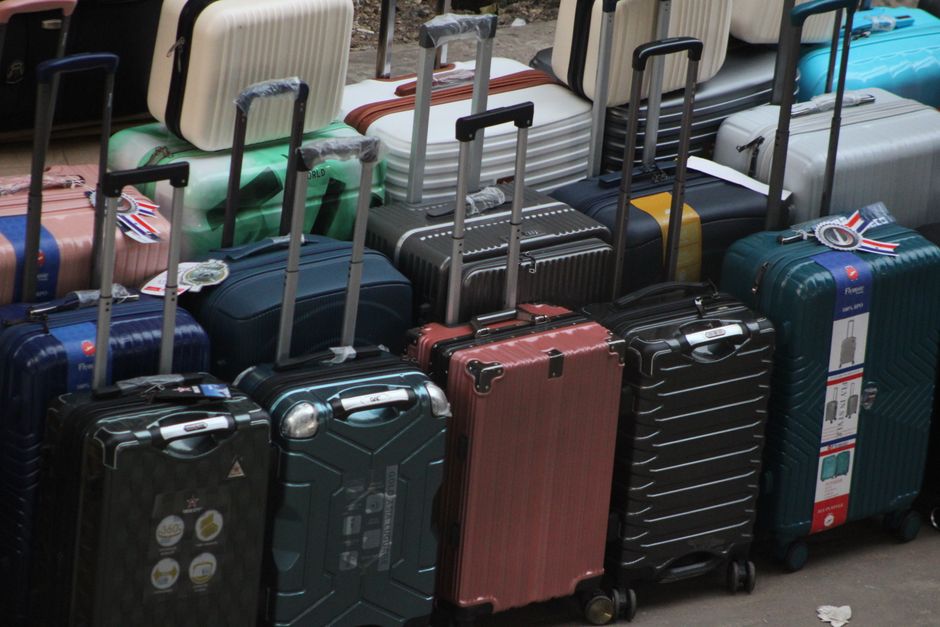
A wheeled carry on does not usually die from accumulated wear across its shell. It dies when a single non-replaceable component fails: a wheel bearing seizes, a telescoping handle cable frays, a corner cracks, a zipper tape delaminates. The body is still fine. You throw the whole bag out anyway. That disposal pattern is the central problem this guide solves. Genuine buy it for life luggage is defined less by initial shell durability than by the component replacement ecosystem surrounding it, because the four mechanical failure modes of wheeled bags are inevitable but whole-bag replacement is optional.
Stay in the loop.
Get the latest posts and exclusive content delivered to your inbox.
Join 25 readers. No spam. Unsubscribe in one click, anytime.
This article ranks repairable luggage brands by parts availability and long-run repair economics rather than by aesthetics or spinner count. By the end you will be able to diagnose the most common failures, compare warranty programs apples to apples, and estimate the ten-year cost of owning a bag instead of replacing one.
Why Most Premium Luggage Fails in Two Years
Walk through any airport baggage claim and you will see bags that cost between $200 and $600 failing on their second or third year of frequent use. The shell looks intact. The handle will not retract. A wheel wobbles and grinds. The zipper pull separated last month. None of these are catastrophes. They are component failures, and most manufacturers engineer their bags around the assumption that you will replace the entire unit when one part breaks.
A high retail price does not guarantee a manufacturer will stock individual replacement parts for older models. Premium positioning often means premium styling and marketing, not a parts catalog. The hidden tax is total cost of ownership, which compounds every time you buy a replacement bag because a low-cost wheel could not be sourced separately.
The reddit BIFL community regularly asks why some luggage survives a decade of business travel while visually identical bags die in two years. The honest answer comes down to whether the manufacturer publishes a parts list, sells wheels and handle assemblies direct to owners, and honors repair requests for legacy models. Repairability is a design choice, and it is the single best predictor of multi-decade lifespan.
The Four Mechanical Failure Modes of Wheeled Bags

To compare brands intelligently you need to know what actually breaks. Wheeled carry on luggage has four recurring failure points. Each has a distinct cause, symptom, and repair pathway.
Wheel bearing seizure
Inline skate wheels and spinner wheels use small bearings that ingest grit, hair, and moisture. Over time the bearing race corrodes or packs with debris until the wheel either locks or shreds its own hub. The distinction between ball bearings and roller bearings matters here: roller bearings distribute load across a line and tend to survive side loads better, while ball bearings roll more freely but fail faster under asymmetric stress from spinner mounts. Either way, the wheel is replaceable on any repairable brand and permanently fused on most others.
Telescoping handle cable failure
The push-button on your handle connects to a thin steel cable that runs inside the tubes and releases the locking pins. After thousands of cycles the cable frays, stretches, or snaps. The handle still slides but will not lock at any height. This is one of the most common failures on wheeled carry on luggage and one of the most fixable, provided the manufacturer sells the assembly. A practical telescoping handle repair walkthrough shows the steps involved, which typically require a hex set and patience rather than specialized tooling.
Shell corner cracking
Polycarbonate and molded ABS shells crack at the corners where stress concentrates during impacts and overhead bin compression. Cracks often start invisibly around rivet holes and zipper tape seams. Once a corner goes, the bag loses structural rigidity and the crack propagates. Brands that weld or stitch internal corner patches can extend shell life, but corner cracking is the failure mode most likely to end a bag permanently if not addressed early.
Zipper tape delamination
The zipper is not the metal teeth. It is the woven tape bonded to the shell. On cheaper bags the bond fails and the tape peels away from the body, often starting near a curved corner. The teeth may still function, but the bag no longer closes securely. Quality YKK or equivalent zippers with stitched, not glued, tape attachment are the difference between a repairable bag and a disposable one.
Most premium luggage is discarded because a single non-replaceable component fails, not because the main body wears out. Identify the part before you throw the bag away.
How to Calculate Luggage Repair Economics
A useful comparison framework is a ten-year ownership model. The math is simple once you gather the inputs.
| Input | Example value | Notes |
|---|---|---|
| Initial purchase price | $400 | Varies widely by brand |
| Expected component failures over 10 years | 3 to 5 | Based on monthly travel |
| Cost per repair (parts plus labor) | $20 to $80 | DIY vs authorized service |
| Cost per full replacement | $400 | If parts are unavailable |
| Downtime and shipping | $15 to $40 | Round trip to repair center |
A bag with a parts catalog and DIY-friendly design might cost $400 upfront plus another $150 in repairs across a decade, for a total of roughly $550. A comparable bag with no parts availability could require two or three full replacements in the same window, pushing the ten-year cost above $1,200 even at a lower initial price point.
The asymmetry is the point. Repairable brands flatten the cost curve. Disposable brands keep charging you the full retail price every time an inexpensive cable frays. Brands that offer comprehensive component replacement programs significantly lower the total cost of ownership over a decade, and the savings scale with how often you travel.
Top 5 Buy It For Life Luggage Brands Ranked
The brands below are ranked by the strength of their parts ecosystem, not by looks or capacity. Each handles component replacement differently, and those differences dominate long-run repair economics.
1. Briggs and Riley
Briggs and Riley publishes a self-repair parts collection that includes wheels, handle components, and trim pieces sold direct to consumers. Per the company's published terms, the Simple As That warranty covers repair of manufacturing defects for the functional life of the bag, and the company is known within the BIFL community for actually stocking legacy parts rather than sunsetting them after a few seasons. This is the closest thing to a true parts catalog in the premium segment, and it is the reason Briggs and Riley consistently tops repair-focused rankings.
2. Travelpro
Travelpro is the workhorse of the flight crew segment and offers what it describes as a Built For a Lifetime warranty on premium lines. The warranty leans on authorized repair centers rather than direct consumer parts sales, which means repairs are professional but you will likely ship or carry the bag to a service location. For frequent flyers near a repair center the economics are strong. For everyone else, factor in shipping and turnaround time.
3. Eagle Creek
Eagle Creek's published terms describe its No Matter What warranty as covering the product for its lifetime, with repair or replacement handled at the company's discretion. The program is well regarded for duffels and soft-sided travel gear where stitching and buckle failures are the dominant issues. Parts availability for individual components is less transparent than Briggs and Riley, but the repair channel itself is reliable.
4. Patagonia
Patagonia is not a luggage specialist in the traditional wheeled sense, but its Black Hole duffel line is a frequent BIFL pick for travelers who do not need wheels. The Ironclad Guarantee, per Patagonia's published terms, covers repairs for the practical life of the gear, and Patagonia's Worn Wear program is one of the most mature repair ecosystems in any consumer category. If your travel pattern can tolerate a soft bag, the repair economics are excellent.
5. Tumi
Tumi occupies the premium price tier, exemplified by products like the Voyageur Q Tote. What separates Tumi from Briggs and Riley is its service model: repairs route through authorized service partners rather than a direct consumer parts catalog. Owners frequently report higher out-of-warranty costs compared with brands that sell components for self-installation, and proprietary components can extend turnaround times depending on which parts your local service center stocks. Tumi build quality is widely regarded as strong, but the long-run economics depend on proximity to a well-stocked service partner.
Comparing Brand Repair Programs and Parts Availability
Instead of restating brand summaries, run a three-question interrogation before you buy any bag. These questions work on any brand, at any price point.
- Does the manufacturer publish a public parts list? A brand that lists replacement wheels, handles, and trim on its website has made a structural commitment to repairability. Brands that require a phone call to check stock usually have not.
- Are parts sold direct to consumers or gated behind authorized service? Direct sales mean you can swap a failed wheel at home for the cost of the component. Authorized-service-only models add shipping, labor, and turnaround time to every repair.
- Does the brand stock parts for discontinued models? This is the true differentiator. A bag is only BIFL if the manufacturer still has parts for it five years after the model was retired.
Score each brand one point per yes. Three yeses means a strong candidate for decades of ownership. One or two means you are trading repair convenience for other attributes. Zero means the bag is disposable regardless of its retail price.
The table applies that interrogation to the five brands above.
| Brand | Public parts list | Direct parts sales | Legacy support | Score |
|---|---|---|---|---|
| Briggs and Riley | Yes | Yes | Yes, legacy stocking | 3/3 |
| Travelpro | Limited | Via service centers | Varies by line | 1.5/3 |
| Eagle Creek | Limited | Via repair channel | Via repair channel | 1.5/3 |
| Patagonia | Via Worn Wear | Via Worn Wear | Strong for soft goods | 2/3 |
| Tumi | No public catalog | Via authorized partners | Varies by center | 1/3 |
Repairable luggage brands separate themselves on the second and third questions. Briggs and Riley is the only brand here that clears all three consistently. The rest deliver solid products but introduce friction somewhere in the repair pipeline, and over a decade of travel that friction translates into higher costs and more downtime.
How to Perform Basic Luggage Repairs Yourself
Most wheeled luggage repairs are more accessible than owners assume. The barrier is usually information and fastener access, not skill.
Replacing wheels
Wheels are typically attached with either standard hex bolts, rivets, or proprietary Torx-style fasteners. The inline skate wheel replacement process is similar across most major brands: remove the fastener, pull the old wheel assembly, seat the new bearing-equipped wheel, and torque the fastener back to spec. Proprietary screws and specialized rivets often prevent owners from performing basic luggage repairs at home, which is why brands that use standard fasteners rank higher on repairability.
Fixing handle assemblies
Handle cable replacement requires opening the tube housing, detaching the frayed cable, threading the new assembly, and reseating the release pins. It is fiddly but not difficult. The main risk is losing small detent springs during disassembly. Work over a tray and photograph each step.
Repairing zippers
Zipper slider replacement is a five-minute job with a pair of pliers and a replacement slider matched to the tooth size. Zipper tape delamination is harder: if the tape is glued, regluing with flexible contact cement can buy time, but a stitched reattachment through a tailor or cobbler is the durable fix.
When to call a professional
Shell corner cracking, internal frame damage, and proprietary electronic components in smart luggage should go to an authorized service center. DIY attempts on structural failures usually void warranties and rarely match the strength of a factory repair.
The Verdict on Repairable Travel Gear
The Reddit traveler who logged a decade of business trips on a single middling backpack is not an outlier because of luck. They are an outlier because their bag had no wheels, no telescoping handle, and no bearings to seize. The moment you add those mechanical systems, repairability becomes the deciding variable in whether a bag lasts two years or twenty.
Match the bag to your travel pattern. A weekly business traveler logging 40-plus flights a year needs a wheeled carry on with a published parts catalog and standard fasteners, which points squarely at Briggs and Riley. A monthly traveler can tolerate Travelpro's authorized-service model if a repair center is nearby. An occasional vacationer flying three or four times a year may be better served by a soft duffel like the Patagonia Black Hole, which eliminates the mechanical failure points entirely and still carries a lifetime repair guarantee.
Know when repair economics stop mattering. Below roughly $150 retail, a bag is disposable by design. No manufacturer at that price point stocks replacement wheels or handle cables, so the ten-year cost model collapses into a cycle of full replacement. Above $300, repairability becomes the dominant cost variable, and the brand you choose determines whether decade-long ownership runs $550 or $1,200.
Watch the regulatory horizon. Right-to-repair pressure is pushing consumer goods manufacturers toward published parts lists and standardized fasteners. Luggage has lagged behind electronics and appliances, but the same legal and consumer forces are beginning to reach travel gear. Brands that already operate a direct parts catalog are positioned to comply easily. Brands that gate everything behind authorized service may face pressure to publish parts lists within the next few product cycles, which would narrow the repairability gap across the industry.
A robust repair ecosystem is the defining feature of buy it for life luggage. Everything else is marketing.
Stay in the loop.
Get the latest posts and exclusive content delivered to your inbox.
Join 25 readers. No spam. Unsubscribe in one click, anytime.
About the author
Naomi Estrada
Value and Comparisons Analyst
Naomi came to durable goods through cost-per-use economics, running the numbers on cheap-versus-quality for a personal-finance site before going all-in on BIFL. She builds the head-to-head comparisons and best-of rankings so readers stop guessing and buy the right product the first time.
Related Posts

5 Buy It For Life Camera Backpacks Ranked By Construction
Camera bag rankings ignore the construction failures that kill bags. We rank buy it for life camera backpacks by divider, harness, and weatherproofing.

Amusement Park Backpacks Ranked by How They Die
How do amusement park backpacks die? Chlorine soaks, closet mold, and strap failure at Disney and Universal. See which five popular bags survive.

Polycarbonate Carry-On $150 vs $500, What Actually Lasts
Polycarbonate carry-ons run $150 to $500. This tier teardown shows which upgrades in wheels, zippers, and warranty service actually buy 20-year survival.