Rolling Hard Cases Ranked by the Parts That Fail First
Rolling hard case ranked by the parts that fail first: latches, wheels, hinge pins, and gaskets, with decade parts availability and cost per shipment.
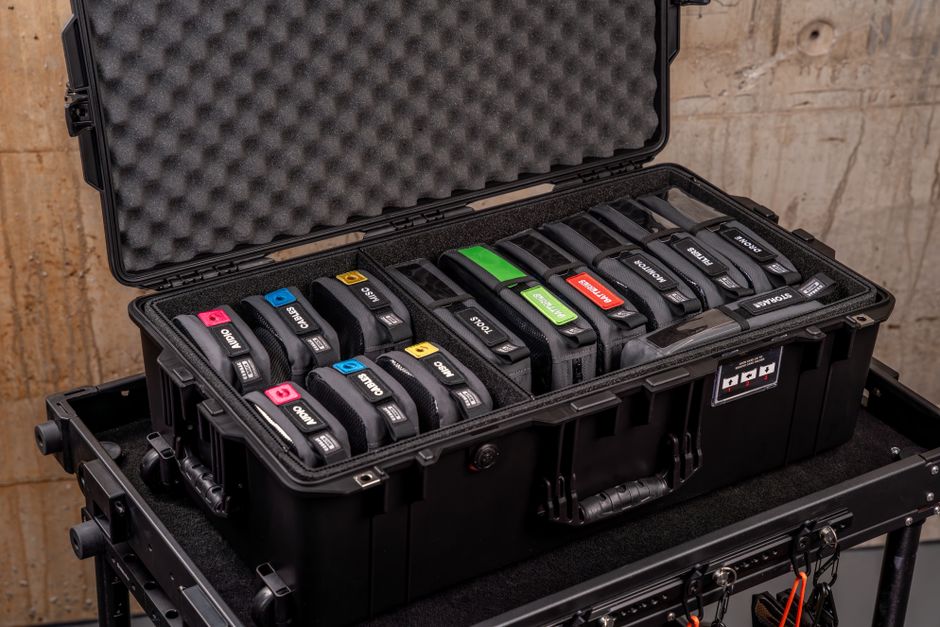
Ask a gear forum which case survives a decade of FedEx and the answers collapse into one word: Pelican. That advice is often correct and almost always lazy. The more useful question is the one a fleet coordinator recently posed on Reddit while planning to ship 85 laptops to three or four events a year: which case still closes, rolls, and seals after years of courier cycles, and can you still buy the parts that make that true?
Stay in the loop.
Get the latest posts and exclusive content delivered to your inbox.
Join 41 readers. No spam. Unsubscribe in one click, anytime.
A rolling hard case is a wear-part system wearing a brand badge. Latches, wheels, hinge pins, and gaskets all sit on a decade-long replacement clock, and the shell around them is usually the last thing to fail. Buy by wear parts and two decisions follow automatically: whether spare parts exist for your model, and what the whole system costs per shipment once you stop counting only the sticker price.
This guide ranks Pelican, SKB, Nanuk, and Seahorse by failure anatomy rather than unboxing impressions, prices foam and gaskets as scheduled consumables, checks each maker's decade-out parts channel, and runs the fleet math for an owner shipping three to four round trips a year.
Why Week-One Reviews Pick the Wrong Case
Most case reviews grade week-one properties: capacity, foam fit, TSA friendliness, the IP rating printed on the lid. Those properties are all real, and they are all measured on day zero. A courier network then spends years consuming them, and none of them predict the order in which things break.
After a few courier cycles the real decision shifts to four wear parts. The latch that gets flexed at every open and close. The wheel that eats curb strikes. The hinge pin carrying the whole lid. The gasket squeezed shut for the eleven months a year your case sits in storage. Week-one reviews cannot see any of this because, on review day, none of it has happened yet.
The Four Wear Parts Inside Every Rolling Hard Case

The rest of this guide runs on four rows. Treat the timelines as budgeting heuristics for a 3-to-4-trips-per-year owner, not lab data; strikes and bad storage can move any row left.
| Part | How it fails | Fixability | Plan for |
|---|---|---|---|
| Latch | Flex fatigue at hinge and trigger; rim and conveyor strikes crack the body | Screw-on replacement on serviceable designs, a minutes-long job | Spare set in your parts bin by mid-decade |
| Wheels | Bearing seizure, hub wear from drops and curb strikes | Bolt-on hubs with replaceable bearings are a short job; sealed hubs may not be replaceable at all | Inspect yearly, expect service by mid-decade |
| Hinge pin | Pin walk-out, bore wallow from repeated flex | Screw-retained pins re-seat in minutes; riveted pins mean drilling | Inspect whenever you service the gasket |
| Gasket and foam | Compression set from latched storage; pluck foam crumbles with repacking | Both are cheap, easy swaps when parts are listed | Gasket by decade's end, foam every few years |
Latch Designs, From Double-Throw to Butterfly
Latch failures rarely come from one heroic overload. They come from thousands of small flexes, plus the corner strike when a conveyor or a courier's hand finds the one part of the case that sticks out. That makes latch architecture a better predictor of longevity than the logo on the lid.
Three families cover most of the market:
- Over-center double-throw latches. Pelican popularized the design, many Seahorse models use it, and Nanuk's PowerClaw sits in the same family with a secondary lock on the trigger. The cam-over action gives mechanical advantage against the gasket, which is why these cases seal tightly, and the design concentrates stress in a replaceable, screw-on part.
- Butterfly latches. Common on rack cases and lighter protective cases, they clamp with one motion and have fewer internal parts, but the wings sit proud of the shell and take strikes directly.
- Press-and-pull latches. Low profile and fast, they rely on a catch and spring that can loosen with cycles. Fine on a case with a parts channel behind it, more of a gamble without one.
The Pelican vs Nanuk latch durability question people search for has a boring answer: both makers sell replacement latches, so both designs are survivable. The case that dies from a cracked latch is the one whose maker does not sell the part.
Wheels and Hinge Pins, Serviceable Versus Sealed
Wheels split into two camps. Serviceable hubs use bolt-on wheels with replaceable bearings, so a dead wheel becomes a bearing swap instead of a funeral. Sealed hubs press or mold the wheel into the axle carrier, and where the wheel is integral to that carrier, one dead wheel can end an otherwise sound case even with a perfect shell and clean latches.
Check before purchase, not after:
- Spin the wheel. Grit, wobble, or a grinding start tells you the bearing quality on day one.
- Look for fasteners at the hub. Bolts or screws mean a serviceable design.
- Search the maker's parts page for your exact model line. Nanuk and Seahorse both sell wheels through their official stores, and SKB supports iSeries parts through its own channel, but wheel availability varies by model, so verify the specific case.
Hinge pins are the least-discussed failure point in hard case coverage, mostly because they fail quietly. A pin migrates out or the polymer bore walls out from flex, the lid rocks a millimeter, the gasket stops compressing evenly, and the seal you paid an IP rating for is gone. Screw-retained pins turn that into a five-minute repair. Riveted pins mean drilling out hardware and improvising, and a wallowed bore may never hold a new pin securely.
Gaskets and Foam, the Consumables Nobody Budgets
Engineers call it compression set: an elastomer seal held squeezed for months slowly loses its ability to spring back, and heat accelerates the process. Research on elastomer compression set describes the mechanism plainly, and a storage unit in July applies it for free. For a case that ships three or four times a year, the gasket spends most of its life clamped shut in a warm room, which means the IP and drop ratings your case passed when new are week-one properties too.
That reframes gasket care between events: store the case unlatched when it is empty, keep it out of direct sun and away from the hot wall of the unit, and check the seal for bounce before each season. A gasket that has taken a set stays dented where the lid compressed it. Replacement seals are listed by all four makers, which is exactly why they belong in the budget rather than on the feature list.
Pick and pluck foam fails on a different clock. Every repack pulls at the plucked channels until cubes tear away and gear starts migrating inside the case in transit. Plan a foam replacement every few years at moderate cadence, or sidestep it with layered solid foam cut once for a fixed load, or padded dividers if the contents change event to event. Foam is a consumable with a price. Reviews treat it as a feature; your budget should not.
Parts Availability Ten Years Out, Brand by Brand

Which hard case brand still sells parts ten years later is the question that decides this purchase, and the four makers answer it differently.
| Brand | Parts path | Warranty path | Notes |
|---|---|---|---|
| Pelican | Official case accessories catalog with latches, wheels, gaskets, handles | Lifetime Guarantee of Excellence, read the terms | Deepest accessories ecosystem of the four |
| SKB | Kits sold direct, including the TSA-3 locking latch kit for iSeries | Strong limited lifetime warranty | Verify parts for your exact model |
| Nanuk | Replacement parts store with latches, gaskets, and more | Standard warranty; the parts channel is the real asset | PowerClaw latches are user-replaceable |
| Seahorse | Accessories catalog with low-cost latches, o-rings, wheels | Standard warranty | Buying spares up front is cheap insurance |
Every maker here sells hard case replacement latches in some form. Pelican and Nanuk advertise user-replaceable latches and gaskets through official channels, SKB anchors on warranty muscle, and Seahorse positions its parts at low prices. The calibration that roundups skip: availability varies by model line and region, and warranty terms change. Confirm your exact model's parts are listed before you pay, because a case with no parts channel converts every wear failure into a total loss.
Cost per Shipment Over a Decade of Events
Now the arithmetic the Reddit poster actually needed. A $350 rollable case doing four round trips a year for ten years makes 40 shipments, which is $8.75 per trip in hardware alone before consumables. At three events a year it is 30 shipments and $11.67.
| Case price | 30 shipments | 35 shipments | 40 shipments |
|---|---|---|---|
| $300 | $10.00 | $8.57 | $7.50 |
| $350 | $11.67 | $10.00 | $8.75 |
| $500 | $16.67 | $14.29 | $12.50 |
The number that changes decisions is the gap. A $70 price difference between brands lands at $1.75 per shipment over 40 trips, under $2. Add a latch here, a gasket, one foam refresh across the decade and consumables add a few dollars per shipment more, but the pattern holds.
A rolling hard case is a decade asset priced per shipment. When the fleet math runs this shallow, a modest price gap almost never outweighs parts availability.
That is also where the Seahorse vs Pelican value question settles. The cheaper case wins when its parts channel covers the four wear parts and your cadence is light, because you sacrifice durability headroom you were never going to use. The expensive case wins when it is the only one with the part you need in year eight.
Courier Abuse and Storage, the Factors Roundups Skip
Parcel networks are not gentle, and they are not random either. The industry tests to standards: ISTA 3A parcel testing simulates the drops, vibration, and compression typical of small-parcel sortation, and ASTM D4169 is the broader practice for running shipping containers through full distribution cycles. Read either one and the failure map writes itself: repeated drops concentrate on corners and edges, and sortation hardware finds whatever protrudes. On a protective case built for courier shipping, what protrudes is latches and handles.
Two practical consequences. Prefer recessed latch designs when your case rides conveyors more than it rides in your hand. And pad the lid-side contents, because the case surviving a drop does not guarantee the laptop inside survives the deceleration.
Storage is the second unmodeled factor, and for a 3-to-4-event owner it is arguably the bigger one. Your case spends most of the year in a facility doing three things to itself: heat-cycling the gasket, UV-degrading anything near a window or skylight, and holding the seal compressed for months. Store unlatched when empty, off concrete, out of direct light, and your gasket budget stretches years further. Courier geometry and storage chemistry decide more ten-year outcomes than any spec sheet, and no brand roundup models either one.
The Picks, Matched to How You Actually Travel
- Courier-heavy, set and forget. Pelican's wheeled lines, backed by the deepest official parts catalog and a lifetime guarantee. Order two spare latches in the same cart as the case.
- The balanced pick. Nanuk's 935-class wheeled cases. Over-center PowerClaw latches, a direct parts store, and pricing that often sits below comparable Pelican sizes, a gap the fleet math says to ignore anyway.
- Worst-case abuse. SKB's wheeled iSeries. The warranty is the strongest argument here, and TSA-locking latch kits upgrade security for air legs.
- Lightest budget. Seahorse's wheeled SE models, plus a full spare set, latches, o-ring, wheels, ordered up front while everything is in stock.
Before you buy any of them, run this checklist:
- Latches for your exact model are listed in the maker's parts store today
- Wheels are bolt-on hubs with replacement bearings or listed replacement wheels
- Hinge pins are screw-retained or the hinge is a serviceable assembly
- The gasket is replaceable, not molded in
- Foam refresh is budgeted as a consumable, not assumed eternal
- For any air leg, spare lithium batteries stay out of checked bags per FAA lithium battery rules, and locked cases follow TSA lock guidance so inspection does not break your hardware
Pick the case whose parts will still be on sale in year eight, stock the spares that ship free in year one, and the per-shipment cost takes care of itself. That is a better answer than a brand name, and unlike folklore, you can defend it line by line.
Stay in the loop.
Get the latest posts and exclusive content delivered to your inbox.
Join 41 readers. No spam. Unsubscribe in one click, anytime.
About the author
Naomi Estrada
Value and Comparisons Analyst
Naomi came to durable goods through cost-per-use economics, running the numbers on cheap-versus-quality for a personal-finance site before going all-in on BIFL. She builds the head-to-head comparisons and best-of rankings so readers stop guessing and buy the right product the first time.
Related Posts
Polycarbonate Carry-On $150 vs $500, What Actually Lasts
Polycarbonate carry-ons run $150 to $500. This tier teardown shows which upgrades in wheels, zippers, and warranty service actually buy 20-year survival.

Durable Sling Bags Ranked by the Parts That Fail First
Durable sling bags ranked by what fails first: strap junctions, adjusters, buckles, and zippers, with a Bellroy Sling Lite Mini vs budget verdict.

Fjällräven Räven 28 Review, Graded for a 20-Year Commute
This Fjällräven Räven 28 review grades the pack for a 20-year commute, pricing the G-1000 wax schedule against Cordura nylon rivals on cost per decade.