Buy It For Life Watches Ranked by 20-Year Service Cost
Buy it for life watches ranked by 20-year service cost and movement parts availability. Pick a timepiece any watchmaker can keep running until 2045.
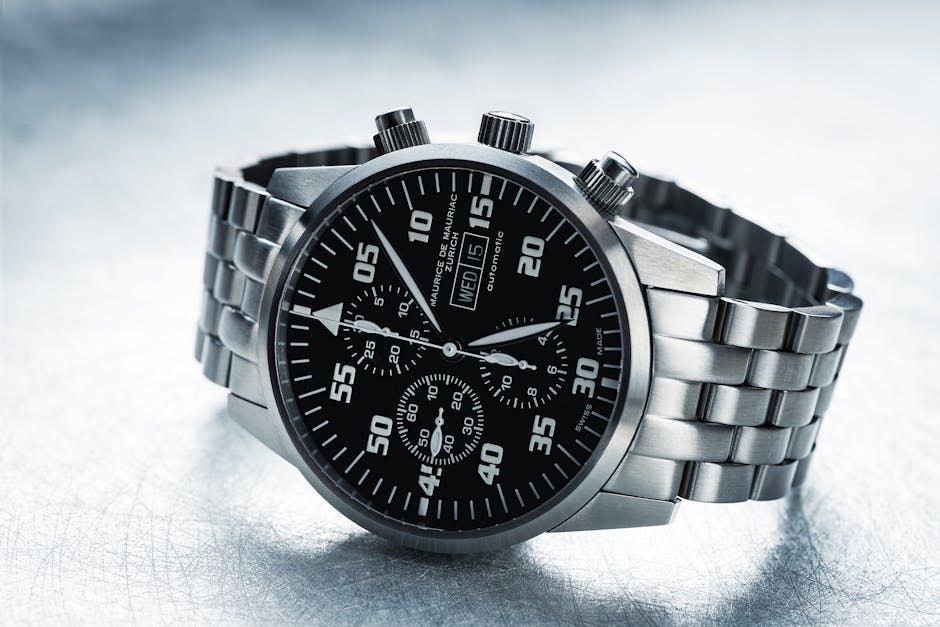
The most expensive watch you can buy is the one nobody can fix. When collectors discuss buy it for life watches, they usually mean a case that survives decades of scratches and shocks. The metric that actually decides whether your watch runs in 2045 is the movement inside it, and more specifically, whether any competent watchmaker can source replacement parts for that movement decades from now. A Sellita-powered field watch that costs $400 today and takes $150 service visits every five years will outlive a $3,000 boutique piece whose proprietary caliber exists behind one factory door that may not be open in two decades.
Stay in the loop.
Get the latest posts and exclusive content delivered to your inbox.
Join 25 readers. No spam. Unsubscribe in one click, anytime.
This article ranks mechanical watches not by dial finishing, brand heritage, or resale value, but by the cold economics of parts availability and independent serviceability over a 20-year horizon.
The Hidden Cost of a Lifetime Watch
Across a two-decade ownership span, a mid-tier watch with a standard Sellita or ETA movement typically accumulates $450 to $1,200 in service costs, spread across three or four visits to any independent shop in your area. A boutique piece with a proprietary caliber faces $2,000 to $5,000 or more in factory-only bills, and each visit assumes the manufacturer is still solvent and still stocking parts for your specific reference. The initial price gap gets swallowed by the service gap, and that gap widens with every cycle.
Every mechanical movement needs periodic disassembly, cleaning, lubrication, and regulation to offset the friction and wear that accumulate across millions of gear revolutions. Skip that work and accuracy degrades until the movement seizes. The hidden cost is who can perform the service, not the service itself. A standardized workhorse caliber turns the entire independent watchmaking community into your service network. A proprietary movement locks you into factory pricing, factory timelines, and the manufacturer's continued corporate existence.
ETA, Sellita, and the Proprietary Movement Trap
The Workhorse Standard
ETA's 2824-2 is arguably the most serviced automatic movement in horological history. The ETA 2824-2 technical documentation details a 25-jewel, 28,800 vph automatic caliber with a 38-hour power reserve. It has been in continuous production since the 1970s, which means parts distributors worldwide carry mainsprings, balance staffs, escapement wheels, and every wearing component for it. Nearly any independent watchmaker with a bench and a parts account can service one without contacting the manufacturer.
Sellita's SW200 is the functional equivalent. Originally a licensed manufacturer of ETA designs, Sellita began producing the SW200 as an independent caliber when ETA restricted external supply to third parties. The Sellita SW200 caliber reference describes nearly identical architecture, jewel count, beat rate, and power reserve. For repairability purposes, the two are interchangeable. Both are backed by a global aftermarket parts ecosystem that does not depend on any single brand's survival.
For a deeper technical breakdown, the Sellita versus ETA comparison traces their shared lineage and minor engineering divergences. The practical takeaway: either movement gives you decades of affordable, independent serviceability with parts sourced from multiple competing suppliers.
The Proprietary Trap
Boutique brands create long-term risk when they engineer a proprietary caliber. A proprietary or in-house movement is manufactured and parts-controlled by a single company. The manufacture versus outsourced movements analysis outlines the core tradeoff: in-house movements offer prestige and sometimes genuine technical innovation, but they funnel every repair through the manufacturer's authorized service center.
The consequences compound over time. If the brand discontinues a caliber, closes its doors, or simply decides to stop supporting an older reference, independent watchmakers cannot source replacement parts. The proprietary movement repairability analysis outlines how discontinued in-house calibers can leave owners without a viable parts source, potentially requiring expensive custom fabrication or rendering the watch unserviceable.
The proprietary trap is straightforward: in-house movements restrict service options to the manufacturer, risking total loss of the watch if parts inventories are depleted or the brand ceases operations. A $3,000 watch with a proprietary caliber carries more existential repair risk than a $400 watch running an SW200 that five independent watchmakers in your city can service tomorrow.
Calculating 20-Year Service Economics

Let us do the math that most buying guides skip. A mechanical watch should be serviced every four to seven years depending on the movement grade and daily wear patterns. The reasons mechanical watches need service are straightforward: dried lubricants increase friction, friction wears gears, and worn gears degrade accuracy until the movement fails catastrophically.
Over a 20-year ownership horizon, expect roughly three to four service intervals. Now compare two ownership paths, based on typical service cost ranges from industry data.
| Factor | Standard Movement (Independent) | Proprietary Movement (Factory) |
|---|---|---|
| Service interval | Every 5 years | Every 4 to 5 years |
| Services over 20 years | 3 to 4 | 4 to 5 |
| Cost per service | Typically $150 to $400 | Typically $500 to $1,000+ |
| Shipping and insurance | Often none (local) | Required, insured for full value |
| 20-year service total | Roughly $450 to $1,600 | Roughly $2,000 to $5,000+ |
| Parts availability | Global, multiple suppliers | Single source only |
The average watch servicing costs breakdown indicates that manufacturer service routinely runs multiples of what an independent charges for equivalent work on a standard caliber. When you add the cost of shipping a luxury watch insured for its full replacement value to a factory service center and back, the premium grows further.
The conclusion is uncomfortable for prestige buyers. Routine service costs for standard mechanical movements generally range lower than manufacturer-only servicing, especially when factoring in shipping and insurance for factory repairs. Over 20 years, the $500 Sellita-powered watch can cost less to keep running than the service bill alone on a $3,000 boutique piece.
Initial price is a one-time expense, but service is recurring, and the gap between standard and proprietary movements widens with every cycle. That gap, not the sticker price, should anchor every purchase decision.
Top 5 Buy It For Life Watch Archetypes Ranked
The most durable automatic watches roundup surveys field-tested options across price tiers, but durability testing alone does not answer the 20-year repairability question. Below are five archetypes ranked by estimated 20-year service cost, each paired against a proprietary alternative at the same retail tier.
| Archetype | Reference Model | Movement | Retail Price | Per-Service Cost | 20-Year Service Total |
|---|---|---|---|---|---|
| Entry automatic | Seiko 5 Sports | Seiko NH35 | ~$200 | $100 to $150 | $300 to $600 |
| Manual wind field | Hamilton Khaki Field Mechanical | ETA 2801 / Unitas 6497 | ~$450 | $150 to $250 | $300 to $750 |
| Automatic field/dive | Hamilton Khaki Field Auto 38mm | ETA 2824-2 | ~$550 | $150 to $300 | $450 to $1,200 |
| SW200 diver/dress | Raymond Weil Freelancer | Sellita SW200 | ~$1,200 | $150 to $300 | $450 to $1,200 |
| Premium automatic | Longines Spirit | ETA 2892 family | ~$2,000 | $250 to $400 | $750 to $1,600 |
1. Seiko NH35 Entry-Level Automatic
Reference: Seiko 5 Sports (~$200). Per service: $100 to $150. 20-year total: roughly $300 to $600.
A $200 Seiko with roughly $600 total 20-year ownership undercuts a $2,000 proprietary watch whose first factory service alone can cost $700. The NH35 wears primarily on its mainspring and escapement wheel, parts included in any standard $100 to $150 independent service because Seiko produces this caliber in massive volume. Any local watchmaker strips and reassembles one from memory without contacting Seiko. The tradeoff is industrial finishing and looser accuracy tolerances.
2. Manual Wind ETA 2801 or Unitas 6497
Reference: Hamilton Khaki Field Mechanical (~$450). Per service: $150 to $250. 20-year total: roughly $300 to $750.
Manual wind movements have fewer rotating components than automatics, meaning less wear per year and often one fewer service interval over two decades. Compare a $450 Hamilton with $750 lifetime service against a $2,500 proprietary dress watch whose factory service starts at $800 per visit. The 6497's mainspring and pinions are globally stocked by multiple distributors, and its pocket-watch origin makes it one of the easiest calibers for any independent to disassemble and regulate.
3. ETA 2824-2 Field or Dive Watch
Reference: Hamilton Khaki Field Auto 38mm (~$550). Per service: $150 to $300. 20-year total: roughly $450 to $1,200.
At $550 retail with roughly $1,200 over two decades, this archetype undercuts any $3,000 boutique diver whose proprietary caliber demands $900 factory services. The components that wear first (balance staffs, escapement wheels, and mainsprings) are the same parts every independent stocks. Dozens of distributors worldwide carry every wearing component, and your local watchmaker has serviced this caliber dozens of times without contacting the manufacturer.
4. Sellita SW200 Diver or Dress Watch
Reference: Raymond Weil Freelancer (~$1,200). Per service: $150 to $300. 20-year total: roughly $450 to $1,200.
A $1,200 Raymond Weil with SW200 internals costs the same to service as a $550 Hamilton, while a comparably priced boutique piece with a proprietary caliber can accumulate $3,500 in factory service over the same period. The SW200's automatic winding gears and escape wheels are stocked by multiple competing suppliers, making this caliber functionally interchangeable with the ETA 2824-2 for repair purposes. Any independent handles the full service without contacting the brand.
5. ETA 2892 Family Premium Standard
Reference: Longines Spirit (~$2,000). Per service: $250 to $400. 20-year total: roughly $750 to $1,600.
At this price point the proprietary trap is sharpest. A $2,000 Longines running an ETA 2892 family derivative stays serviceable at independent rates, while a $2,000 watch with an in-house caliber forces factory service at $700 to $1,000 per visit, totaling $3,500 to $5,000 over 20 years. The 2892 family's thinner architecture means its rotor axle and automatic winding bridge wear faster, but those exact parts flow through the same global ecosystem as the 2824-2.
Established Brands vs Newer Microbrands

Founded in 1976, Raymond Weil has nearly 50 years of proven parts support behind it. The Raymond Weil brand review traces the brand's consistent reliance on standardized Sellita and ETA movement bases across its catalog. That consistency is the BIFL advantage. A watchmaker servicing a Raymond Weil today is working with a movement architecture they have likely serviced hundreds of times, and they can order parts without contacting the brand.
The contrast with newer microbrands is instructive. Many microbrands launched in the last decade sell attractive watches at competitive prices, often powered by Sellita or Seiko movements. On the surface, the service economics look identical to a heritage brand using the same caliber. But established brands with long histories provide a proven track record of maintaining parts inventories and honoring warranty service, compared to newer market entrants whose longevity is entirely untested.
The risk is not that a microbrand uses a bad movement. The SW200 inside a five-year-old microbrand is the same SW200 inside a Raymond Weil. The risk is institutional. A microbrand may not exist in 2045 to supply replacement dials, hands, crowns, case tubes, or proprietary crystal shapes. Without those components, even a perfectly serviceable movement becomes difficult to keep in a wearable case.
The Raymond Weil versus microbrand question comes down to this: the movement matters most, and a microbrand running an SW200 is still a better BIFL bet than a heritage brand running a proprietary caliber. But all else equal, the brand with five decades of parts support carries less existential risk than the brand founded in the last recession.
How to Future-Proof Your Next Watch Purchase
The BIFL scoring methodology evaluates durable products across standardized criteria including repairability, parts availability, and manufacturer longevity. Applied to archetype #3 above, the ETA 2824-2 Hamilton field watch scores top marks on repairability and parts availability, since any independent can service it and dozens of distributors stock every wearing component. That same framework, adapted for mechanical watches, comes down to five checks.
Before you buy, confirm these five things:
Identify the exact movement. Look for ETA 2824-2, Sellita SW200, Seiko NH35, or another widely produced caliber with a documented parts ecosystem. If the seller cannot name the movement or describes it only as in-house or proprietary without further detail, treat that as a repairability red flag.
Verify independent parts access. Call or visit a local independent watchmaker and ask whether they can service the specific movement. If they say they need to send it to the manufacturer, the parts channel is closed and you are buying into a single-source service dependency.
Research current service pricing. Look up what independent watchmakers charge for the movement in question. The gap between a $200 service and a $700 service compounds over four visits in 20 years. Watches any watchmaker can service at standard rates will always win this calculation.
Check the brand's track record. A brand with decades of history has demonstrated it can maintain parts inventories and support older references. A brand founded last year has not proven anything about its post-2035 existence. Heritage is not about prestige here, it is about institutional continuity as a parts supplier.
Confirm case and crystal serviceability. Even with a standard movement, a proprietary crystal shape, custom crown, or unique case tube can render a watch unrepairable after physical damage. Sapphire crystals from major suppliers are usually replaceable through generic channels. Custom-cut crystals from defunct brands are not.
The Verdict on Buy It For Life Watches
The decision framework in one sentence: Choose the watch whose movement the largest number of independent watchmakers can service at the lowest cost per decade, and you will own a timepiece that runs through 2045 regardless of whether its original brand still exists.
The best buy it for life watches are the ones engineered around movements that the global watchmaking community can keep alive with off-the-shelf parts, not the most expensive or beautifully finished. Buy the movement, not the marketing, and the watch takes care of itself for the next twenty years.
Stay in the loop.
Get the latest posts and exclusive content delivered to your inbox.
Join 25 readers. No spam. Unsubscribe in one click, anytime.
About the author
Naomi Estrada
Value and Comparisons Analyst
Naomi came to durable goods through cost-per-use economics, running the numbers on cheap-versus-quality for a personal-finance site before going all-in on BIFL. She builds the head-to-head comparisons and best-of rankings so readers stop guessing and buy the right product the first time.
Related Posts

5 Buy It for Life Mattresses Ranked by Repairable Parts
Buy it for life mattresses ranked by repairable parts, from swappable comfort layers to flippable builds, with warranty math and cost per decade.

Buy It for Life Area Rugs Ranked by How They Die
Buy it for life area rugs are decided by construction, not fiber. Learn the flip and inspect test, the glued-back failure mode, and cost-per-year math.

Best 12V Portable Refrigerators Ranked by What Fails First
The best 12V portable refrigerators ranked by what fails first, not week-one cooling, plus the decade math against a $40 cooler and bags of ice.