Denier Fabric Is a Weight, Not a Durability Rating
Denier fabric ratings measure yarn weight, not durability. See which specs actually predict a bag's life, from nylon 6,6 tenacity to PU coatings and DWR.
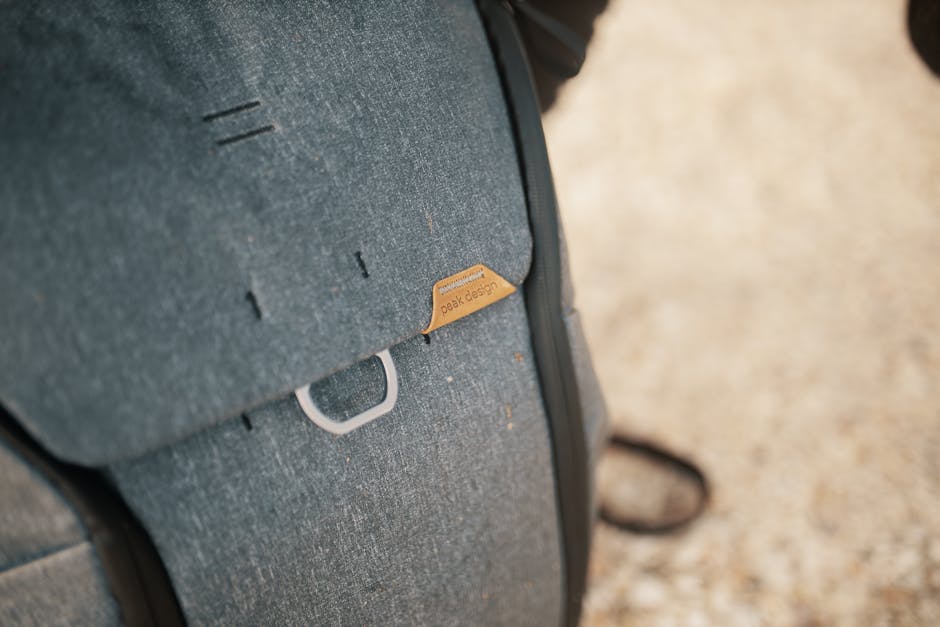
Denier fabric ratings are the first number buyers reach for and the least reliable signal on the hangtag. Denier measures how much a yarn weighs, not how much punishment the cloth absorbs, and two fabrics with identical denier can age in completely different ways because fiber chemistry, yarn tenacity, weave, and coating each govern a different failure. Longevity is still predictable. You just have to read the specs in the order that matches how bags actually die, and that order puts the famous number dead last.
Stay in the loop.
Get the latest posts and exclusive content delivered to your inbox.
Join 7 readers. No spam. Unsubscribe in one click, anytime.
The method below converts every line of a carry spec sheet, from nylon 6 versus 6,6 to ripstop versus ballistic, into a concrete prediction about how that specific bag will fail. Run it in a store aisle, on any backpack, duffel, or suitcase, and you will know more than the hangtag is willing to tell you.
The Four Ways a Bag Actually Fails
"Fabric durability" fails as a phrase because it treats toughness as one property. Watch enough bags grow old and you see four separate deaths instead, each governed by a different spec.
- Abrasion. The face fabric slowly sands away against sidewalks, conveyor belts, and overhead bins. Fiber type and weave set this pace.
- Tear propagation. A nick or snag starts small, then runs. Weave architecture decides whether a cut stays a cut.
- Coating breakdown. The coated back of the cloth cracks, flakes, and stops resisting water. Coating chemistry, plus your storage climate, sets that clock.
- Seam and hardware death. Thread wears through, bartacks let go, zippers split. Construction decides this, and no hangtag mentions construction at all.
That last point deserves its own sentence. In real long-term use, seams, stitching, and zippers often fail before the shell fabric does, so the strongest spec sheet in the world cannot rescue a bag built with single stitching and bargain zips. Any durability reading that ignores construction is reading half the page.
What the Denier Fabric Number Measures and Predicts
What 1000D Means on a Backpack
Denier is a linear mass density: the weight in grams of 9,000 meters of yarn, per the same textile units of measurement used across the industry. A 1000D yarn weighs one kilogram per nine kilometers of length. The figure is a shipping weight, a proxy for how much material is present, and only through that proxy does it touch durability at all.
Heavier yarn usually does mean more material to sand through, which is why denier tracks abrasion resistance loosely. So does higher denier mean more durable? Within one fabric, same fiber, same weave, same finish, a higher number commonly buys more abrasion mass. Across fibers the comparison collapses: 600D standard polyester and 600D high-tenacity nylon 6,6 share a figure and almost nothing else, which is why backpack fabric durability cannot be ranked from one number.
The Denier Inflation Problem
Arithmetic works against you too. Total denier can be derived from filament count multiplied by single-filament denier, and a two-ply yarn can be quoted by the ply or by the total, whichever flatters. The classic 1680D ballistic figure describes a doubled 840D yarn, and brands have not always been careful about which basis they print. Any raw denier fabric comparison across brands inherits that ambiguity, which is why the number works better as marketing than as measurement.
Fiber Type and Tenacity Beat the Denier Number
The polymer inside the yarn predicts more about a bag's old age than any denier figure, and it is printed in a smaller font.
Nylon 6 vs Nylon 6,6
The two nylons differ at the molecular level, and the differences land exactly where durability lives. Nylon 6,6 generally offers a higher melting point, better abrasion resistance, and higher tenacity than nylon 6, while nylon 6 costs less and tends to feel softer (nylon 6,6 versus nylon 6). Performance carry gear leans heavily toward 6,6 for those reasons. Cordura nylon fabric, the most name-dropped brand in the category, is built around high-tenacity nylon 6,6 yarns that INVISTA keeps pushing further (Cordura's high-tenacity nylon 6,6). When a bag says Cordura, the value sits in the yarn and its texturizing, not in the denier figure printed beside it.
Polyester, Sunlight, and Spilled Chemistry
Nylon does not win every environment. Polyester generally resists UV and acidic exposure better, and a comparative UV aging study on woven nylon 6,6 and polyester shows the two fibers do not age alike under sun. A bag that lives on a boat, a roof rack, or an airport apron with its de-icing chemicals can genuinely age better in polyester, despite polyester's weaker abrasion story. Fiber choice is a match between climate and abuse, not a leaderboard.
Tenacity, the Number Nobody Prints
Tenacity is breaking strength per unit of denier, the property measured under ASTM D2256 yarn testing. High-tenacity grades can deliver far more strength at the exact same denier, which is precisely why denier alone cannot rank fabrics. Industrial buyers specify tenacity on data sheets; consumers almost never see it on a hangtag. If a brand prints it, that transparency is itself a quality signal.
Ripstop vs Ballistic Nylon vs Twill Weaves
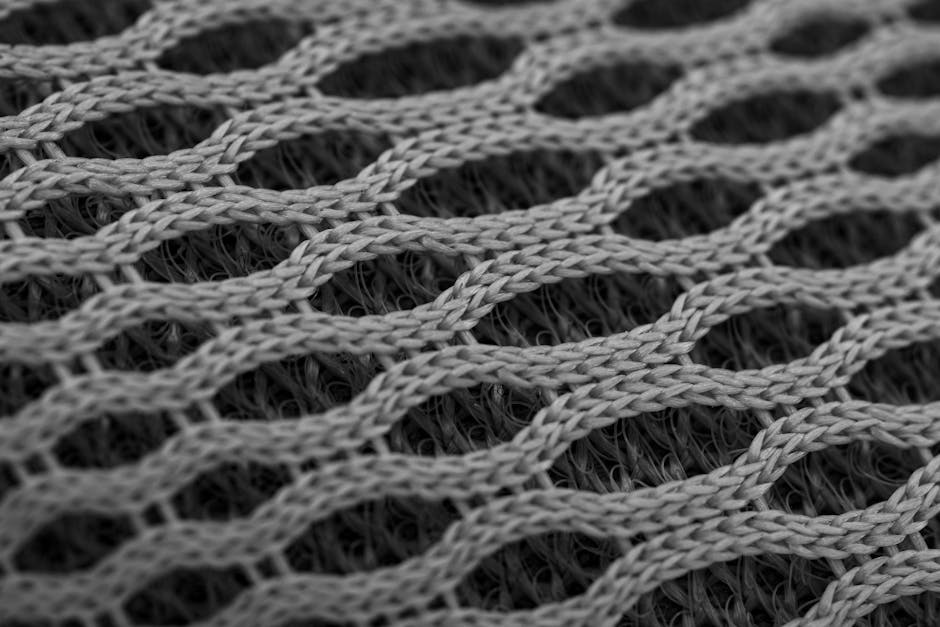
Of the four deaths, abrasion is the one a brand can win on a test rig, which is why it is the only durability number anyone prints. Hold that fact and the ripstop vs ballistic nylon comparison stops being a leaderboard. Every weave is a bet on exactly one failure mode, and the hangtag never tells you which bet you are holding.
Ripstop is tear-arrest technology. A heavier grid yarn interrupts the cloth at intervals, and a running tear stops when it reaches the reinforcement (ripstop grid engineering). That is the whole trick, and it is a good one: a nick in a 420D ripstop tends to stay a nick. Beyond that the grid is indifferent. It adds little puncture resistance and essentially no abrasion mass, so the fabric that shrugs off a thorn still sands through on a curb.
Ballistic nylon is abrasion armor. The 2x2 basket weave, with yarns crossing in pairs in both directions (ballistic nylon's 2x2 basket weave), packs dense cloth that resists sanding, flak-jacket heritage doing its job. You pay for the armor in stiffness, weight, and tear growth: yarns that interlace at fewer points than a plain weave leave a started tear room to run.
Twill is the middle bet. Its diagonal structure generally improves abrasion performance and hand feel over plain weaves, and the longer floats that make it drape are also the easiest path for a tear that is just starting.
So key the weave to your dominant failure, not to which name sounds toughest:
| Weave | The bet | Take it when your bag faces | The price |
|---|---|---|---|
| Ripstop grid | Tears stop at the grid | Brush, thorns, snags on trail and scaffold | Abrasion and puncture run their course |
| 2x2 basket (ballistic) | Abrasion armor | Baggage conveyors, truck beds, daily floor contact | Stiffness, weight, tears that grow |
| Twill diagonal | Abrasion plus drape | Constant handling, everyday carry | Tears start easily along floats |
If the dominant threat is years of storage between trips, no weave answers that. The coating on the back of the cloth owns that clock, and it is the next thing to read.
One last piece of skepticism, and it is the section's real payoff. When a hangtag does print a figure, it is nearly always abrasion cycles from a Martindale or Wyzenbeek rig (Martindale and Wyzenbeek tests), machines that rub cloth until it fails. The number is real, and it flatters exactly the death a lab can referee. No brand prints cycles for hydrolysis in a humid garage or for a tear running along a fence wire, the failures that actually kill stored and snagged bags.
Coatings and the Hydrolysis Clock
Turn a pocket inside out and look at the back of the cloth. That grey or black layer carries most of the fabric's waterproofing, and it is often the first component to die. Its lifespan is set by chemistry, and the chemistry has a clock.
Why PU Coatings Crack and Peel
Polyurethane coatings are polymer layers bonded to the fabric, and PU is vulnerable to hydrolysis: ambient moisture slowly cleaves the polymer chains until the coating loses strength and starts to flake (hydrolysis in coated textiles). Heat and humidity accelerate the process. This is the mechanism behind the black snowfall inside old rain jackets, and it explains why two identical bags can age differently, with the one stored in a humid garage flaking while its dry-closet twin stays whole. PU is not a bad coating for active use; it simply demands dry storage.
TPU and PE Film Age Differently
The PU vs TPU coating difference is molecular: thermoplastic polyurethane is generally more hydrolysis-resistant, at a higher price (TPU versus PU coatings), which is why better gear migrates toward it. PE film laminates take another route, bonding a film to the face fabric instead of relying on a conventional water-based PU coat, which typically sidesteps the layer most prone to hydrolysis. That is avoidance, not immunity: laminates can involve adhesive layers of their own, and they can delaminate at long-worn folds, so different aging is not the same as no aging.
DWR Is Maintenance, Not Durability
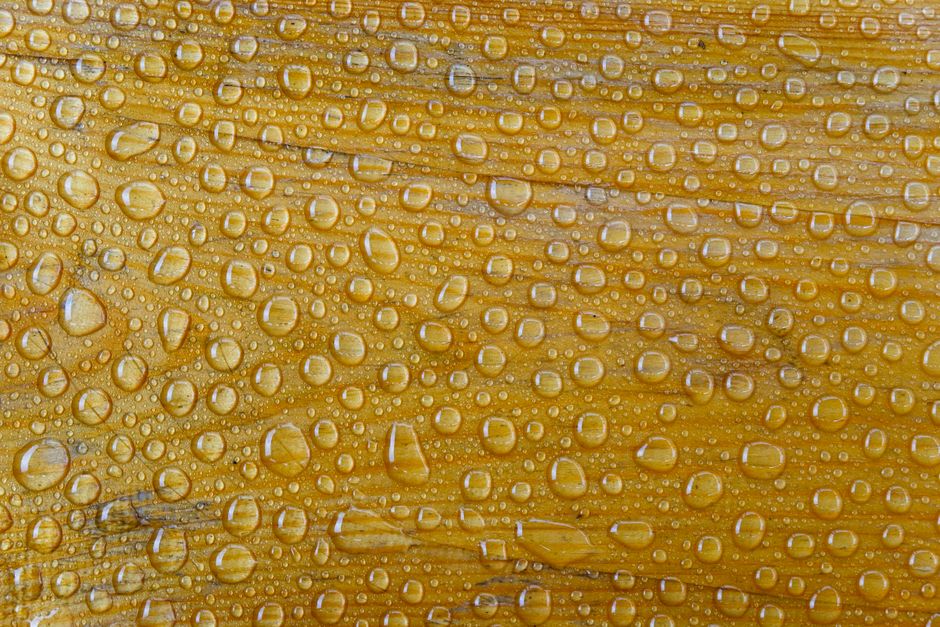
DWR (durable water repellent) is a micro-thin surface finish that raises surface tension so water beads and rolls off. The finish causes beading, but the waterproof barrier is the coating or film underneath it. DWR wears away with abrasion, dirt, and washing, and the fix is routine rather than heroic: heat reactivation in a dryer or with an iron, then re-treatment sprays or wash-ins once heat stops working (REI's DWR care guide).
Two practical consequences. A bag that beads water in the store proves nothing about its cloth, because fresh DWR sits just as happily on cheap fabric. And a bag that stops beading after a season has not failed; it carries a consumable that needs ten minutes of service. Judge the barrier, service the finish.
Five Hangtags Read Correctly
X-Pac laminate fabric, the sailcloth-derived family from Dimension-Polyant, stacks a face fabric, diagonal reinforcing plies, and waterproof film into one bonded cloth (X-Pac laminate construction). It is the purest example of laminate aging rules, and it belongs on this list next to the classics.
| Hangtag says | What actually governs its life | Most likely death | Honest verdict |
|---|---|---|---|
| 1000D Cordura | High-tenacity nylon 6,6 yarn | Coating flake, zippers | Decades-capable; the 1000D is the least of it |
| 1680D ballistic nylon | 2x2 basket weave | Coating, edge fray | Abrasion tank; heavy and stiff |
| 420D nylon ripstop | Grid architecture | Face abrasion | Right for weight savings, wrong for baggage handlers |
| X-Pac laminate | Film barrier, no PU layer | Delamination at creases | Waterproof and structural; ages differently |
| 18 oz waxed canvas | Cotton fiber, wax finish | Mildew, seam thread | Decades if re-waxed and kept dry |
Cordura vs ballistic nylon, which lasts longer? Both are typically nylon 6,6, so the honest answer is that weave and weight class decide; ballistic carries stiffness and heft, while textured Cordura usually feels better in the hand at comparable abrasion duty. Is 600D polyester good for luggage? For a suitcase checked a few times a year, polyester's UV and chemical patience plus a decent twill often serves fine. For a daily-abuse commuter bag, high-tenacity nylon at a lower denier usually ages better.
The Store-Aisle Fabric Checklist
The whole method compresses into a read order. Work down the list on any bag, in the aisle.
- Fiber. Nylon 6,6 over nylon 6 for abrasion and strength; polyester over both for sun and chemical exposure. Brand names like Cordura act as a fiber-quality proxy.
- Weave. Ripstop grids stop tears; basket and twill weaves favor abrasion. Match the weave to the failure your use invites.
- Coating. Peek past a pocket lining. TPU or a film laminate sets a slower clock than basic PU, and dry storage stretches any of them.
- Construction. Bartacks at stress points, bound seams, a name-brand zipper. Nothing on the hangtag covers this, and it frequently dies first.
- Denier, last. Use denier fabric figures only to compare like with like, same fiber, same weave. As a cross-brand badge of toughness it is close to noise.
Fiber, weave, coating, construction, denier. Sixty seconds, in that order.
How to tell if a backpack will last years turns out to be a construction question wearing a fabric costume, and now you can see through it. So when a hangtag shouts a four-digit denier at you, nod politely, then turn the bag inside out and read the back of the cloth. That is where the truth is stored.
Stay in the loop.
Get the latest posts and exclusive content delivered to your inbox.
Join 7 readers. No spam. Unsubscribe in one click, anytime.
About the author
Cal Whitmore
Durability Testing Lead
Cal has spent a decade in product testing, from tool labs to outdoor gear reviews, and treats every claim of a lifetime warranty as a hypothesis to break. He writes about the materials, joinery, and failure modes that actually decide whether gear lasts twenty years or two.
Related Posts

Timbuk2 Clark Backpack Graded on What Kills Commuter Bags
We grade the Timbuk2 Clark backpack on what kills commuter bags, from DWR decay to rain-soaked zippers, then run the warranty and repair math.

The Most Durable Duffel Bag Is Not the Toughest Fabric
The most durable duffel bag is not the toughest fabric. Ranking Black Hole, Big Haul, Transporter, and Base Camp by the failures that kill coated bags.

Durable Sling Bags Ranked by the Parts That Fail First
Durable sling bags ranked by what fails first: strap junctions, adjusters, buckles, and zippers, with a Bellroy Sling Lite Mini vs budget verdict.