Buy It For Life Grill Presses Ranked by Handle Joints
A buy it for life grill press lasts decades because the handle joint, not the plate, fails first. See the four handle joints ranked by 20 year survival.

The cast iron slab on a typical bacon press will outlive you. That is metallurgy, not marketing. A solid block of ferrous metal on a cooking surface has no moving parts, no seals, no electronics. Bury it, dig it up in fifty years, and the worst you face is surface rust that steel wool removes in minutes. The plate is a given.
Stay in the loop.
Get the latest posts and exclusive content delivered to your inbox.
Join 25 readers. No spam. Unsubscribe in one click, anytime.
What kills a grill press is the point where the handle meets the plate. Every buying guide ranks presses by weight, material, or price, as though the plate is the whole product. The plate will outlast the cook; the handle joint is the sole predictor of whether a press lasts two years or two decades. Yeti recently entered the category with a $75 stainless steel grill press that takes a fundamentally different approach to the durability question. The handle and plate appear to form a continuous stainless assembly with no visible mechanical fasteners, and that design approach is what separates a genuine buy it for life grill press from a heavy paperweight that wobbles apart by year three.
The Hidden Failure Point in Every Heavy Grill Press
A handle joint fails the way a bridge connection fails: cyclic loading at a stress point. Every time you press a smash burger or flatten a strip of bacon, force travels through the handle into a connection that was never engineered for repeated lateral stress. Layer on thermal cycling from a 400-degree griddle, grease that seeps into every seam, and a trip through the sink, and you have a degradation profile the plate itself will never experience.
The sequence is predictable. The handle develops a faint wobble. The joint fills with oxidized grease that expands and contracts with each heating cycle, prying the connection further open with every meal. Eventually the handle rocks visibly, the press becomes unpleasant to use, and the plate, still structurally perfect, goes into a drawer.
This is why the question of what makes the best bacon press gets answered wrong so consistently. The best bacon press is the one whose handle joint survives the specific combination of heat cycling, grease ingress, and mechanical stress that defines daily cooking. Weight, price, and review count are secondary to that single structural question.
Why Plate Weight and Material Are the Wrong Metrics
The dominant advice for grill press buyers boils down to two rules: get the heaviest plate you can find, and get cast iron. Both recommendations miss the point in ways that actively steer buyers toward presses that fail early.
Heavier is not better when the extra weight sits on a weak joint. A four-pound cast iron press with a screw-in handle delivers more downward force per use. It also transmits more leverage through the handle joint every time you lift it, reposition it, or tilt it to slide a spatula underneath. More weight means more stress on the component most likely to break. The plate benefits from the mass. The joint pays for it.
Material matters less than buyers assume. Both cast iron and stainless steel handle thermal expansion under normal cooking temperatures without warping or cracking. What warps is the joint, because that is where two components meet and expand at different rates, or where a single material has a geometric stress concentration from a drilled hole, a machined thread, or a rivet head.
The durability killer that almost no guide mentions is trapped moisture. Threaded and riveted joints create microscopic crevices where grease and water collect after every wash. That trapped organic matter oxidizes, and the resulting rust expands with enough force to distort surrounding metal. When dissimilar metals are in contact, the process accelerates through galvanic corrosion, turning a threaded steel handle in a cast iron plate into a miniature battery that eats itself over years. A smooth, seamless joint has no crevice to trap moisture, which is why the handle-to-plate connection determines the entire service life of the tool.
The Four Handle Joints Ranked by 20 Year Survival
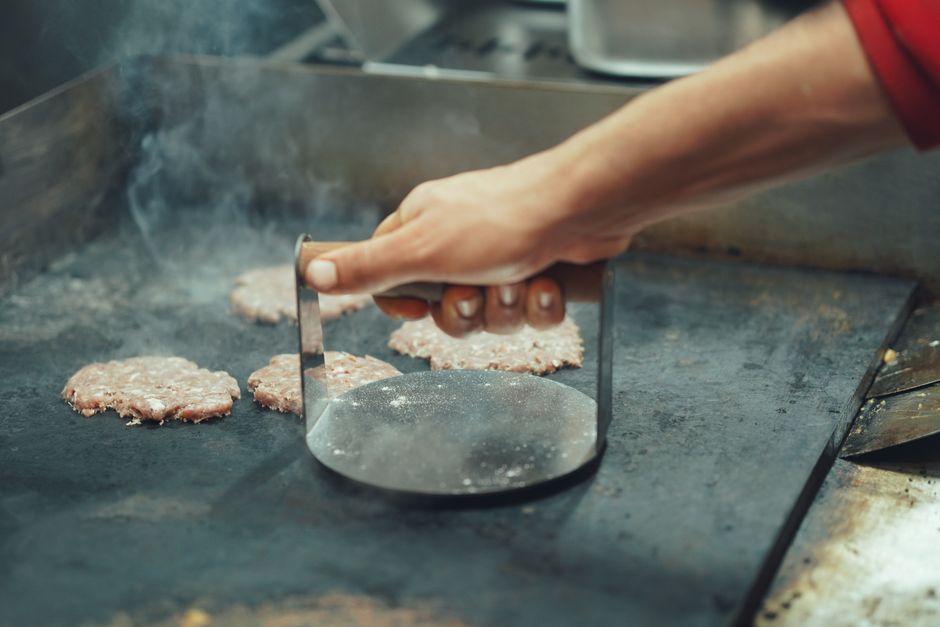
Not all handle joints age the same way. Here is how the four dominant designs perform against two decades of heat, grease, and sink water.
1. Welded Single-Piece Stainless Steel (Highest Survival Odds)
A handle welded to a stainless steel plate forms a continuous metallic bond with no crevice, no fastener, and no dissimilar-metal interface. There is nothing to loosen because there is no separate part. Thermal cycling stresses the weld zone, but a properly executed stainless weld has a fatigue life well beyond what a home cook generates in twenty years of daily use.
Grease has no seam to penetrate. Water has no gap to enter. The material itself resists rust under normal cooking conditions. This is why the welded versus riveted handle debate in cookware consistently favors welded construction for longevity, and why a welded stainless steel bacon press represents the current ceiling for press durability. The premium brands entering this space understand that the joint is the product.
The downside is cost. Yeti's stainless press lands at $75, and Made In offers a comparable alternative at a similar price point, compared with $15 to $35 for mainstream cast iron. That premium buys the only component that determines a twenty-year service life.
2. Cast-In Steel Wire Handles (Strong, With One Vulnerability)
This is the legacy design behind most traditional cast iron bacon presses. A steel wire or rod handle is embedded directly into the molten iron during casting, creating a mechanical bond that relies on the iron contracting around the steel as it cools.
The bond is strong initially and often lasts decades. But steel and cast iron expand and contract at slightly different rates under thermal cycling. Over years of repeated heating and cooling, that differential can work the wire loose inside its iron socket, producing the rattle and wobble that signals early joint failure. The process is slow, and many presses survive twenty years without incident. The vulnerability is structural, though, and no amount of seasoning can reverse it once the wire begins to move.
For the price, this design remains the best value in the category. A press does not need to be perfect to be worth buying. It needs to outlast three or four cheaper alternatives, and the cast-in wire handle typically does.
3. Riveted Handles (Functional, Grease-Trapping)
Riveted handles appear on some commercial-grade presses and many premium skillets. Steel rivets secure the handle to the plate through drilled holes, creating a joint that resists vertical force but introduces exactly the crevice type that traps grease and water.
Over years of use, rivet holes become repositories for oxidized fat, and the rivets themselves loosen as the surrounding metal corrodes. When the rivet material differs from the plate, the contact point becomes a galvanic couple that accelerates localized rust. The handle may hold for a decade, but the joint degrades visibly, and cleaning around rivets is a chore most cooks eventually skip, which accelerates the decline.
4. Enameled Coatings (Shortest Joint Lifespan)
Enameled cast iron presses look immaculate out of the box, and the brands behind them have built reputations on visual appeal. The enamel is a glass coating fused to the metal, and glass chips. Routine contact with spatulas, grill grates, and the press's own storage surface produces micro-fractures, particularly at the handle base where mechanical stress concentrates.
Once the enamel chips, the exposed cast iron underneath rusts, and the chip edge accelerates further coating loss. Premium enameled cookware warranties generally emphasize manufacturing defects over routine wear, though exact terms vary by manufacturer. For a tool designed to be slammed on grates and scraped with metal spatulas, enamel is a fragile finish on an immortal plate.
5 Buy It For Life Bacon and Grill Presses
Five presses illustrate the full spectrum of joint engineering, from genuine twenty-year survivors to designs that are functionally disposable.
| Press | Handle Joint | Best For | 20-Year Outlook |
|---|---|---|---|
| Yeti Stainless Steel Grill Press | Seamless stainless | Premium over-engineering | Excellent if integrated |
| Lodge Rectangular Cast Iron Press | Cast-in steel wire | Best dollar-to-decade ratio | Very good |
| Made In Stainless Grill Press | Welded cookware-spec | Cookware-brand pedigree | Excellent |
| Le Creuset Enameled Press | Enameled cast iron | Looks, not longevity | Poor at joint |
| Generic budget cast iron press | Threaded screw-in | Avoid | Poor |
Premium pick: Yeti Stainless Steel Grill Press. A $75 play from a brand that over-engineers mundane tools, Yeti entered cookware via the Butterpat acquisition and applies the same one-piece philosophy here. The Yeti stainless grill press listing confirms an all-stainless build with a stay-cool handle but does not detail the attachment method. Based on the construction, price tier, and brand track record, the press most likely uses a welded or similarly integrated joint with no threaded fastener to loosen. Treat that as a strong inference from the build quality, not a factory-confirmed spec.
Value champion: Lodge Rectangular Cast Iron Press. The $20 value math is simple: replacing it twice in twenty years still costs less than one premium press. The Lodge rectangular press uses a cast-in wire handle that may loosen after a decade of heavy use, but for most home cooks, that is the pragmatic pick that delivers cast iron bacon press durability without the premium price tag.
Cookware pedigree pick: Made In Stainless Grill Press. Made In occupies the same premium tier as Yeti, but the distinction is pedigree. Welded handles are an explicit design philosophy across their cookware line, not an inference from price. Between welded stainless options, the deciding factor becomes handle ergonomics under load: grip width that fits a single-handed lift, handle angle that keeps knuckles clear of a hot griddle, and balance point of a heavy plate held at arm's length. Both Yeti and Made In are genuine buy it for life grill press candidates if the welded construction assumption holds.
Worst longevity-per-dollar: Le Creuset Enameled Press. A beautiful tool poorly suited to the abuse a grill press absorbs. Enamel chips from routine contact, and warranty terms generally focus on manufacturing defects rather than routine wear, making these the weakest longevity value in the category.
Avoid: Generic $15 threaded cast iron press. The screw-in joint is the weakest attachment method available, trapping grease in the threads and loosening with each heating cycle. These are the presses responsible for searches about a grill press handle falling off, and the design that gave grill presses a disposable reputation.
One note for ceramic cooktop owners: the best bacon press for glass top stove use is a smooth-bottomed stainless model, because rough cast iron bases can scratch ceramic surfaces.
How to Maintain a Press Handle for Two Decades
Most press maintenance guides talk about seasoning the plate. The plate takes care of itself. The joint is where a twenty-year service life is won or lost, and the right protocol depends entirely on which joint type you own.
Maintain the joint, not the plate. The handle base is where water hides, rust starts, and joints fail. Treat it as the most important surface on the press.
Welded stainless owners: almost nothing. There is no crevice to trap moisture and no fastener to corrode. Wash, dry thoroughly, and occasionally oil the surface to maintain the finish. Avoid prolonged soaking, which can pit even stainless steel over time. This is the lowest-maintenance joint in the category, and that near-zero upkeep is part of what you pay for.
Cast-in wire handle owners: listen for rattle. The socket where the steel wire meets the cast iron plate is the vulnerability. Water collects there after every wash, and once rust takes hold inside the socket, no amount of surface seasoning reverses it. After cleaning, dry the press over low heat and apply a thin coat of oil specifically to prevent rust in that socket. The telltale sign of trouble is a faint rattle when you tap the handle, which means the wire is already working loose. Catch it early, because the differential expansion between steel and iron only widens the gap over time.
Riveted handle owners: fight the grease trap. Rivet holes are grease repositories that no brush reaches fully. Periodically work the rivets to check for play, and use a toothpick or pipe cleaner to clear oxidized fat from the holes. If a rivet loosens, tightening it buys time but does not reverse the corrosion already inside the joint.
Enameled handle owners: protect the base. The handle base is where enamel chips first, because that is where spatula contact and mechanical stress concentrate. Never scrape the press with a metal spatula near the handle junction, and never stack the press against other metal tools. Once enamel chips at the base, the exposed cast iron rusts and the coating continues to flake outward from the damage point.
Silicone grip owners: inspect and replace. If your press uses a silicone or rubber handle cover, check it regularly. Food-grade silicone resists heat up to its rated temperature, but it degrades over years of grease exposure and can tear, exposing bare metal to a 400-degree surface. Replace grips before they fail.
The performance link is real. A press that sits flat needs fewer repositions, which means fewer stress cycles on the joint. Check your doneness against the recommended safe internal temperatures for bacon and ground meat so you are not repeatedly lifting and repositioning to test the center. Fewer lifts, less joint wear.
The Ultimate BIFL Meat Press Verdict
Budget is no object: buy a welded stainless press and never think about handle failure again. Best dollar-to-decade ratio: buy a Lodge cast iron press with a cast-in wire handle, season the socket, and accept a possible replacement once in twenty years. Avoid entirely: any threaded screw-in handle and any enameled press, because both fail at the joint long before the plate shows its age. The plate is immortal; the joint is the gamble. Choose the joint right, and you have a buy it for life grill press that outlasts every other tool in your kitchen.
Stay in the loop.
Get the latest posts and exclusive content delivered to your inbox.
Join 25 readers. No spam. Unsubscribe in one click, anytime.
About the author
Priya Raman
Repair and Restoration Writer
Priya maintains and restores everything she owns, from cast iron to mechanical watches, and has spent years in the right-to-repair community. She writes about maintenance, warranties, and repairs, the half of buy-it-for-life that keeps good gear out of landfills.
Related Posts
Buy It for Life Immersion Blenders Ranked by What Breaks
Buy it for life immersion blenders ranked by the parts that actually die: coupling, shaft bearings, seal, and switch, with the 1980s Braun as benchmark.
Buy It for Life Grain Mills Ranked by the Parts That Die
We rank buy it for life grain mills by the parts that die first, from crank bearings to sealed motors, with burr costs and 20-year survival scores.
Oil Sprayers Ranked by Why They Stop Misting
Oil sprayers die in the head, not the bottle. Our failure-mode ranking explains why misters stop spraying and which oil sprayer designs last for years.