Buy It For Life Hex Keys Ranked by Hardness and Geometry
Stop rounding fasteners with cheap Allen wrenches. See our buy it for life hex keys ranked by steel hardness, tip tolerances, and anti-rounding geometry.
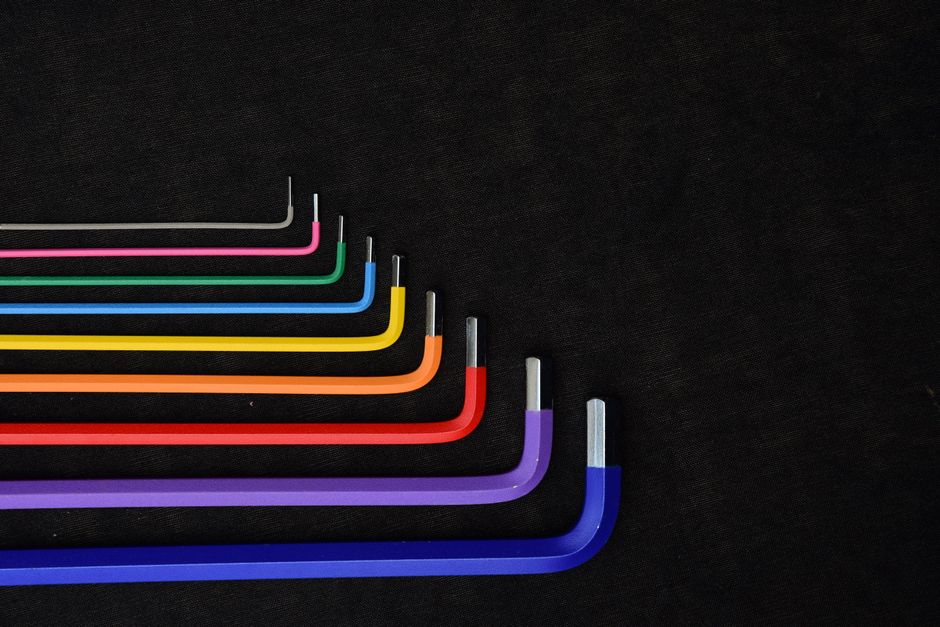
A cheap Allen wrench rarely snaps. What it does is worse. The hex key twists imperceptibly under load, its slightly undersized tip rides up the corners of your fastener, and the socket-head cap screw on your brake lever, derailleur, or engine case rounds off. The tool still looks fine. The bolt, which can cost twenty times what the wrench did, is ruined.
Stay in the loop.
Get the latest posts and exclusive content delivered to your inbox.
Join 25 readers. No spam. Unsubscribe in one click, anytime.
That is the real argument for buy it for life hex keys, and the market barely makes it. Most reviews stop at "hardened steel" as if every manufacturer heats their alloy the same way. They do not. A genuine lifetime hex key is defined by three measurable engineering properties, not a marketing label: tight dimensional tolerances at the working tip, steel hardness high enough to resist deformation without turning brittle, and proprietary tip geometry that physically redirects force away from the fastener's weakest corners. Hex keys that won't strip fasteners earn that label through metallurgy and manufacturing precision, not luck.
The Hidden Cost of Cheap Hex Keys
The failure mode of a budget hex key is quiet and expensive. A wrench stamped from low-carbon steel, or even decent steel cut with worn tooling, lands at the loose end of its tolerance band. A nominal 5 mm key that should measure 5.00 mm might arrive measurably undersize, somewhere in the 4.95 to 4.97 mm range depending on the manufacturer. Even that gap means the wrench grips only the extreme tips of the socket's six internal corners instead of the flat walls between them.
Those corners are the weakest geometry in any socket-head fastener. The metal is thinnest there, and stress concentrates at the sharp internal angle. Apply torque and the corner rolls over, permanently deforming the bolt. The wrench shows zero visible wear because it was the harder part, or because the fastener yielded first.
This is why fastener engineers frame screw stripping prevention as a system-level problem. The wrench costs three dollars to replace. The bolt, the labor to extract it, the downtime, and sometimes the damaged housing around it cost far more. A rounded derailleur hanger bolt on a bicycle can mean a replacement part plus a shop visit. A seized M8 cap screw in an aluminum engine case can mean hours of drilling, heat, and easy-out extraction.
The geometry of a hex key is unforgiving by design. Six small contact patches must carry every bit of torque you apply. Sloppy fit shrinks those patches further and guarantees corner loading.
The BIFL Hex Key Trinity: Hardness, Tolerance, and Geometry
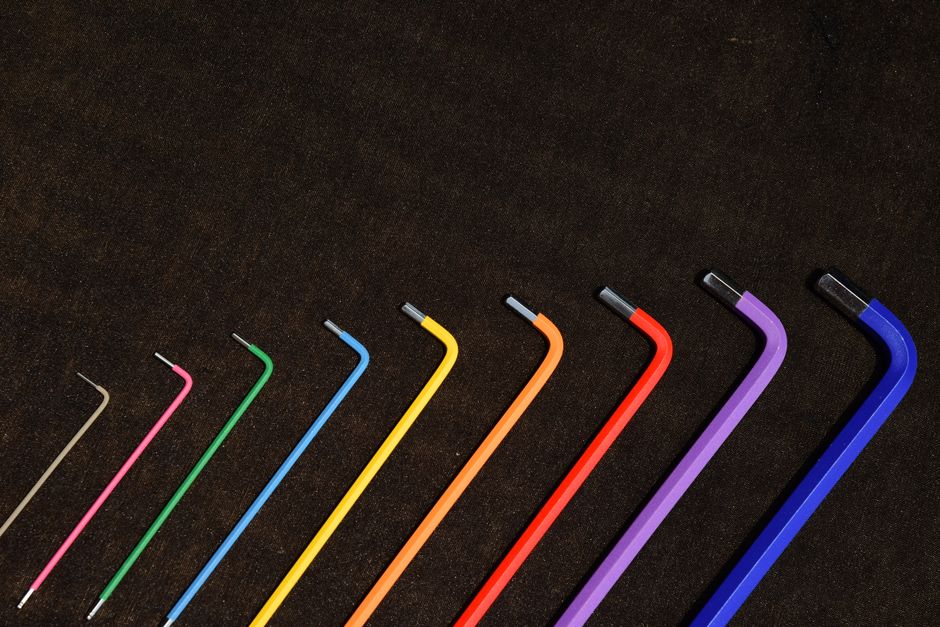
Three engineering metrics separate a lifetime tool from a disposable one. Understanding them is how you evaluate any hex key set on its actual merits rather than its packaging.
Steel Hardness (HRC)
Tool steel hardness is rated on the Rockwell C scale. A higher HRC number means harder steel that resists wear and tip deformation, but also means more brittleness if the alloy and heat treatment are not dialed in.
Hex key steel hardness matters most at the working tip, where torque concentrates. Premium manufacturers target HRC 60 or higher, the range where the steel resists the slow peening that rounds tips over hundreds of high-torque cycles. Budget wrenches often sit in the low-to-mid 50s HRC. They feel adequate in the hand but deform progressively under repeated load.
The choice of Allen key material drives this number. S2 tool steel, a silicon-alloyed grade, is the most common choice for the hardest steel Allen wrench sets because it responds well to through-hardening. Chrome-vanadium is tougher and more corrosion-resistant but typically cannot reach the same peak hardness. The chrome vanadium versus S2 trade-off is why manufacturers pick one over the other depending on whether they prioritize impact resistance or wear resistance.
Manufacturing Tolerance at the Tip
Hardness is useless if the tip is the wrong size. Precision hex key tolerances are measured in hundredths of a millimeter. The top brands hold those tolerances across entire production runs, not just on the sample sent to a reviewer. A key 0.02 mm undersize will round fasteners. A key 0.02 mm oversize will not seat fully and will cam out under load.
Tip Geometry and Force Distribution
The third variable is the cross-sectional shape of the driving tip. A standard hex key has six sharp corners that mirror the fastener's six corners. Modified geometries reshape that contact area so force lands on the flat socket walls instead, where the metal runs full thickness. We cover the mechanics of this in the Wera section below.
Top 5 Buy It For Life Hex Key Sets Ranked
These five brands represent the engineering ceiling of what is currently available. Each earns its rank through a different technical strength.
| Brand | Key Steel | Standout Feature | Best For |
|---|---|---|---|
| PB Swiss | Proprietary alloy (HRC 60+) | Tightest published tolerances | Precision and bike work |
| Bondhus | Protanium steel | Ball-end durability | Daily shop abuse |
| Wera | Through-hardened | Hex Plus anti-rounding geometry | Maximum fastener protection |
| Felo | Through-hardened tool steel | Angled short-arm ergonomics | Tight-access fasteners |
| Wiha | Chrome-vanadium | Consistent value at lower cost | Budget-conscious buyers |
1. PB Swiss Tools
PB Swiss sets the reference standard for precision hex key tolerances. Their wrenches are manufactured in Switzerland from a proprietary alloy, heat-treated in-house to hardness they rate above HRC 60. Their tolerance bands run tighter than the industry norm, and their long-arm keys have a reputation among bike mechanics and instrument technicians for fitting socket-head cap screws with effectively zero rotational play.
The trade-off is price. A full metric set costs several times what a hardware-store set does. The payoff is a wrench you will probably hand to someone else decades from now.
2. Bondhus
Bondhus is the American workhorse and the brand most working mechanics own. Their Protanium steel process is a proprietary heat treatment they describe as producing higher hardness than standard tool steel while retaining toughness. Any honest Bondhus hex key review has to acknowledge that the black oxide finish is functional rather than decorative, and the tips hold their dimensions through years of daily high-torque use.
Bondhus also makes the most durable ball-end hex keys on the market. Their ball ends survive angle work that destroys cheaper equivalents.
3. Wera
Wera earns its rank almost entirely on tip geometry. Their Hex Plus profile is one of the most widely recognized anti-rounding designs available (the linked page demonstrates the profile on Wera's T-handle line, but Hex Plus carries across their entire hex tool range, including L-keys). The steel and finish are good, but the Wera Hex Plus technology is the reason to buy them. We break down exactly how it works in the next section.
Wera offers chrome-plated and color-coded variants. The color-coded versions carry a thicker coating that slightly changes feel in the fastener. Some mechanics prefer the plated versions for that reason.
4. Felo
Felo hexagonal L-keys are through-hardened, meaning the steel holds consistent hardness from the core outward rather than depending on a thin case-hardened skin that exposes softer metal once the surface wears back. Their short arm sits at roughly 90 degrees to the long arm instead of the conventional in-line bend, letting you reach a recessed bolt inside a bicycle bottom bracket shell or engine case where a standard L-key hits the frame before the tip seats. Felo does not publish dimensional tolerance data, so precision claims rest on field reputation among mechanics rather than manufacturer specifications.
5. Wiha
Wiha's defining trade-off is chrome-vanadium instead of S2 tool steel. The alloy's finer carbide structure improves toughness but caps peak hardness at generally the mid-to-high 50s HRC, several points below what S2 through-hardening reaches. Over hundreds of cycles that softer tip compresses measurably faster than a Protanium or PB Swiss equivalent. The compensating advantage is impact resistance. A Wiha wrench in a field-service kit tolerates drops and side-loads that could chip a harder S2 key, making it the practical pick where tool survivability matters more than peak fastener protection.
Wera Hex Plus vs Standard Hex Geometry Explained
The Wera Hex Plus vs standard hex geometry question is worth its own section because the marketing copy rarely explains the actual mechanics behind the claims.
A standard hex key tip is a hexagon, and so is the interior of the fastener socket. When you apply torque, the six corners of the key press against the six corners of the socket. Force concentrates at those contact points because that is where the shapes first meet.
Those corners are the weakest feature in any socket-head fastener. The metal is thinnest there, and the sharp internal angle creates a stress riser. Apply enough torque and the corner rolls over, permanently rounding the socket. Research on stress distribution in hex profiles has examined how this corner-loading drives fastener failure.
Wera's Hex Plus profile reshapes the driving faces so they are slightly convex rather than flat. Instead of bearing on the fastener's corners, the key contacts the flat wall of the socket, where the metal runs full thickness. Wera states that this geometry allows higher torque transfer before rounding and extends fastener life across repeated insertions because the corners never carry the primary load. The underlying principle, shifting load from a thin corner to a thick wall, is sound. What is harder to verify independently is the magnitude of the advantage, because the published research on hex profile stress addresses the general problem rather than testing Hex Plus against a standard profile head to head.
The trade-off is feel. Hex Plus keys sometimes seat with a faint looseness because the modified profile does not fill the entire socket. That gap is intentional. It is the clearance that keeps force off the corners. If you are accustomed to standard keys, the sensation takes a use or two to accept.
How to Maintain and Test Your Hex Keys
The most dangerous failure mode of a premium hex key is invisible. A tip that has worn below tolerance still feels snug in the socket. It seats, it grips, and it silently rounds the corners of every fastener it touches. You will not notice until a bolt strips. That is why testing a BIFL hex key is not about checking whether it broke. It is about checking whether it still meets the three metrics that made it worth buying in the first place.
Tolerance: Catch the Silent Shrink
HRC 60+ steel does not fail by gross deformation. It wears by slow peening, the working face compressing microscopically over hundreds of high-torque cycles until a nominal 5 mm tip measures 4.95 mm. Those fifty microns are invisible to your fingers but they shift the contact patch back onto the fastener's corners, undoing every advantage you paid for. Measure hex key wear with a digital caliper accurate to 0.01 mm across the flats at the tip. If a 5 mm key reads below 4.95 mm, retire it. The same threshold scales proportionally to other sizes.
You can also field-test by inserting the key into a new, high-quality socket-head cap screw. Zero rotational play before engagement is the goal. Any wiggle means the tip has lost tolerance.
Geometry: Read the Wear Pattern
The way a tip wears tells you whether your geometry is still working. A standard hex key wears at the corners first. The sharp edges round back, and you can see the deformation under good light. A Wera Hex Plus key wears differently because it was never bearing on the corners. The convex faces polish smooth instead. If you see corner wear on a Hex Plus tip, the profile has degraded enough that the key is loading corners again. At that point it is no longer doing what you bought it to do.
Storage: Prevent the Damage You Cannot See
Good Allen wrench maintenance starts with keeping both sides of the interface clean and dry. Debris in a hex socket is the second most common cause of rounding after poor tolerance, because grit prevents full seating and concentrates force on a tiny area. But the less obvious risk is storage. Hex keys rattling loose in a drawer peen their own tips against each other, and a size-mismatch error, forcing a 4.5 mm key into a 5 mm socket because you grabbed the wrong one from a pile, destroys fasteners instantly. A centralized holder, whether a commercial benchtop rack, a drilled wood block, or a wall strip, solves both problems at once.
Hardness: Respect the Limit Even Good Steel Cannot Beat
Even a perfect hex key cannot save a bolt that is overloaded. Socket-head cap screws and other threaded fasteners carry specific torque ratings that depend on size, material grade, and thread pitch. Exceed them with the best wrench on the market and the bolt still yields. Use a torque wrench for critical applications, and rely on the long arm of the L-key for leverage instead of adding a cheater bar.
Investing in Fastener Preservation
A full PB Swiss metric set costs roughly what a shop charges to extract one seized bolt. That is the entire math behind buy it for life hex keys. You are not buying a nicer tool. You are buying insurance against the extraction job that costs more than the tool kit.
Finding the best BIFL allen wrench set for your specific work comes down to matching the engineering strength to the fastener:
| Work Scenario | Fastener Type | Typical Torque | Recommended Brand |
|---|---|---|---|
| Bicycle, cycling components | Titanium, aluminum, M3 to M6 | 2 to 8 Nm | PB Swiss |
| Daily shop, automotive | Steel socket-head, M5 to M10 | 4 to 25 Nm | Bondhus |
| High-torque, expensive bolts | Soft steel, stainless, M6 to M12 | 8 to 40 Nm | Wera Hex Plus |
| Tight access, assemblies | Recessed socket-head, M2 to M8 | 0.5 to 15 Nm | Felo |
| General DIY, household | Mixed, occasional use | Low to moderate | Wiha |
One honest contrarian note. If you only tighten low-torque fasteners that are easily accessible and cheap to replace, premium hex keys are overkill. A five-dollar wrench on a sheet-metal screw that sits in an open tray is not a risk worth insuring against. The value compounds when the fastener is expensive, buried, or made of soft metal that rounds under sloppy fit.
The cheapest hex key you own is the one that rounds a fastener it should have saved. The right set pays for itself the first time it preserves a bolt that a budget wrench would have destroyed.
Stay in the loop.
Get the latest posts and exclusive content delivered to your inbox.
Join 25 readers. No spam. Unsubscribe in one click, anytime.
About the author
Cal Whitmore
Durability Testing Lead
Cal has spent a decade in product testing, from tool labs to outdoor gear reviews, and treats every claim of a lifetime warranty as a hypothesis to break. He writes about the materials, joinery, and failure modes that actually decide whether gear lasts twenty years or two.
Related Posts
Buy It for Life Scissors Ranked by Pivot and Steel
Buy it for life scissors ranked by pivot serviceability and sharpenability, plus why induction-hardened edges can turn tough shears into consumables.

The Best Utility Knife Is Not the Week-One Winner
The best utility knife for a decade of work is not the week-one winner. We re-rank 9 tested knives by failing parts and 10-year blade cost.

The Best Tool Belt Is the One That Fails Last
The best tool belt is the one that fails last. We rank leather and nylon rigs by the parts that break first, with cost-per-year math by trade.